

























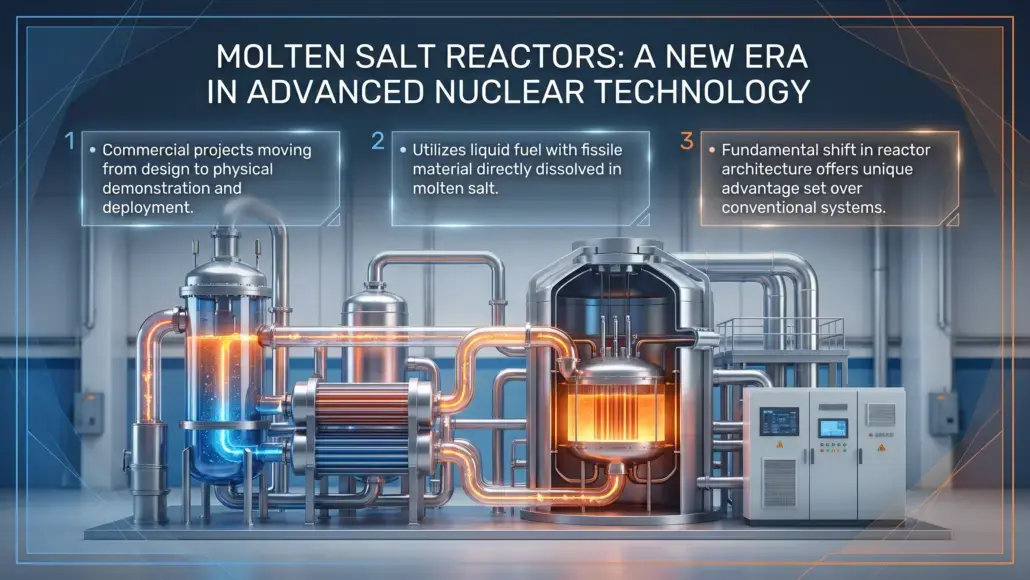

The momentum behind molten salt reactor technology is reaching a critical threshold as multiple commercial projects move from the design phase toward physical demonstration and deployment. Unlike conventional nuclear reactors that use solid fuel elements cooled by high pressure water, these advanced systems utilize a liquid fuel where the fissile material is dissolved directly into a molten fluoride or chloride salt. This fundamental shift in reactor architecture offers a unique set of advantages, particularly in terms of safety, fuel utilization, and operational flexibility. As the global power generation sector seeks scalable solutions for deep decarbonization, the inherent characteristics of liquid fuel reactors are positioning them as a viable alternative to traditional light water technologies.
The development of this technology is not a new concept, having been successfully demonstrated at the Oak Ridge National Laboratory in the 1960s, but modern advancements in material science and digital control systems have revitalized the field. Today, a diverse array of startups and established engineering firms are refining different variations of the molten salt design, including systems fueled by uranium, plutonium, and thorium. These reactors are uniquely capable of operating at atmospheric pressure and very high temperatures, making them highly efficient for both electricity production and the provision of high grade industrial heat. The following analysis explores the technical and economic factors driving the commercial resurgence of molten salt reactor technology.
Inherent Passive Safety Features of Liquid Fuel Systems
The safety profile of molten salt reactor technology is defined by its reliance on natural physical laws rather than active mechanical systems. In a conventional reactor, the solid fuel must be constantly cooled to prevent a meltdown, a process that requires a continuous supply of water and electricity for pumps and sensors. In contrast, the liquid fuel in a molten salt reactor is already in a molten state, eliminating the risk of a core melt in the traditional sense. Additionally, the salts used in these systems have a very high boiling point, allowing the reactor to operate at low pressure. This removes the risk of a pressure driven explosion or a rapid release of radioactive steam that characterizes many light water reactor accidents.
A critical safety feature of these reactors is the use of a “freeze plug” at the bottom of the reactor vessel. This plug is a section of salt kept solid by active cooling. If the reactor experiences a loss of power or if the temperature rises beyond a certain limit, the plug melts, and the liquid fuel drains by gravity into specialized subcritical storage tanks. In these tanks, the fuel is geometrically configured to stop the fission process and is cooled by natural convection. This passive drainage system ensures that the reactor can shut itself down and reach a safe state without any human intervention or external power, a level of inherent safety that significantly reduces the complexity and cost of the plant’s overall safety architecture.
Additionally, the chemical properties of the molten salts help to retain many of the most hazardous fission products. Elements like iodine and cesium, which are highly volatile in a traditional reactor accident, form stable chemical bonds with the salt, preventing them from being released into the environment. The ability to continuously remove gaseous fission products like xenon and krypton during operation further improves the safety and efficiency of the system. By integrating safety into the fundamental chemistry and physics of the reactor, molten salt technology offers a resilient solution for the next generation of nuclear power plants.
Utilization of Diverse Fuel Cycles and Fissile Material Management
Molten salt reactor technology is exceptionally versatile in its ability to utilize different fuel cycles, including the promising thorium fuel cycle. Thorium is more abundant than uranium and can be converted into the fissile isotope uranium-233 within a reactor. Liquid fuel systems are particularly well suited for this conversion process because they allow for the continuous removal and addition of materials without stopping the reactor. This enables a much more efficient utilization of fissile resources and provides a pathway for a sustainable nuclear energy future that is less dependent on expensive uranium enrichment processes.
Fissile material management is also simplified in a liquid fuel environment. Because the fuel is a homogeneous liquid, there is no need for the complex and expensive fabrication of solid fuel assemblies. The fuel can be adjusted in real time to maintain optimal reactor performance, and spent fuel can be processed to remove fission products and recycle the remaining fissile material. This capability to “burn” its own waste or to utilize plutonium from decommissioned weapons and legacy reactor fuel makes molten salt reactors a valuable tool for addressing nuclear proliferation and waste management challenges.
Additionally, the fast spectrum version of these reactors can operate as “breeders,” producing more fissile material than they consume. This effectively opens up an almost inexhaustible source of energy and significantly reduces the volume of long lived radioactive waste that requires geological disposal. The flexibility to operate in both thermal and fast neutron spectrums allows utilities to choose a reactor design that best matches their specific fuel availability and waste management goals. By offering a more holistic approach to the nuclear fuel cycle, molten salt reactors enhance the long term viability of nuclear energy in a resource constrained world.
Thermal Energy Storage and Industrial Heat Process Integration
One of the most compelling economic arguments for liquid fuel nuclear systems is its ability to provide high temperature heat for industrial processes. Conventional nuclear plants produce heat at around 300 degrees Celsius, which is sufficient for electricity generation but too low for many heavy industrial applications. Molten salt reactors, however, can operate at temperatures between 600 and 700 degrees Celsius, and even higher in some designs. This high temperature output can be used to drive chemical processes, produce hydrogen, or provide steam for district heating and industrial manufacturing. By serving multiple markets, these reactors can achieve much higher overall energy efficiency and improve their financial return.
The integration of thermal energy storage is a natural extension of the molten salt design. The heat from the reactor can be transferred to a large reservoir of non radioactive molten salt, which acts as a thermal battery. This stored heat can then be used to generate electricity during periods of peak demand or to provide a constant supply of industrial heat even when the reactor is operating at a lower power level. This capability allows the reactor to follow the load requirements of the grid and to work in harmony with intermittent renewable energy sources like wind and solar. The ability to decouple heat production from electricity generation provides a level of operational flexibility that is unattainable with traditional nuclear plants.
Industrial heat process integration also facilitates the decarbonization of sectors that are difficult to electrify. For example, the production of steel and cement requires intense heat that is currently provided by fossil fuels. By replacing these carbon intensive burners with a clean and reliable source of nuclear heat, industrial companies can significantly reduce their carbon footprint. The development of specialized heat exchangers and transport systems for high temperature salts is a key area of focus for the industry, ensuring that the energy from the reactor can be delivered safely and efficiently to the point of use. This synergy between nuclear power and industrial manufacturing is a major driver for the commercial deployment of molten salt reactors.
Addressing Material Science Challenges in Corrosive Environments
Despite the many advantages of liquid fuel nuclear systems, the commercial deployment of these systems faces significant technical hurdles, particularly in the area of material science. The combination of high temperatures, intense radiation, and the chemically corrosive nature of molten salts creates a very challenging environment for reactor components. Conventional stainless steels and alloys used in light water reactors can degrade rapidly when exposed to these conditions. Addressing these challenges requires the development and qualification of new materials that can maintain their structural integrity over the decades long lifespan of a commercial power plant.
High nickel alloys, such as Hastelloy-N, were specifically developed for use in molten salt environments and have shown excellent resistance to corrosion and radiation damage. Modern research is focused on further refining these alloys and developing advanced ceramic coatings and composites that can provide even greater durability. The use of advanced manufacturing techniques, such as laser cladding and 3D printing of metallic components, allows for the creation of complex geometries with specialized surface properties. These innovations are essential for ensuring that components like heat exchangers, pumps, and reactor vessels can operate reliably without frequent replacement.
Regulatory approval for these new materials is a critical step in the commercialization process. Regulators require extensive data on the long term behavior of materials under realistic reactor conditions, including their resistance to creep, fatigue, and stress corrosion cracking. Testing facilities and experimental loops around the world are currently generating this data, building the technical foundation for the licensing of commercial molten salt reactors. By demonstrating that these materials can perform safely and reliably, the industry is clearing one of the most significant obstacles to the wide scale deployment of liquid fuel technology. The successful resolution of these material science challenges will be a major milestone for the power generation sector.
Scaling Liquid Fuel Reactors for Commercial Electricity Markets
The final step in the commercialization of liquid fuel nuclear systems is the scaling up of designs for the electricity market. This involves the transition from small experimental reactors to utility scale facilities capable of providing hundreds of megawatts of power. Scaling a liquid fuel system presents unique engineering challenges, such as the management of large volumes of molten salt, the design of high capacity heat removal systems, and the integration of complex chemical processing units. These tasks require close collaboration between reactor designers, component manufacturers, and utility operators to ensure that the final plant is both reliable and economically competitive.
The development of a resilient supply chain for specialized salts and materials is essential for scaling the industry. The production of high purity fluoride and chloride salts requires dedicated facilities and strict quality control measures to ensure that impurities do not accelerate corrosion or impact reactor physics. Similarly, the specialized alloys and components needed for these reactors must be available in sufficient quantities and at a price point that supports large scale deployment. Investment in this industrial infrastructure is a key focus for both government and private sector stakeholders, providing the foundation for a sustainable and competitive molten salt reactor market.
Utility companies are also evaluating the integration of molten salt reactors into their existing portfolios. The high temperature output and flexible operation of these systems make them an attractive option for replacing aging fossil fuel plants and for supporting the growth of the hydrogen economy. The ability to deploy these reactors in modular configurations allows for a more phased approach to capacity expansion and reduces the financial risk for investors. As the first commercial demonstration units begin operation in the coming years, the data generated will be used to refine the designs and to build confidence among utilities and financiers. The transition to liquid fuel nuclear systems represents a major evolution in the nuclear industry, offering a safer, more efficient, and more versatile way to generate carbon free power.