





















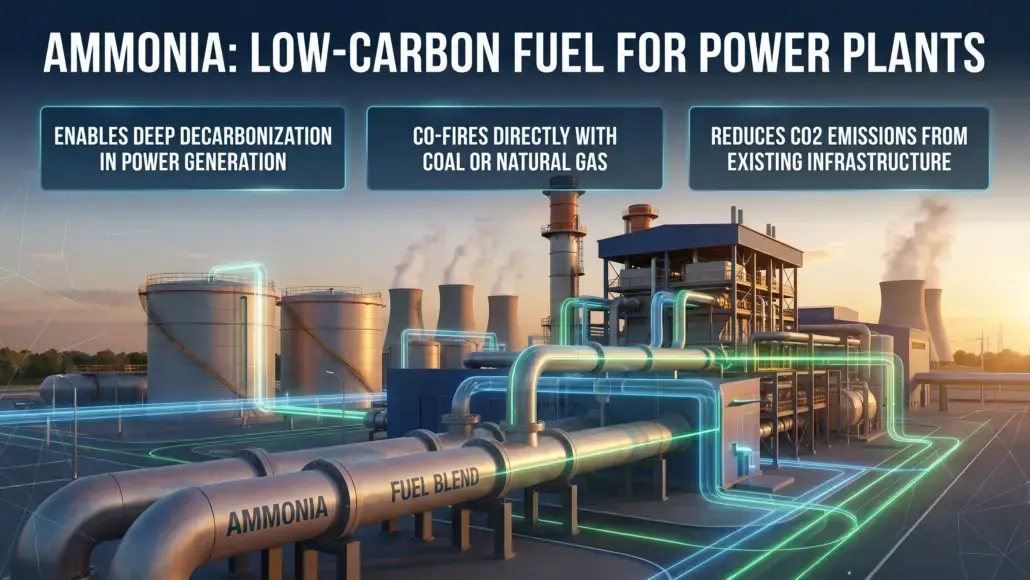

The global power generation sector is currently exploring diverse pathways to achieve deep decarbonization while maintaining the stability of the existing energy infrastructure. One of the most promising strategies is the direct use of ammonia as a fuel in thermal power plants, either alongside coal or natural gas. The development of ammonia co-firing technologies expanding low-carbon fuel options for power plants provides a pragmatic solution for reducing carbon dioxide emissions from large-scale power assets without the need for immediate, full-scale retirement of these facilities. By substituting a portion of the fossil fuel with ammonia, utilities can achieve significant carbon reductions in a relatively short timeframe and with manageable capital investments.
Ammonia is a particularly attractive fuel because it is carbon-free at the point of combustion and can be stored and transported using established global infrastructure. While the concept of co-firing is not new, the application of ammonia at the scale required for utility boilers and gas turbines involves complex engineering challenges. These include managing the slower combustion speed of ammonia, addressing the potential for increased nitrogen oxide emissions, and ensuring the safety of large-scale ammonia handling at the plant site. As demonstration projects in Japan and other regions show success, the industry is moving toward higher co-firing ratios, with the ultimate goal of achieving one hundred percent ammonia combustion.
Burner Modifications for Ammonia-Coal and Ammonia-Gas Co-Firing
The introduction of ammonia into a combustion chamber designed for coal or natural gas requires significant modifications to the burner hardware. Ammonia has a lower heating value and a significantly lower flame speed compared to conventional fuels, which can lead to flame instability if the burners are not properly adjusted. In coal-fired applications, ammonia co-firing technologies expanding low-carbon fuel options for power plants often involve the use of multi-fuel burners that can inject ammonia into the primary combustion zone as a gas or a liquid spray. The placement and angle of the ammonia injectors are critical for ensuring stable ignition and complete burnout within the furnace.
For gas-fired assets, the challenge lies in the different chemical kinetics of ammonia combustion. Advanced burner designs, such as those utilizing lean-premixed or staged combustion, are being developed to accommodate the unique properties of ammonia-natural gas blends. These burners must manage the transition between different fuel ratios while maintaining high efficiency and low emissions. In many cases, the entire burner assembly may need to be replaced with a version specifically engineered for fuel flexibility. The use of computational fluid dynamics (CFD) is essential for optimizing the burner geometry and predicting the behavior of the flame under various co-firing scenarios.
The modification of the fuel supply system to the burners is also a key aspect of the retrofit. This involves installing ammonia vaporizers, compressors, and dedicated piping to deliver the fuel at the required temperature and pressure. Because ammonia is corrosive to certain materials, such as copper and its alloys, the material compatibility of all valves, seals, and gaskets must be verified. The ability to switch fluidly between pure fossil fuel and the co-fired blend is a vital operational requirement, providing the utility with the flexibility to respond to fuel price fluctuations and carbon constraints.
Fuel Supply and Storage Infrastructure for Large-Scale Ammonia Integration
A significant barrier to the widespread adoption of ammonia co-firing is the requirement for massive quantities of ammonia and the associated storage infrastructure. A typical one-thousand-megawatt coal plant co-firing at twenty percent ammonia would require hundreds of thousands of tons of ammonia per year. Therefore, ammonia co-firing technologies expanding low-carbon fuel options for power plants must be supported by a resilient and scalable supply chain. This involves not only the production of green or blue ammonia but also the construction of port facilities, storage tanks, and potentially pipelines to deliver the fuel to the power plant.
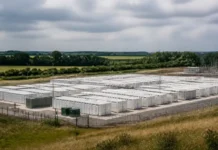
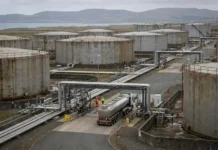
On-site storage is another critical consideration. Ammonia is typically stored as a refrigerated liquid at atmospheric pressure or as a pressurized liquid at ambient temperature. The choice of storage technology depends on the volume required and the space available at the plant site. Double-walled tanks with advanced leak detection and containment systems are standard for large-scale installations to ensure the safety of the facility and the surrounding area. The logistical challenge of coordinating the delivery and storage of ammonia with the plant’s operational schedule requires sophisticated supply chain management tools and close collaboration between the fuel supplier and the utility.
The integration of ammonia supply systems also offers opportunities for regional energy hubs. A power plant located near an industrial cluster or a major port could serve as a focal point for ammonia distribution, providing fuel not only for power generation but also for shipping and industrial heating. This cross-sector integration can improve the overall economics of ammonia infrastructure, making it a cornerstone of a regional low-carbon economy. The ability of the power sector to act as an anchor customer for green ammonia is a major driver of the global transition to sustainable fuels.
Mitigation of Fuel-NOx and Nitrous Oxide Emissions in Co-Fired Boilers
A primary environmental concern with ammonia co-firing is the potential for increased emissions of nitrogen oxides (NOx) and nitrous oxide (N2O). Because ammonia contains nitrogen, it can contribute to the formation of fuel-NOx through chemical pathways that are not present in carbon-based fuels. Ammonia co-firing technologies expanding low-carbon fuel options for power plants must therefore include advanced emission control strategies. Staged combustion, where the fuel and air are introduced in multiple levels, is a highly effective way to create fuel-rich zones that promote the conversion of ammonia-nitrogen into harmless molecular nitrogen rather than NOx.
The use of Selective Catalytic Reduction (SCR) systems is also essential for achieving the required emission levels. In many cases, the existing SCR system at a coal plant can be utilized, although it may need to be expanded or the catalyst replaced with a version that is more active for ammonia-derived NOx. Additionally, the presence of unreacted ammonia in the exhaust, known as ammonia slip, must be carefully managed to prevent the formation of ammonium sulfate or bisulfate, which can foul downstream equipment like air preheaters. Real-time monitoring of the exhaust chemistry is critical for optimizing the performance of the emission control systems.
Nitrous oxide, a potent greenhouse gas, can also be formed during the combustion of ammonia, particularly at lower temperatures. The control of N2O requires a careful balance of the furnace temperature and the residence time of the gases in the combustion zone. Research is ongoing into the use of specialized catalysts that can simultaneously reduce both NOx and N2O in the exhaust stream. By combining primary combustion control with advanced post-combustion treatment, utilities can ensure that the environmental benefits of ammonia co-firing are not compromised by an increase in other harmful pollutants.
Operational Impacts on Boiler Performance and Heat Transfer Profiles
The substitution of ammonia for a portion of the coal or gas feed changes the thermal and chemical environment within the boiler, affecting heat transfer and steam generation. Ammonia burns with a different radiative and convective heat profile, which can lead to shifts in the temperature distribution across the furnace and the superheater sections. Ammonia co-firing technologies expanding low-carbon fuel options for power plants must involve a detailed assessment of the boiler’s heat balance to ensure that the steam temperature and pressure remain within the design limits of the steam turbine.
The impact of ammonia on boiler fouling and slagging also needs to be considered. In coal-fired boilers, the change in the furnace atmosphere can affect the behavior of the coal ash, potentially altering the rate of deposit formation on the heat transfer surfaces. While initial studies suggest that ammonia co-firing may actually reduce fouling in some cases due to the lower ash content of the total fuel blend, long-term operational data is still being gathered. Regular inspection and the use of soot blowers are necessary to maintain the cleanliness and efficiency of the boiler.
The moisture content of the exhaust gas also increases when burning ammonia, as the hydrogen in the ammonia molecule reacts with oxygen to form water vapor. This can lead to a slight decrease in the boiler’s thermal efficiency due to the latent heat loss of the moisture. However, this loss is generally small compared to the overall carbon reduction achieved. The increased moisture can also affect the performance of the flue gas desulfurization (FGD) system and the electrostatic precipitator (ESP), requiring minor adjustments to these auxiliary units. A holistic understanding of these operational impacts is essential for the successful long-term deployment of co-firing technology.
Strategic and Economic Roadmap for High-Ratio Ammonia Co-Firing
The transition to ammonia co-firing is typically envisioned as a phased process, starting with low blending ratios (e.g., ten to twenty percent) and gradually increasing as the technology matures and the supply of ammonia expands. This strategic roadmap allows utilities to gain operational experience and to spread the capital costs over time. The economic case for these fuel-switching technologies is strongly linked to the price of carbon and the availability of government incentives. In regions with high carbon taxes, the reduction in emission costs can provide a clear financial return on the investment in co-firing equipment.
Similarly, the ability to co-fire ammonia provides a valuable insurance policy against the risk of stranded assets. As carbon targets become more ambitious, power plants that can adapt to new fuels will remain viable, while those that cannot will face early retirement. This long-term strategic value is a key consideration for utility executives and investors. The development of international standards for green and blue ammonia will also help to create a more transparent and liquid market for the fuel, further improving its economic attractiveness.
Ultimately, the successful adoption of ammonia co-firing will depend on a combination of technological innovation, supportive policy frameworks, and the development of a global ammonia economy. By providing a pathway for the decarbonization of the existing thermal fleet, ammonia co-firing acts as a vital bridge to a fully sustainable energy future. The lessons learned from these projects will also inform the design of future one hundred percent ammonia-fired power plants, which will play a critical role in the zero-carbon grids of the mid-twenty-first century. This evolutionary approach to power generation is essential for balancing the competing demands of environmental sustainability, energy security, and economic affordability.