



















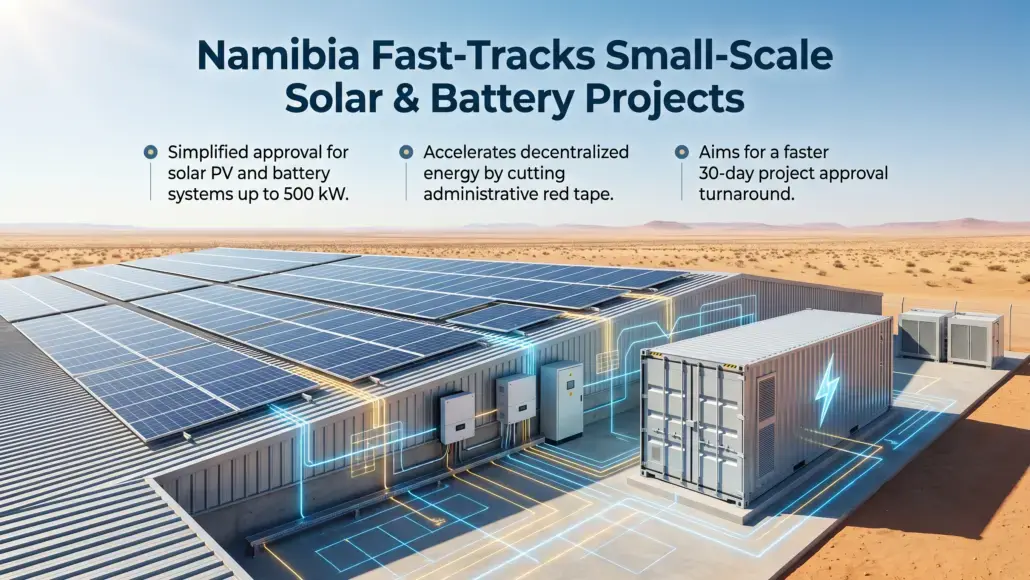

Namibia’s Electricity Control Board (ECB) has introduced measures to simplify the approval process for small-scale solar photovoltaic (PV) and battery energy storage systems up to 500 kW. This regulatory shift is designed to accelerate decentralized solar deployment by reducing administrative delays and removing bureaucratic barriers that have previously slowed embedded generation projects. Under the revised framework, the energy regulator aims to complete approvals within a 30-day period, providing a faster and more standardized path for property owners, farmers, businesses, and private institutions to develop distributed energy systems. By making the approval process simpler, the ECB intends to encourage greater private-sector investment and participation in the country’s renewable energy market.
The move supports Namibia’s strategic efforts to enhance domestic electricity generation and decrease its reliance on power imported from neighboring countries. By leveraging the country’s high levels of year-round sunlight, expanding decentralized generation is expected to improve national energy security and build a more resilient electricity system. For consumers, the adoption of small-scale solar and storage can lower monthly power costs and provide essential backup power during grid outages. Additionally, eligible participants may continue to utilize existing net-metering arrangements to feed surplus electricity back into the local network, further supporting the economic viability of these installations.
While the simplified framework covers a wide range of residential, agricultural, and small-to-medium commercial projects below the 500 kW threshold, developers must still comply with all applicable technical and safety requirements. Electricity distributors will remain responsible for assessing grid capacity and technical conditions prior to connecting new generation systems. Overall, the ECB’s reforms are anticipated to drive growth in the distributed renewable energy market, potentially creating employment opportunities while advancing Namibia’s clean energy transition through accelerated decentralized solar deployment across the nation.