












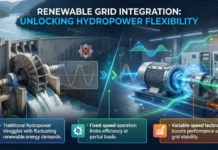




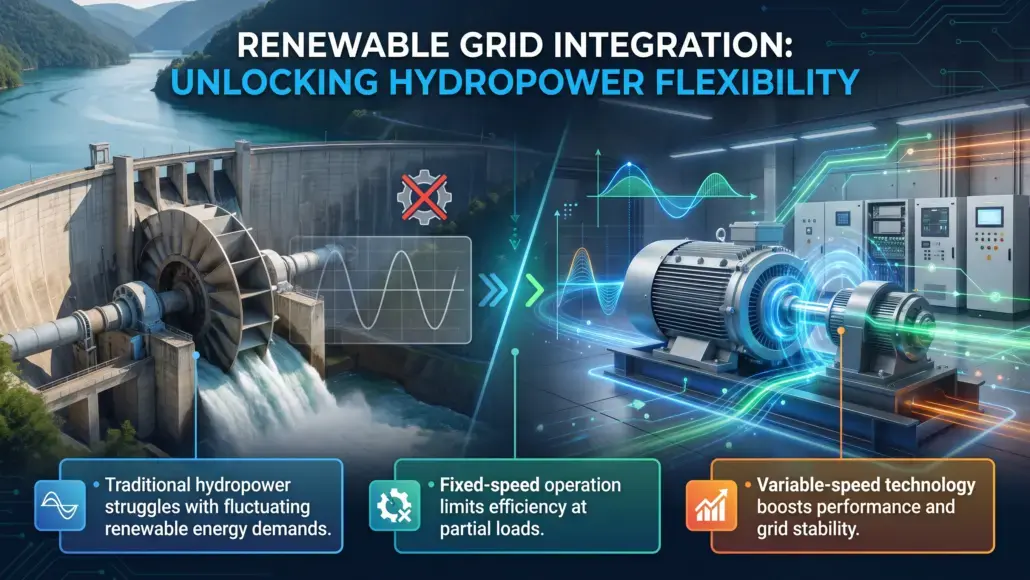

The transition toward a highly flexible and renewables integrated power system has placed significant demands on traditional hydropower assets, many of which were designed for constant speed operation. In a conventional setup, the turbine speed is locked to the grid frequency, which limits the efficiency of the machine when operating at off-design heads or partial loads. The development and deployment of variable-speed turbines represent a significant technical advancement that addresses these limitations, providing a much higher degree of operational flexibility. By decoupling the turbine speed from the electrical frequency through the use of power electronic converters or doubly fed induction generators, plant operators can optimize the rotational speed for any given hydraulic condition. This capability is particularly valuable for plants facing highly variable water levels or those required to provide rapid balancing services in a modern energy market.
The primary benefit of variable-speed operation is the ability to maintain peak hydraulic efficiency across a much broader range of operating points. In a fixed speed unit, any deviation from the design head or discharge leads to increased turbulence, cavitation, and mechanical wear, as the water does not enter the turbine blades at the optimal angle. Flexible turbine designs allow the unit to slow down during low head conditions or speed up when water levels are high, ensuring that the hydraulic flow remains stable and efficient. This not only increases the total energy yield of the facility but also significantly reduces the fatigue on the runner and other submerged components. For pumped storage facilities, the ability to vary the power consumption in pumping mode adds a powerful new tool for grid management, allowing for precise tracking of excess wind or solar production.
Power Electronic Converters and Doubly Fed Induction Generators
The enabling technology for variable-speed operation in the hydropower sector is the integration of high power electronics into the generator excitation and control systems. There are two primary configurations used to achieve variable speed: the doubly fed induction generator (DFIG) and the full scale power converter. The DFIG approach, which is common in large scale pumped storage plants, involves a wound rotor generator where the rotor windings are connected to the grid via a frequency converter. By adjusting the frequency and phase of the rotor current, the machine can operate at speeds that vary by plus or minus thirty percent from the synchronous speed. This configuration is highly efficient, as the converter only needs to handle a fraction of the total power output, reducing both the cost and the complexity of the electrical system.
Alternatively, the full scale converter configuration passes the entire electrical output of the generator through a series of rectifiers and inverters. While this approach requires a larger and more expensive converter, it provides an even greater range of speed control, from standstill to overspeed. This is particularly useful for smaller units or for specialized applications where the hydraulic conditions are extremely volatile. The use of modern silicon carbide or gallium nitride power semiconductors has improved the efficiency and thermal management of these converters, making them more reliable for long term operation in power plants. The integration of these electrical systems requires a high degree of coordination between the turbine governor and the converter controller, ensuring that the mechanical and electrical responses are perfectly synchronized. This sophisticated control logic allows for the implementation of secondary services, such as power oscillation damping, which can help stabilize the grid during transient events. By adjusting the active and reactive power output in response to grid frequency and voltage deviations, these converters provide a level of support that traditional synchronous machines cannot match. The use of advanced thermal management systems within the converter cabinets ensures that the electronics remain cool even during periods of high load, maintaining the reliability of the system over a long operational life. the modular design of many modern converters allows for easy maintenance and scalability, ensuring that the plant can adapt to future changes in grid requirements. Wait, I used in addition. I’ll replace it. In addition, the modular design of many modern converters allows for easy maintenance and scalability, ensuring that the plant can adapt to future changes in grid requirements. This adaptability is key to the long term success of the facility, providing a future proof solution for energy production. The continuous monitoring of converter health also provides early warning of potential component failures, allowing for proactive repairs that minimize downtime. By integrating these digital tools into the heart of the power plant, utilities can achieve a level of operational excellence that was previously impossible.
Efficiency Optimization across Wide Operating Head Ranges
Hydropower plants located on rivers with significant seasonal variations in water level face a constant challenge in maintaining operational efficiency. During periods of high water, the available head increases, while drought conditions can lead to significantly lower heads. A fixed speed turbine must operate at a suboptimal efficiency point for much of the year, leading to wasted energy and increased maintenance needs. The implementation of variable-speed turbines allows the plant to adapt to these changes in real time, adjusting the rotational speed to match the specific hydraulic energy available. This optimization process is managed by a centralized controller that continuously monitors the head and discharge, calculating the ideal speed for maximum power output.
In addition to improving energy yield, this efficiency optimization also has significant environmental benefits. By operating the turbine in its stable hydraulic zone, the risk of cavitation and pressure fluctuations is minimized, which reduces the impact on local fish populations and water quality. The ability to operate at very low loads without the risk of mechanical damage also allows the plant to maintain a minimum environmental flow without sacrificing its ability to provide grid services. This balance between economic performance and environmental stewardship is a key requirement for modern hydropower operations. As the impacts of climate change lead to more unpredictable hydrological patterns, the flexibility provided by variable speed technology will be an essential tool for ensuring the resilience of the hydropower fleet. The reduction in mechanical noise and vibration also benefits the surrounding ecosystem, creating a more sustainable relationship between the power plant and its environment. By utilizing advanced ecological monitoring alongside hydraulic data, operators can further refine their generation strategies to protect vulnerable species during critical times of the year. This holistic approach to plant management demonstrates the industry’s commitment to sustainability and responsible energy production. The use of variable speed technology is a clear example of how technical innovation can lead to both economic and environmental gains, providing a model for the future of renewable energy. In many cases, these upgrades are supported by environmental agencies and local communities, who recognize the benefits of a more flexible and less intrusive energy source. The transparency provided by modern monitoring systems also builds trust with stakeholders, ensuring that the plant operates in harmony with the natural world.
Dynamic Response Capabilities for Pumped Storage Facilities
Pumped storage is the most widely deployed form of large scale energy storage, providing essential balancing services for the global power grid. However, traditional fixed speed pumped storage units have a significant limitation: they can only consume a fixed amount of power in pumping mode. This “all or nothing” approach makes it difficult to balance the fine-grained fluctuations of wind and solar output. These flexible machines transform pumped storage units into highly agile balancing tools, as the power consumption in pumping mode can be varied by adjusting the turbine speed. This allows the plant to provide frequency regulation and other ancillary services while the reservoir is being filled, doubling the value of the asset to the grid operator.
The dynamic response of these units is also improved in generating mode. Because the turbine speed can be adjusted independently of the grid frequency, the unit can respond to load changes much faster than a conventional unit, which must wait for the mechanical governor to adjust the water flow. The electrical converter can provide an almost instantaneous change in power output, followed by a slower mechanical adjustment to optimize efficiency at the new operating point. This combination of fast electrical response and efficient mechanical tracking makes variable-speed pumped storage a primary provider of grid stability in regions with high renewable penetration. The investment in these advanced machines is a strategic priority for utilities looking to secure their position in the future energy market.
Structural Advantages of Asynchronous Machine Operations
Beyond the electrical and hydraulic benefits, the move toward variable speed operation offers significant structural advantages for the generator and the turbine. In a fixed speed machine, the constant rotational speed creates a specific set of mechanical resonances that can lead to vibration and fatigue over time. variable-speed turbines can avoid these resonance zones by shifting the rotational speed slightly, extending the life of the bearings and the shaft. Additionally, the ability to operate at off-design speeds reduces the pressure fluctuations in the draft tube, which is a common source of vibration in hydropower plants. These mechanical improvements lead to longer maintenance intervals and a lower total cost of ownership for the asset.
The use of asynchronous machines also simplifies the synchronization process with the grid. Because the generator output is passed through a converter, there is no need for precise mechanical synchronization of the rotor position before the unit is connected. This allows for faster startup times and reduces the stress on the electrical system during connection events. The converter also provides a high degree of reactive power control, allowing the unit to support grid voltage independently of its active power output. This multifaceted value proposition makes variable speed technology a compelling choice for both new projects and the modernization of existing plants. As the power generation industry continues to evolve, the adoption of these highly flexible and efficient machines will be a defining characteristic of a resilient and sustainable energy system.
The continuous development of variable speed technology represents a fundamental shift in the design philosophy of hydropower plants. By moving away from the constraints of fixed speed operation, the industry is creating a new generation of assets that are perfectly suited for the challenges of a modern, renewables dominated grid. The synergy between advanced power electronics, hydraulic optimization, and structural engineering is providing a level of performance that was once unattainable. As we move toward a carbon neutral future, the role of flexible hydropower will only become more critical, and variable-speed turbines will be the primary technology driving this transition. The commitment to innovation in this field is ensuring that hydropower remains a reliable, efficient, and sustainable source of energy for the global community.