






















Close
Achema middle east
Horizon Clean Energy Expansion India Conference 2026

DOE Awards EPRI $2 Million to Investigate Co-Adoption of Solar, Energy Storage & Electric Vehicles

Note* - All images used are for editorial and illustrative purposes only and may not originate from the original news provider or associated company.

Subscribe

- Never miss a story with notifications

- Gain full access to our premium content

- Browse free from any location or device.

Media Packs

Expand Your Reach With Our Customized Solutions Empowering Your Campaigns To Maximize Your Reach & Drive Real Results!

– Access the Media Pack Now

– Book a Conference Call

Leave Message for Us to Get Back

Related stories

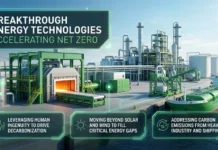
Breakthrough Energy Technologies Accelerating Net Zero

The global journey toward a zero-carbon world relies on more than just incremental improvements; it requires the deployment of frontier innovations. Accelerating net zero with breakthrough energy technologies involves integrating ultra-dense power sources like fusion and advanced geothermal with versatile molecular carriers such as hydrogen to create a truly resilient and sustainable industrial civilization.

How Renewable Infrastructure Drives Industrial Decarbonization

The heavy industry sector is often considered the "last mile" of the energy transition. Building renewable infrastructure for industrial decarbonization involves a fundamental redesign of industrial energy systems, moving away from high-carbon combustion toward a hybrid model of direct electrification and molecular green energy.

Integrating Renewable Energy for Enhanced Grid Stability

As the world transitions toward a cleaner power mix, the challenge of maintaining a steady electricity supply becomes paramount. Integrating renewable energy for grid stability involves leveraging cutting-edge technology and flexible infrastructure to turn variable resources into a reliable backbone for modern society.
- Advertisement -

The Electric Power Research Institute (EPRI) will receive a $2 million contract from the U.S. Energy Department (DOE) to explore how information about solar energy spreads among consumers.

DOE’s Solar Energy Technologies Office (SETO) selected EPRI to examine how residential and commercial utility customers make decisions related to the co-adoption of solar power with other technologies, such as energy storage and electric vehicles (EVs). This research will help utilities determine future needs of the electric grid.

In collaboration with the DOE’s National Renewable Energy Laboratory (NREL) and Lawrence Berkeley National Laboratory, EPRI will assess residential and commercial customer preferences, influences, and decision-making for co-adopting solar photovoltaics with energy storage and/or EVs. The interplay among these three distributed energy resource (DER) technologies can provide consumers and businesses new flexibility in the way they use energy. Without a clearer understanding of the customer motivations for owning and operating multiple DERs, utilities may not fully anticipate and prepare for the grid impacts of DER co-adoption.

“With this research, EPRI will understand, and be able to communicate to utilities, customer DER co-adoption preferences, motivations, and barriers,” said Rob Chapman, Senior Vice President of Energy Delivery and Customer Solutions at EPRI. “Understanding these behaviors will better prepare the electric industry as consumers and utilities move towards a clean energy future.”

“This project will help enhance long-term forecasting tools, such as NREL’s open source dGen adoption model,” said Ben Sigrin, Researcher in the Strategic Energy Analysis Center at NREL. “We anticipate the industry benefiting from tools that can model the impact of complex customer decision making related to co-adoption, instead of relying on tools that model customer adoption of individual technologies in silos.”

EPRI was selected as a part of the SETO Fiscal Year 2020 funding program, an effort to advance research and development projects that will lower solar electricity costs, increase the competitiveness of American solar manufacturing and businesses, improve the reliability and resilience of the grid, and expand solar to new applications. EPRI is one of several projects examining how the flow of solar information can reduce the non-hardware costs of solar energy. By finding ways to efficiently deliver knowledge to key stakeholders’ decisions can be made more quickly and effectively.

Power Info Today brings together the global energy industry — from generation and transmission operators to utility executives and energy transition leaders — through trusted editorial, market intelligence, and digital engagement.

Our 2026 Media Pack offers integrated solutions to reach your audience:

  • Magazine & Digital Editions Showcase your brand within premium energy industry coverage read by executives and decision - makers worldwide.
  • Industry Insights & Reports Align with data - driven analysis, trend reports, and regional roundups across the global power and energy value chain.
  • Brand Authority & Credibility Position your company as a thought leader through expert commentary, interviews, and special features.

Latest stories

Related stories

Breakthrough Energy Technologies Accelerating Net Zero

The global journey toward a zero-carbon world relies on more than just incremental improvements; it requires the deployment of frontier innovations. Accelerating net zero with breakthrough energy technologies involves integrating ultra-dense power sources like fusion and advanced geothermal with versatile molecular carriers such as hydrogen to create a truly resilient and sustainable industrial civilization.

How Renewable Infrastructure Drives Industrial Decarbonization

The heavy industry sector is often considered the "last mile" of the energy transition. Building renewable infrastructure for industrial decarbonization involves a fundamental redesign of industrial energy systems, moving away from high-carbon combustion toward a hybrid model of direct electrification and molecular green energy.

Integrating Renewable Energy for Enhanced Grid Stability

As the world transitions toward a cleaner power mix, the challenge of maintaining a steady electricity supply becomes paramount. Integrating renewable energy for grid stability involves leveraging cutting-edge technology and flexible infrastructure to turn variable resources into a reliable backbone for modern society.

Advancing Hydrogen Storage for Enhanced Energy Security

The global energy landscape is currently undergoing a transformation...

Subscribe

- Never miss a story with notifications

- Gain full access to our premium content

- Browse free from any location or device.

Media Packs

Expand Your Reach With Our Customized Solutions Empowering Your Campaigns To Maximize Your Reach & Drive Real Results!

– Access the Media Pack Now

– Book a Conference Call

Leave Message for Us to Get Back

Translate »