










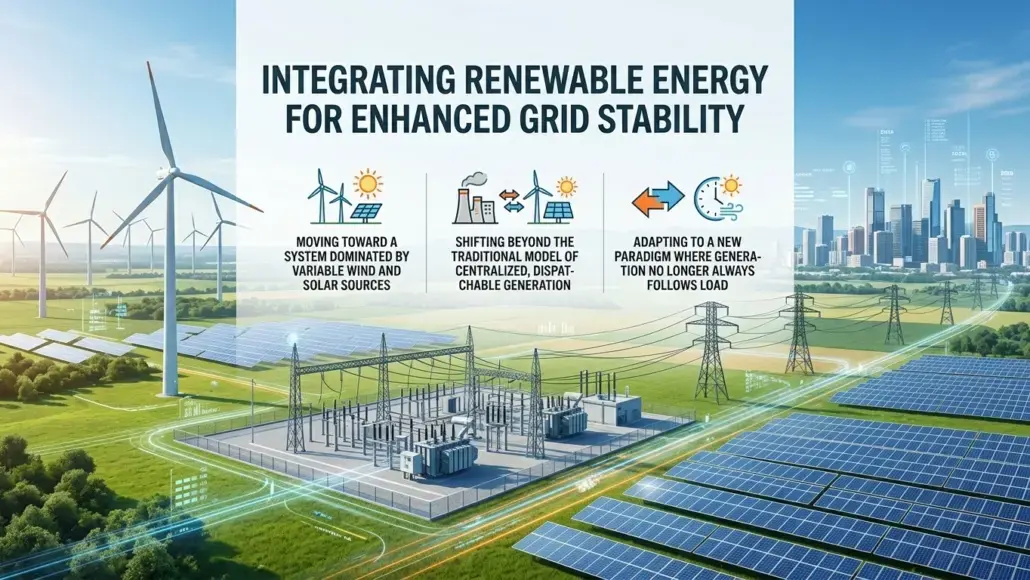

The modernization of the global electrical grid is perhaps the most significant engineering challenge of our time. For over a century, power systems were designed around centralized, dispatchable generation primarily coal, gas, and hydro. These systems operated on a simple premise: generation follows load. Today, that paradigm is being flipped on its head. As we move toward a system dominated by wind and solar, we are dealing with variable sources that do not necessarily produce power when it is most needed. However, rather than being a source of instability, the process of integrating renewable energy for grid stability is actually driving a technological renaissance that is making our grids more resilient, intelligent, and flexible than ever before.
The narrative that renewables are inherently “unstable” is rapidly being replaced by a more nuanced understanding of grid physics. While it is true that a cloud passing over a solar farm or a sudden drop in wind speed presents a challenge, the tools available to grid operators have evolved dramatically. By combining sophisticated AI-driven forecasting with ultra-fast responding storage and advanced power electronics, we are creating a dynamic system that can react to fluctuations in milliseconds. This transition is not just about replacing one fuel with another it is about rebuilding the grid with a level of digital precision that was previously unimaginable.
The Digital Brain: AI and Predictive Analytics
At the heart of integrating renewable energy for grid stability is the power of data. Traditional grids were relatively “blind,” with limited visibility into real-time conditions at the edge of the network. Modern grids, by contrast, are becoming vast sensory networks. Machine learning algorithms now ingest terabytes of meteorological data, satellite imagery, and historical usage patterns to predict renewable output with startling accuracy. When grid operators know exactly how much wind energy will be available six hours in advance, they can schedule other resources more efficiently, reducing the need for expensive and polluting standby plants.
These predictive capabilities extend to the demand side as well. “Smart” loads ranging from industrial cooling systems to residential electric vehicle chargers can now be orchestrated to match the availability of renewable power. This concept, known as demand-side flexibility, turns the consumers into an active part of the solution. By shifting non-essential energy use to times of high renewable production, we reduce the stress on the grid during peak periods. This bi-directional communication between the utility and the user is a cornerstone of a stable, renewable-heavy system, ensuring that supply and demand are always in harmony.
Synchronous Condensers and Inverter-Based Resources
One of the more technical challenges of removing large fossil fuel turbines is the loss of physical “inertia.” These massive spinning masses provide a natural buffer against frequency changes if a large load suddenly comes online, the momentum of the turbines keeps the frequency stable for those critical few seconds needed for other plants to react. As we replace these with solar panels and wind turbines, which connect to the grid via electronic inverters, we lose that mechanical inertia. However, engineers have developed brilliant workarounds to maintain stability.
Synchronous condensers essentially large spinning motors that aren’t connected to a fuel source are being deployed at strategic points in the grid to provide that missing inertia and voltage support. More impressively, “grid-forming” inverters are now entering the market. Unlike traditional “grid-following” inverters that wait for the grid to tell them what to do, grid-forming technology allows renewable plants to actively set the frequency and voltage of the system. By integrating renewable energy for grid stability through these advanced power electronics, we are proving that a grid can be entirely powered by inverter-based resources while remaining rock-solid.
The Role of Long-Duration Energy Storage
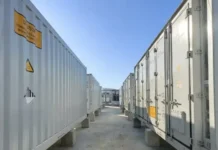
While short-duration lithium-ion batteries are excellent for smoothing out second-by-second fluctuations, grid stability over longer periods requires a different set of tools. Long-duration energy storage (LDES) technologies, such as flow batteries, compressed air energy storage, and thermal storage, are becoming essential. These systems can discharge power for eight, twelve, or even twenty-four hours, providing a critical safety net during “Dunkelflaute” events periods with little wind or sun.
By integrating renewable energy for grid stability with a diverse portfolio of storage, we create a multi-layered defense against outages. Short-term batteries handle the frequency regulation, while LDES systems handle the energy shifts between day and night. This synergy ensures that the grid remains energized even when the weather is uncooperative. The deployment of these technologies is a clear signal that the transition to renewables is being handled with the utmost regard for reliability, debunking the myth that a green grid is a fragile grid.
Microgrids and Decentralized Resilience
Another fascinating aspect of this transition is the move toward decentralization. Traditionally, a failure in a high-voltage transmission line could plunge an entire region into darkness. By integrating renewable energy for grid stability at a local level through microgrids, we are building a more “granular” and resilient architecture. A microgrid consisting of local solar, wind, and storage can “island” itself from the main grid during a disaster, keeping critical services like hospitals and water treatment plants running.
This “bottom-up” approach to stability means that the grid is no longer a single point of failure. Instead, it becomes a network of interconnected energy cells that can support each other. If one area is producing excess power, it can feed its neighbors if an area is struggling, it can be isolated to prevent a cascading blackout. This decentralized model is inherently more secure against both natural disasters and cyber-attacks. The integration of local renewables is, therefore, not just a climate strategy it is a fundamental upgrade to our national security infrastructure.
Conclusion: Redefining Reliability for a New Era
The integration of renewable energy is often framed as a trade-off between sustainability and stability. However, the reality on the ground suggests otherwise. The very process of integrating renewable energy for grid stability is forcing us to build the “Grid 2.0” a system that is more observant, more responsive, and more diverse than its predecessor. We are moving away from a rigid, mechanical system toward a fluid, digital one that treats flexibility as its greatest asset.
As we continue to refine these technologies, the stability of the grid will not be measured by the size of its turbines, but by the intelligence of its software and the diversity of its storage. The transition is undeniably complex, but the results are clear: a cleaner, more robust, and more stable energy future is within our reach. By embracing the challenges of integration, we are not just saving the planet we are building a superior way to power our civilization.