












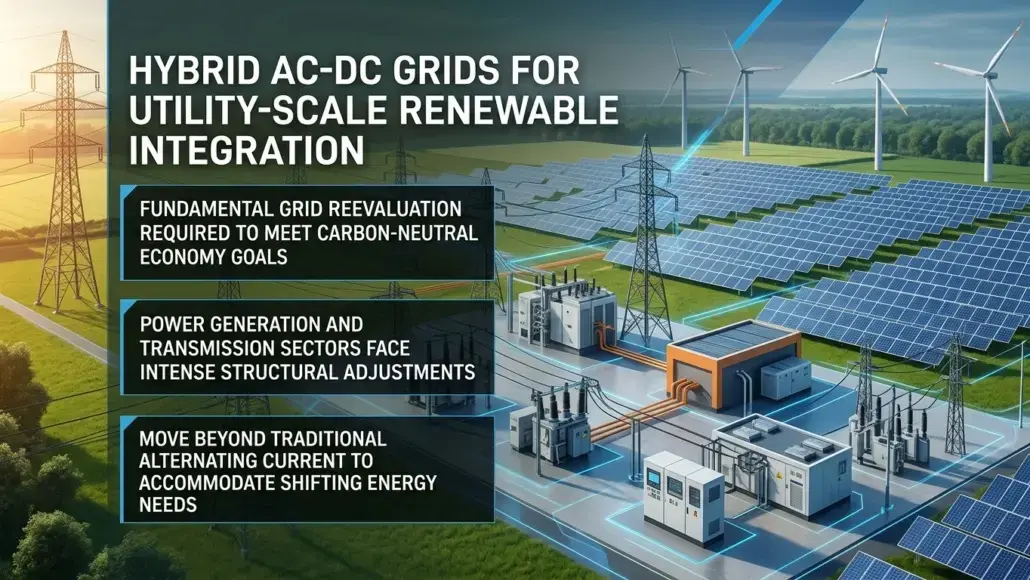

The global industrial environment is currently undergoing a period of intense structural adjustment as a variety of external pressures converge on the energy sector. For organizations operating within power generation and transmission, these shifts are not merely cyclical fluctuations but represent a fundamental change in how the grid is designed and operated. It is increasingly clear that the transition to a carbon-neutral economy requires a reevaluation of traditional alternating current transmission strategies. The implementation of hybrid AC-DC grids has emerged as a vital response to the geographic remoteness of wind and solar assets, providing the technical resilience needed to manage a more volatile energy mix.
Inflationary pressures and the rising cost of raw materials have become a dominant concern for utility executives who are attempting to maintain margins while facing the massive capital requirements of grid modernization. The price of copper, aluminum, and the specialized semiconductors used in converter stations has seen significant volatility, driven by global supply chain instability and shifting trade policies. In response, many firms are moving toward more flexible infrastructure models that can adapt to rapid changes in generation patterns. This shift requires a high degree of technical transparency and a sophisticated approach to power engineering that can account for the unique characteristics of direct current links within an alternating current framework.
The Technical Justification for Hybrid Transmission Networks
The capacity to monitor and control power flow with high precision has transitioned from a specialized research objective to a fundamental pillar of national energy security. As global populations become more reliant on decentralized generation, the speed at which the grid must respond to fluctuations in production requires an acceleration in control capabilities. Hybrid AC-DC grids represent a significant shift in this capability, providing the high-throughput transmission necessary to move energy from remote resource areas to urban load centers. This technology moves beyond the limitations of traditional alternating current lines, offering a comprehensive solution to the problem of reactive power and line losses.
Within the context of utility-scale renewables, the ability to connect a broad spectrum of assets through a single high-capacity corridor changes the economics of transmission. Utilities have historically faced a trade-off between the depth of the interconnection and the speed of the deployment. High-voltage direct current links that are fully integrated into existing alternating current networks allow for the rapid expansion of renewable capacity without the labor-intensive requirements of building entirely new rights-of-way. By reducing the physical footprint of the transmission corridor and increasing the volume of energy moved daily, hybrid AC-DC grids ensure that the decarbonization of the energy sector is achieved with maximum efficiency.
Operational Stability and Active Grid Management
The presence of direct current links provides operators with a level of control that was previously unattainable in a purely alternating current environment. Power electronics and voltage-sourced converters allow for the rapid adjustment of voltage and frequency, which is vital for maintaining stability in a grid with high renewable penetration. Hybrid AC-DC grids can provide essential ancillary services, such as frequency regulation and black-start capabilities, which are often difficult to achieve with solar and wind assets alone. This active management of the grid ensures that the transition to green energy does not come at the expense of reliability or power quality.
Furthermore, the fast-acting control systems associated with direct current technology can help to mitigate the risk of cascading failures. By isolating faults and controlling the direction of power flow, hybrid AC-DC grids prevent localized issues from spreading across the entire network. This proactive approach to risk management is essential for protecting sensitive industrial equipment and maintaining the trust of both residential and commercial customers. The stability provided by these systems is a fundamental requirement for the long-term viability of utility-scale renewable energy projects, ensuring that they can be integrated into the national grid without compromising operational safety or grid integrity.
Economic Efficiency and Strategic Investment Standards
The financial case for these systems is becoming increasingly clear as the cost of power electronics continues to decrease. While the initial capital expenditure for a converter station is high, the savings in terms of reduced line losses and improved grid utilization provide a compelling return on investment. Additionally, the ability to avoid the construction of expensive new alternating current corridors by optimizing existing paths through direct current links can lead to significant cost avoidances. For utility leaders, the selection of hybrid technology is a strategic decision that balances the immediate needs of the grid with the long-term goals of the energy transition.
The transition to a hybrid model also requires a thoughtful approach to workforce training and technical standards. Staff at all levels must be trained on how to use new systems and understand the unique characteristics of direct current faults. Resistance to change is common, particularly if staff feel that their roles are being fundamentally altered by the introduction of complex power electronics. Leadership must communicate clearly that hybrid AC-DC grids are implemented to support the resilience of the entire network. By involving engineering and maintenance teams in the design of hybrid workflows, utilities ensure the technology meets the actual operational needs of the facility.
Future Grid Evolution and Global Decarbonization Goals
The continued evolution of the power grid will likely involve the expansion of these hybrid networks into even more complex and interconnected systems. We are already seeing the emergence of multi-terminal direct current grids that can link multiple wind farms and solar arrays into a single high-capacity network. Hybrid AC-DC grids are the foundation of this future, providing the flexibility and the scale needed to handle the total decarbonization of the energy sector. The ongoing innovation in material science and power electronics is set to further enhance the performance and the accessibility of these systems for utilities around the world.
As the industry moves forward, the focus will remain on the integration of smarter and more responsive control systems that can manage the complexities of a hybrid environment. The ability to coordinate the actions of thousands of disparate assets will remain a key challenge for grid operators. The ongoing commitment to hybrid AC-DC grids will continue to provide the technical and the operational foundation for a more efficient, resilient, and sustainable power sector for decades to come. The global implementation of these systems is a defining characteristic of the 21st-century energy sector, marking a fundamental shift in how we generate and transport the power that fuels our modern world.
In the final analysis, the integration of direct current technology into the existing alternating current grid is not a temporary trend but a fundamental reorganization of how we monitor and protect energy infrastructure. The resulting improvements in efficiency and stability will define the next generation of power generation. By prioritizing the integration of advanced power electronics, utility systems can ensure they remain prepared for whatever environmental and economic challenges the future may hold.