

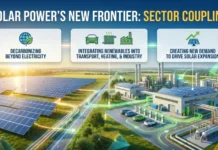





















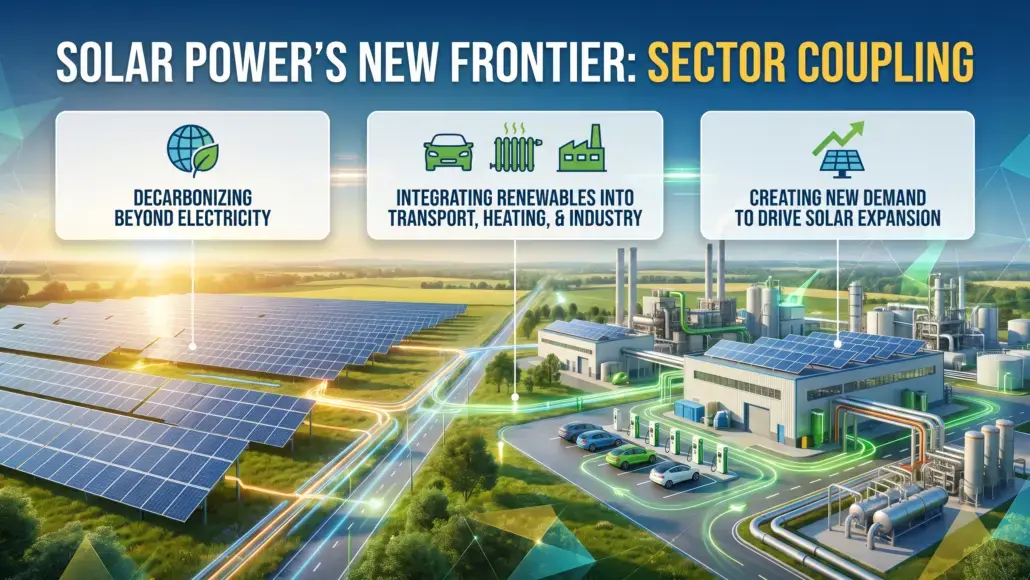

The transition to a sustainable energy system requires more than just the decarbonization of the electricity sector. To achieve meaningful carbon reductions across the economy, it is essential to integrate renewable energy into other high-emitting sectors such as transport, heating, and industrial processes. This process, known as sector coupling, is emerging as a powerful driver for the expansion of solar power. By creating new demand for clean electricity outside of traditional power markets, sector coupling provides vast new solar power integration opportunities. This holistic approach not only accelerates the decarbonization of the entire energy system but also enhances the economic viability of large-scale solar projects by providing new and diverse off-take options.
Sector coupling relies on the electrification of end-use applications that were previously powered by fossil fuels. For example, the shift to electric vehicles (EVs) and the adoption of heat pumps in residential and commercial buildings represent massive increases in electricity demand. When this demand is synchronized with the production of solar energy, it allows for a much higher level of renewable penetration without overwhelming the grid. The coordination of these multi-sector energy flows is a complex task, but the potential for efficiency gains and carbon savings is immense. For developers, this means that flexibility markets creating new revenue streams for solar assets are now encompassing a broader range of industrial and commercial activities.
Driving Synergies Between Solar Generation and Electrified Transport
The electrification of the transport sector is perhaps the most visible and rapid example of sector coupling in action. As millions of EVs hit the road, the demand for charging infrastructure is growing exponentially. By integrating EV charging with solar generation, operators can create a highly efficient system that uses clean energy to power zero-emission transport. This integration is particularly effective at the commercial and industrial level, where large solar arrays can be used to charge fleets of delivery vans, buses, or employee vehicles during the day. This direct use of solar power reduces the need for costly grid upgrades and ensures that the transport sector is powered by truly sustainable energy.
Smart charging technologies allow for the dynamic adjustment of charging rates based on the availability of solar energy. When the sun is shining, charging speeds can be increased to absorb the peak production; when clouds pass or the sun sets, the rate can be reduced to prevent grid stress. This flexibility is a key component of successful solar power integration in the transport sector. The development of vehicle-to-grid (V2G) technology allows EVs to act as mobile batteries, storing excess solar energy and feeding it back into the grid when needed. This transforms the growing fleet of EVs into a valuable resource for grid stability and renewable energy management.
The strategic placement of solar assets near major transport hubs, such as airports, seaports, and logistics centers, creates additional opportunities for sector coupling. These hubs have massive energy requirements for both their operations and the vehicles they serve. By providing on-site solar generation, developers can offer a reliable and cost-effective source of clean energy that reduces the carbon footprint of the entire transport hub. This localized integration of energy and transport is a primary driver for the growth of “smart cities” and integrated energy hubs. The resulting increase in energy self-sufficiency is a major benefit for both the hub operator and the broader community.
Heat Pump Integration and the Decarbonization of Industrial Processes
The heating sector is another major source of carbon emissions that can be decarbonized through electrification and sector coupling. Heat pumps, which use electricity to move heat from the air, ground, or water, are significantly more efficient than traditional gas or oil boilers. When paired with solar generation, heat pumps can provide carbon-neutral heating and cooling for a wide range of applications. In the residential sector, the combination of rooftop solar and heat pumps is becoming a standard feature of low-carbon homes. At the utility scale, large heat pumps can be integrated with district heating networks to provide clean thermal energy to entire neighborhoods or industrial parks.
Decarbonizing industrial processes is a more significant challenge, as many industries require high-temperature heat that is difficult to provide through electricity alone. However, many low-to-medium temperature processes, such as those in the food and beverage or textile industries, are well-suited for heat pump integration. By using solar energy to power these systems, industrial users can significantly reduce their reliance on fossil fuels and lower their operating costs. The integration of thermal storage further enhances this synergy, allowing for the storage of excess solar energy as heat for use during periods of low irradiation. This thermal storage is often cheaper and more durable than electrical storage, providing a cost-effective path for solar power integration in the industrial sector.
The role of “green heat” in corporate sustainability goals is driving increased investment in solar-plus-heat projects. Large industrial companies are looking for ways to reduce their Scope 1 and Scope 2 emissions, and the electrification of heat is a primary strategy for achieving this. By partnering with solar developers, these companies can secure a long-term supply of clean energy that addresses their specific thermal needs. The complexity of integrating these systems requires a high level of technical expertise, but the long-term environmental and financial benefits are clear. As carbon taxes and environmental regulations become more stringent, the pressure to adopt these integrated solutions will only increase.
Green Hydrogen Production as a Scalable Flexibility Solution
Green hydrogen, produced through the electrolysis of water using renewable electricity, is the “missing link” in the energy transition. It provides a way to decarbonize sectors that are difficult to electrify directly, such as heavy industry, shipping, and aviation. It also offers a scalable solution for long-duration energy storage, allowing for the seasonal shifting of renewable energy. For the solar industry, green hydrogen represents a massive new source of demand that can absorb vast amounts of solar power integration during periods of peak production. This helps to prevent curtailment and ensures that every kilowatt-hour of solar energy is put to productive use.
The co-location of solar plants with electrolyzers allows for the direct production of hydrogen without the need for extensive grid transport. This reduces the cost of the hydrogen and improves the overall efficiency of the system. The resulting green hydrogen can be used on-site for industrial processes, injected into the gas grid, or transported to other end-users. This flexibility in off-take is a significant advantage for large-scale solar projects, as it reduces their reliance on traditional power markets and provides a valuable hedge against price volatility. The growth of the “hydrogen economy” is therefore inextricably linked to the continued expansion of the solar sector.
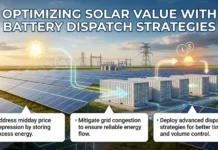
Managing the intermittency of solar generation is a key challenge for green hydrogen production. Electrolyzers are most efficient when operated at a steady rate, but solar production varies throughout the day. To address this, developers are using a combination of battery storage and hydrogen storage to smooth out the energy flow. This integrated approach allows for the continuous production of hydrogen while maximizing the use of clean solar energy. The data gathered from these projects is helping to optimize the design and operation of future solar-plus-hydrogen facilities, leading to lower costs and higher efficiencies. As the cost of electrolyzers continues to fall, the economic case for these integrated projects will become even stronger.
Managing Grid Impacts of Multi-Sector Energy Flows
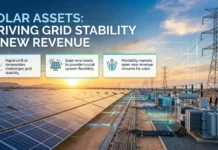
The integration of multiple energy-intensive sectors with the power grid introduces significant operational challenges. The massive increase in electricity demand from EVs, heat pumps, and electrolyzers can strain existing grid infrastructure and lead to congestion. To manage these impacts, it is essential to implement sophisticated grid management and demand-response strategies. This involves the use of real-time monitoring, automated dispatch, and market-based incentives to coordinate the energy flows across different sectors. The goal is to ensure that the increased demand is met by renewable generation without compromising the stability or reliability of the grid.
Smart grid technologies are essential for enabling this level of coordination. By providing real-time visibility into both generation and demand, these systems allow grid operators to identify and address potential issues before they lead to outages. Digital twins and advanced modeling tools can be used to simulate the impact of different sector coupling scenarios, allowing for more effective planning and investment in grid upgrades. The collaboration between grid operators, energy producers, and industrial users is therefore a key requirement for successful solar power integration on a large scale. This integrated approach to grid management is a hallmark of the modern energy transition.
Regulatory frameworks must also evolve to support sector coupling. Traditional energy regulations are often siloed, with separate rules for electricity, gas, and transport. To enable the full benefits of sector coupling, it is necessary to create more integrated and flexible regulatory environments. This includes the introduction of dynamic pricing, the removal of barriers to cross-sector energy trading, and the creation of incentives for the adoption of integrated energy solutions. By providing a clear and supportive regulatory path, governments can accelerate the adoption of these technologies and ensure that the benefits of sector coupling are realized by all stakeholders.
Strategic Long-Term Benefits of Cross-Sector Energy Optimization
The strategic long-term benefits of sector coupling and cross-sector energy optimization are profound. By creating a more integrated and flexible energy system, we can achieve much higher levels of renewable penetration and deeper carbon reductions across the entire economy. This not only addresses the urgent challenge of climate change but also improves energy security and lowers costs for consumers. The expansion of solar power integration through sector coupling is a central pillar of this vision, providing the clean energy necessary to power a modern and sustainable society. The continued innovation in technology and policy will be the driving force behind this transformation.
For investors and developers, the shift toward integrated energy solutions offers a wealth of new opportunities. Projects that combine solar with transport, heat, or hydrogen production are more resilient, more diverse, and more valuable than traditional standalone installations. The ability to provide integrated energy services is becoming a key differentiator in a competitive market, attracting a broad range of capital from infrastructure funds to corporate partners. By embracing these opportunities, the solar sector can ensure its long-term growth and relevance in a rapidly changing energy market. The lessons learned from early sector coupling projects will be invaluable for shaping the strategies of the future.
The transition to a coupled energy system is a multi-decade journey that requires a high level of collaboration and ingenuity. Every project that successfully integrates solar energy with another sector is a step forward in this journey. As we look ahead, the continued development of these integrated solutions will be essential for meeting global climate goals and creating a more prosperous and sustainable future. The commitment to excellence in solar power integration is a testament to the industry’s ability to adapt and lead in the face of complex challenges. Through this ongoing process of innovation and optimization, the solar sector will continue to redefine the boundaries of what is possible in energy production and use. Provision of these strategic insights is intended to guide the industry toward a more efficient and effective model of development. Success will depend on the ability to anticipate market shifts and to adapt technical and financial strategies accordingly. By focusing on these core areas, stakeholders can ensure that their investments are protected and that the transition to clean energy continues at an accelerated pace. The collective impact of these efforts will be a more resilient energy system for everyone.