




















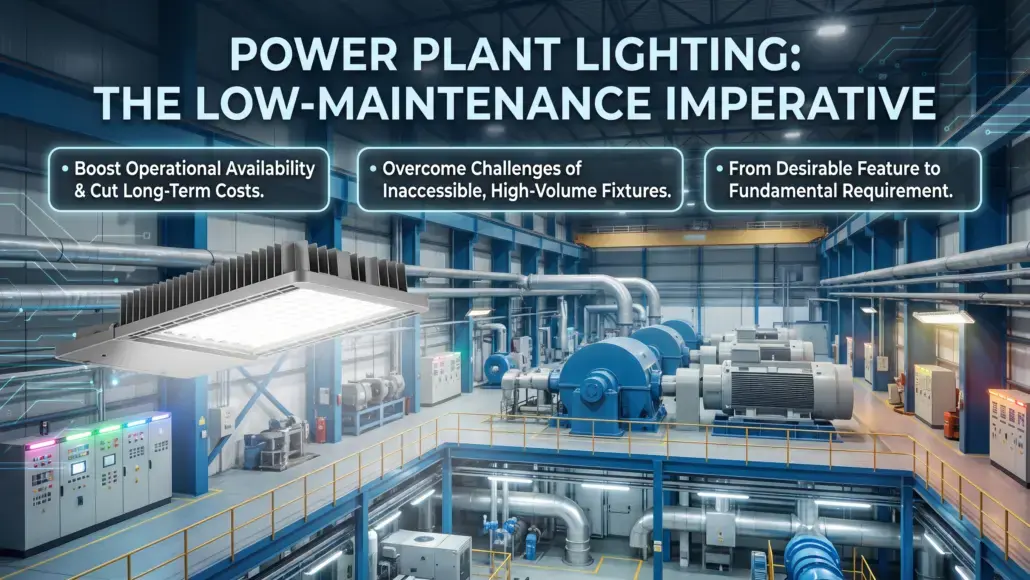

The complexity of modern power generation facilities places a high premium on the serviceability of all auxiliary systems, with illumination being a primary concern for facility managers. Low maintenance lighting systems have transitioned from being a desirable feature to a fundamental requirement for maintaining high operational availability and reducing long-term costs. In a large-scale power plant, the sheer number of lighting fixtures and their often-inaccessible locations make traditional maintenance models both expensive and risky. By deploying lighting technologies that are specifically designed for extended service intervals and ease of repair, facility operators can focus their limited resources on core production assets. The shift toward low maintenance lighting is driven by the maturation of solid-state technology and the integration of intelligent diagnostic features that provide real-time visibility into the health of the lighting infrastructure. This evolution in technical infrastructure represents a broader commitment to operational efficiency within the energy sector.
Reducing the frequency of maintenance interventions is not only a matter of cost but also of safety. Every time a technician must use a lift or climb a ladder to replace a failed light source, the risk of a workplace accident increases. In high-voltage areas or zones with high ambient temperatures, these risks are even more pronounced. Low maintenance lighting systems address this by utilizing high-reliability components that are rated for 100,000 hours of operation or more. This longevity is achieved through superior thermal management, the use of industrial-grade electronic components, and the elimination of traditional failure points such as mechanical starters and filaments. By significantly extending the time between service events, power plants can improve their overall safety profile while simultaneously reducing the administrative burden associated with managing a large inventory of spare parts and scheduling frequent repairs. The increased reliability of these fixtures ensures that critical inspection points remain visible at all times, supporting a more proactive approach to plant safety.
Enhancing Component Reliability through Advanced Thermal Engineering
The primary enemy of longevity in industrial lighting is heat, particularly in the confined spaces and high-ambient environments common in power generation. Low maintenance lighting systems prioritize thermal management as a core design principle, utilizing advanced materials and geometries to dissipate heat away from sensitive electronic components. The use of large-surface-area heat sinks, often integrated into the fixture housing itself, ensures that LED junctions remain well below their maximum rated temperatures even under continuous operation. This thermal efficiency is critical for preventing the rapid lumen depreciation and color shifting that can occur when electronic components are subjected to chronic overheating. By maintaining a stable operating temperature, these systems ensure that the light output remains consistent over the entire life of the fixture, reducing the need for premature replacements. The ability to operate reliably in elevated temperatures is a key differentiator for industrial-grade hardware.
In addition to passive cooling, low maintenance lighting often incorporates active thermal protection circuits that dim the light source if internal temperatures exceed safe limits. This fail-safe mechanism prevents catastrophic component failure during extreme weather events or when ventilation systems are offline. The use of thermal interface materials with high conductivity improves the transfer of heat from the LED array to the heat sink, ensuring that every watt of energy is managed as efficiently as possible. This focus on thermal engineering is what allows low maintenance lighting to thrive in areas where traditional fixtures would fail within months. The result is a more predictable and stable lighting environment that supports the high standards of accuracy required for technical maintenance and operational monitoring within the plant. the reduction in thermal stress leads to a significant decrease in the failure rate of electronic drivers, which are often the weakest link in modern lighting systems.
Simplifying Field Repairs with Modular Design and Tool-Less Access
While the goal of low maintenance lighting is to eliminate the need for repairs, the reality of industrial operations means that occasional interventions may still be necessary. To address this, modern systems utilize modular designs that simplify the replacement of individual components in the field. Instead of having to replace an entire fixture, a technician can quickly swap out a failed driver or LED board using standardized connectors and tool-less access mechanisms. This modularity reduces the time required for a repair from hours to minutes, significantly decreasing the labor costs associated with lighting maintenance. It also allows for the easy upgrade of fixtures as newer, more efficient technologies become available, protecting the facility’s investment against technological obsolescence. The ability to perform rapid repairs without specialized equipment is a major advantage for facilities with lean maintenance teams.
The use of standardized components across the entire lighting estate simplifies the maintenance process. By reducing the number of different parts that must be kept in stock, power plants can streamline their supply chains and reduce the risk of critical parts being unavailable when they are needed. Low maintenance lighting systems often utilize universal voltage drivers and modular mounting brackets that can be used in multiple locations throughout the plant. This flexibility is a major advantage during large-scale upgrades or when responding to emergency repairs. The inclusion of captive hardware and clear labeling on internal components reduces the possibility of errors during field service, ensuring that repairs are performed correctly the first time. This focus on ease of service is a hallmark of industrial-grade design, recognizing that the efficiency of the maintenance team is just as important as the reliability of the hardware itself. The reduction in downtime for lighting systems ensures that the facility remains safe and operational at all times.
Leveraging Remote Diagnostics and Predictive Maintenance Strategies
The integration of digital communication protocols has transformed the way power plants manage their lighting infrastructure. Low maintenance lighting systems often include integrated sensors and controllers that provide real-time data on the status of every fixture. This visibility allows maintenance teams to transition from a reactive model, where they wait for a failure to be reported, to a proactive model where they can identify potential issues before they impact facility operations. Automated alerts for component failure, high temperatures, or communication errors enable the rapid deployment of resources to the exact location of the problem. This targeted approach to maintenance reduces the time spent on routine inspections and allows for more efficient use of labor. The use of centralized dashboards provides facility managers with a comprehensive overview of the entire lighting network, simplifying the task of managing thousands of individual fixtures.
The data generated by these systems can be used to implement predictive maintenance strategies. By tracking the total operating hours and thermal history of each fixture, facility managers can estimate the remaining useful life of key components and schedule replacements during planned outages. This prevents the disruption caused by unplanned failures and ensures that the lighting system is always performing at its optimal level. The ability to monitor energy consumption at the fixture level also provides valuable insights into the facility’s overall utility costs and helps to identify opportunities for further savings. Low maintenance lighting thus becomes an active participant in the facility’s overall energy management strategy, providing a wealth of data that supports informed decision-making at the executive level. The transparency provided by these digital tools is essential for maintaining high standards of accountability and operational excellence within the plant’s facility management team.
Impact-Resistant Engineering for Harsh Industrial Environments
Power generation facilities are physically demanding environments where lighting fixtures are often subjected to mechanical impact, vibration, and airborne debris. Low maintenance lighting systems are engineered with high-impact housings and lenses that can withstand these stresses without losing their functionality. The use of tempered glass or high-strength polycarbonate ensures that lenses remain clear and intact even in areas where physical contact with tools or equipment is common. The structural integrity of the housing is further reinforced through the use of high-strength alloys and protective coatings that resist scratching and deformation. By ensuring that the fixtures remain physically sound, these systems prevent the ingress of dust and moisture that could lead to internal component failure. The durability of these materials is a critical factor in achieving the target service life of the fixture.
Vibration resistance is another critical feature, particularly for fixtures mounted on or near large rotating machinery. Low maintenance lighting utilizes vibration-damping mounts and locking electrical connections that prevent components from loosening over time. This mechanical stability is essential for maintaining electrical continuity and preventing the flickering or total failure that often plagues generic industrial lighting in high-vibration zones. The use of safety tethers and redundant mounting points provides an additional layer of protection, ensuring that the fixtures remain securely attached to the structure even in the event of a catastrophic mechanical failure. This holistic approach to physical durability ensures that low maintenance lighting remains a reliable and permanent part of the power plant infrastructure, providing a stable foundation for the facility’s ongoing operational success. The adoption of these systems is a strategic move that pays dividends in terms of safety, efficiency, and long-term cost reduction. The continued evolution of these systems will provide even greater benefits as power generation facilities move toward higher levels of automation and digital integration, ensuring that lighting remains a reliable utility for decades to come.