

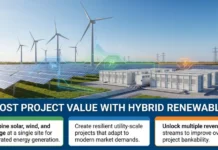

















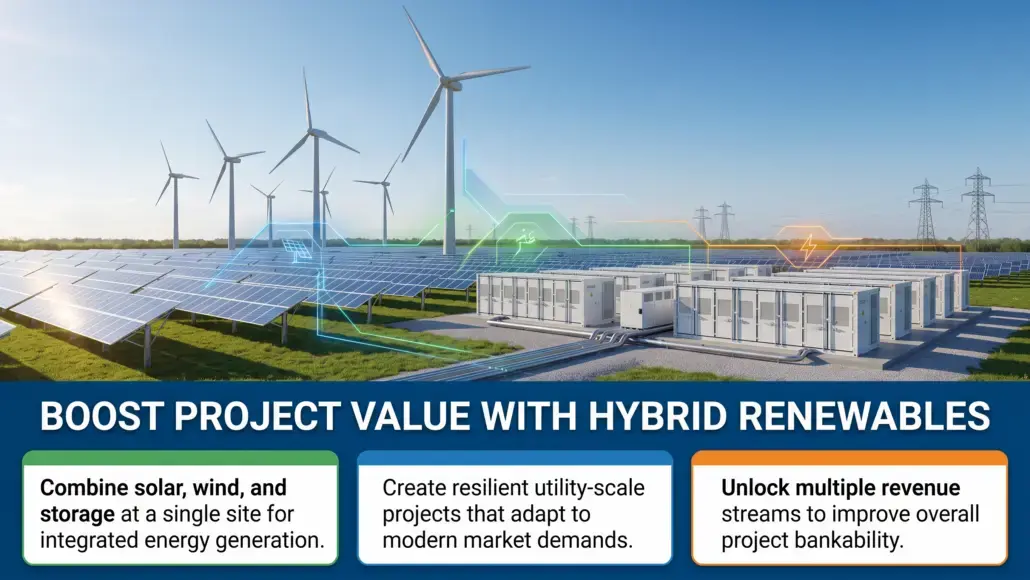

The maturity of the renewable energy sector has led to a fundamental shift in the way utility-scale projects are conceived and financed. While early projects often relied on a single technology and a single source of revenue, the modern market demands a more integrated and resilient approach. Hybrid renewable projects, which combine multiple technologies such as solar, wind, and storage at a single site, are emerging as the preferred model for large-scale development. The primary driver for this shift is the need for revenue diversification, which is essential for improving hybrid project bankability in an increasingly volatile and competitive market. By creating multiple paths to profitability, developers can reduce the risk profile of their projects and attract a broader range of low-cost capital.
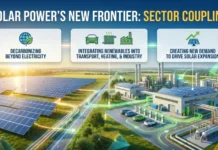
Bankability is a measure of a project’s attractiveness to lenders and investors, reflecting its ability to generate stable and predictable cash flows over the long term. In a merchant-heavy environment where energy prices can vary significantly throughout the day, standalone renewable projects face substantial revenue uncertainty. Hybridization addresses this by smoothing out the generation profile and allowing for participation in multiple market segments. For example, a solar-plus-storage project can earn revenue from energy sales, capacity payments, and grid services, providing a more balanced income stream that is less dependent on any single market signal. This multi-layered approach to revenue generation is a key factor in securing the favorable financing terms necessary for large-scale deployment. By considering sector coupling expanding solar power integration opportunities, developers can identify even more ways to diversify their income and enhance the value of their assets.
Diversifying Income Streams Through Multi-Technology Hybridization
The core of revenue diversification in hybrid projects is the integration of complementary generation and storage technologies. Solar and wind power often have different diurnal and seasonal production patterns, meaning that a hybrid site can maintain a more consistent output throughout the year. For instance, solar production peaks during the day and in the summer, while wind production is often higher at night and in the winter. By combining these technologies, developers can maximize the utilization of their grid connection and reduce the risk of low production periods. This consistent generation profile is highly valued by off-takers and grid operators, as it provides a more reliable source of clean energy.
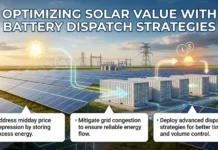
The inclusion of energy storage is perhaps the most significant factor in diversifying the income streams of a hybrid project. A battery system allows the operator to shift energy production away from low-price periods and toward periods of higher demand. It also enables the provision of high-value grid services such as frequency regulation and voltage support. The ability to participate in these different markets simultaneously ensures that the asset is generating value even when energy prices are depressed. This flexibility is a primary driver for improving hybrid project bankability, as it provides multiple layers of protection against market volatility.
Beyond generation and storage, hybrid sites can also incorporate other revenue-generating activities such as demand response or local energy supply. By partnering with nearby industrial or commercial users, developers can create integrated energy solutions that provide additional income through shared savings or performance-based contracts. This localized approach to energy management further reduces the reliance on wholesale power markets and enhances the overall economic resilience of the project. The complexity of these arrangements requires a high level of technical and financial expertise, but the potential for value creation is significant.
Impact of Risk Mitigation on Debt Financing and Capital Costs
Risk mitigation is a fundamental requirement for securing low-cost debt financing for large-scale renewable projects. Lenders are primarily concerned with the project’s ability to meet its debt obligations, and anything that reduces the volatility of its cash flows is seen as a positive. Revenue diversification through hybridization is one of the most effective ways to achieve this, as it reduces the project’s exposure to technical, market, and regulatory risks. By spreading the risk across multiple technologies and revenue streams, developers can provide lenders with the confidence they need to offer higher leverage and lower interest rates.
The reduction in the cost of capital has a direct impact on the internal rate of return (IRR) for project investors. Lower interest payments mean that more of the project’s cash flow is available for distribution to equity partners, making the project more attractive to a wider range of capital providers. This, in turn, supports the continued expansion of the hybrid market by making it easier to secure the necessary funding for new developments. The ability to demonstrate a sophisticated approach to risk management is a key differentiator in the competition for investment, and hybridization is a primary tool for achieving this.
The role of insurance and credit enhancement products is also expanding in the hybrid sector. These products provide an additional layer of protection against specific risks such as equipment failure or underperformance. By combining these financial instruments with the inherent diversification of a hybrid site, developers can create a highly resilient investment profile that meets the stringent requirements of institutional investors. This maturity in the financial structuring of hybrid projects is a clear indicator of the sector’s growth and its potential for long-term sustainability. The continued innovation in both technology and finance will be the driving force behind the next wave of renewable energy development.
Optimizing Cash Flow Stability via Energy Storage and Ancillary Services
Cash flow stability is the cornerstone of project finance, and the integration of energy storage is a powerful tool for achieving it. By allowing the operator to time their energy sales, storage systems act as a hedge against the price cannibalization that often occurs in markets with high renewable penetration. This ensures that the project earns a more consistent revenue per megawatt-hour produced, which is essential for meeting the requirements of debt service coverage ratios. The predictability of these cash flows is a primary factor in improving hybrid project bankability and attracting long-term institutional capital.
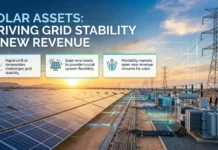
Ancillary services represent another high-value revenue stream that can enhance the stability of a hybrid project’s cash flow. These services, which include frequency response and reserve capacity, are often contracted through long-term agreements with grid operators, providing a fixed income that is decoupled from wholesale energy prices. The technical capability of batteries to provide these services with high precision makes them an ideal partner for solar and wind generation. By dedicating a portion of the storage capacity to these tasks, operators can secure a baseline revenue that protects the project from market downturns.
The management of these multiple revenue streams requires sophisticated software and control platforms. These systems must be able to analyze market data in real time and execute dispatch commands that maximize total returns while staying within the technical limits of the assets. The investment in these digital tools is a key part of the project’s development, as it directly impacts its long-term financial performance. As the energy market becomes more complex and data-driven, the ability to effectively manage these integrated systems will become an even more critical component of successful hybrid project development.
Evaluating Long-Term Investor Confidence in Hybrid Asset Portfolios
Investor confidence is a major driver of capital flows into the renewable energy sector, and hybrid projects are increasingly seen as a safe and attractive investment. The combination of established technologies like solar and wind with the growing maturity of storage systems provides a balanced risk-return profile that appeals to infrastructure funds, pension funds, and other institutional investors. The ability of these projects to provide stable and growing returns in a low-carbon world is a primary factor in their growing popularity. The continued success of early hybrid developments is helping to build a track record that will support the long-term growth of the sector.
Portfolio diversification is another key strategy for maintaining investor confidence. By developing a fleet of hybrid assets across different geographic regions and market segments, investors can hedge against localized risks and ensure a more stable overall performance. The lessons learned from the operation of one asset can be applied to improve the design and management of others, leading to continuous improvements in efficiency and profitability. This portfolio approach is particularly effective for managing the macro-level risks associated with energy policy changes or global economic shifts.
The transparency and reliability of performance data are also essential for maintaining investor trust. Developers must provide clear and accurate reporting on the technical and financial performance of their assets, showing how they are meeting their targets and managing risks. The use of independent engineering reviews and third-party audits provides an additional layer of assurance for investors. By fostering a culture of transparency and accountability, the hybrid sector can ensure its continued access to the large-scale capital necessary for the global energy transition. The long-term winners in this market will be those who can demonstrate a commitment to both operational excellence and investor relations.
The Role of Regulatory Stability in Supporting Hybrid Project Development
Regulatory stability is a prerequisite for the long-term success of any infrastructure project, and the hybrid sector is no exception. Governments and regulators play a critical role in creating a supportive environment for hybrid development by providing clear and consistent policies on grid connection, market participation, and subsidies. The transition to a more flexible and decentralized energy system requires a high level of coordination between different regulatory bodies to ensure that the rules are aligned across the electricity, heat, and transport sectors.
The introduction of specific incentives for hybrid projects, such as tax credits or streamlined permitting processes, can significantly accelerate their adoption. These policies help to offset the higher initial capital costs of hybridization and improve the overall economics of the projects. In addition, the development of standardized grid codes and interconnection agreements makes it easier for developers to integrate multiple technologies at a single site. By providing a clear and predictable path for project development, regulators can reduce the risks and costs associated with hybridization and support the growth of a more resilient energy system.
As the energy market continues to evolve, the regulatory framework must adapt to keep pace with technological and market changes. This includes the introduction of new market products for flexibility and grid services, as well as the removal of barriers to cross-sector energy trading. The collaboration between the industry and regulators is essential for creating a stable and forward-looking environment that supports innovation and investment. By working together, we can ensure that the full potential of hybrid renewable projects is realized, delivering clean, reliable, and affordable energy for everyone. This ongoing process of policy refinement is a fundamental requirement for improving hybrid project bankability and sustaining the momentum of the renewable energy transition. The collective impact of these efforts will be a more resilient energy system that meets the challenges of the twenty-first century. Success will depend on the ability of all stakeholders to work together toward a common goal of a sustainable and profitable energy future. Through this collaborative approach, the full potential of every hybrid site can be realized, delivering maximum value to investors, consumers, and the environment alike. This commitment to value creation is what will drive the next wave of energy infrastructure development across the world.