

















Engie plans to invest approximately €3 billion in India and increase its renewable energy portfolio from around 2 GW to 7 GW by 2030. The French energy company aims to add about 1 GW of capacity annually, with its strategy combining renewable power projects, battery energy storage systems and potential opportunities associated with data centres. The expansion will depend partly on the availability of land and grid connectivity, which the company has identified as constraints to project development.
Engie CEO Catherine MacGregor said the company wants India to become one of its leading markets, moving beyond its current position as a medium-sized market within the group. The proposed investment is still being structured and could involve a combination of debt and equity. Engie has also applied to establish a treasury operation at GIFT City in Gujarat to facilitate project financing.
Grid Connectivity Emerges as a Key Constraint
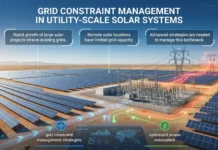
Grid connectivity remains a challenge for Engie as it pursues its expansion plans. MacGregor said some of the company’s projects are ready but awaiting connections to the electricity network. The issue reflects the infrastructure requirements associated with renewable energy development, as projects distributed across multiple locations require additional grid connections and coordinated transmission planning.
A project can be ready to generate electricity but remain unable to operate at its intended capacity if the necessary network connection is unavailable. Such delays can affect revenue generation and complicate construction schedules. They also demonstrate that installed generation capacity does not automatically translate into electricity that can be delivered when and where it is needed.
Engie has also identified land access as a constraint. Securing suitable sites, obtaining grid connections and coordinating construction with transmission availability will be important to maintaining its planned pace of annual additions. The company has not disclosed the number of projects awaiting connectivity or the total capacity affected.
Battery Storage Supports Renewable Integration
Battery energy storage systems form another part of Engie’s India strategy. According to MacGregor, batteries can help distribute electricity supply across different periods of the day, reducing pressure during concentrated solar-generation hours and potentially easing some grid bottlenecks.
Solar generation is concentrated in particular hours, requiring the network to accommodate substantial electricity volumes at the same time. Storage can shift some of this supply to later periods, offering greater flexibility in matching generation with demand. This allows renewable projects to be paired with systems that influence when electricity is delivered to the grid.
MacGregor described congestion during solar-generation hours as a challenge, although she said its impact on Engie was not particularly significant at present. She also pointed to the government’s push towards battery energy storage systems as an opportunity for the company.
Engie has not specified its planned battery capacity, storage locations, selected technologies or commercial arrangements for selling stored electricity. These details will help determine the contribution of storage to its 7 GW target and its effectiveness in addressing grid constraints.
Execution Capabilities and Financing Strategy
To support its planned growth, Engie is strengthening its in-house capabilities across engineering, construction, operations and maintenance. The company intends to manage projects throughout their lifecycle, using experience gained during construction and operation to inform future engineering and development decisions.
This approach is intended to improve execution and protect project returns in a competitive market. However, Engie has not confirmed whether its operating model will reduce costs or shorten delivery schedules. Its ability to meet the annual capacity target will depend on how effectively it coordinates development, construction, financing and operations.
The company is also open to inorganic growth opportunities, including acquisitions, alongside projects developed internally. Its proposed treasury operation at GIFT City is expected to facilitate project financing, although the final funding structure remains under consideration.
India Gains Strategic Importance in Engie’s Portfolio
India currently represents approximately 2 GW of Engie’s portfolio, including projects under construction and those already operating. The company aims to increase this figure to 7 GW by 2030, with annual additions averaging around 1 GW. MacGregor said this level of annual development would be significant compared with the company’s additions globally.
Engie operates across several major markets, including France, the United Kingdom, Belgium and Brazil. Its planned growth in India is intended to elevate the country from a medium-sized market to one of greater strategic importance within the group. The Engie India Expansion strategy also reflects the company’s interest in developing renewable generation alongside storage and emerging sources of electricity demand.
Data centres represent a potential opportunity, although Engie has not disclosed specific projects, power agreements or associated capacity requirements. The combination of renewable energy and storage could be relevant to electricity-intensive consumers seeking dependable supplies, but the company has not outlined a specific commercial model linking these activities.
Delivery Will Depend on Infrastructure and Project Execution
Engie’s plan sets out a target of approximately €3 billion in investment, an increase in its Indian portfolio from 2 GW to 7 GW by 2030, and annual capacity additions of around 1 GW. The company has identified grid connectivity, land access and congestion during solar-generation hours among the challenges that could affect delivery.
Its proposed response includes battery storage, stronger internal execution capabilities, potential acquisitions and a treasury operation at GIFT City. However, details of the final financing structure, storage capacity, project pipeline and implementation milestones remain undisclosed.
The broader challenge is whether electricity infrastructure can develop alongside renewable generation and emerging power demand. For Engie, meeting its target will require more than announcing new capacity. Projects must secure land, obtain network connections, complete construction and become operational.
The Engie India Expansion plan therefore remains a stated ambition rather than a completed investment programme. Progress towards 7 GW by 2030 will depend on finalising financing arrangements and overcoming the infrastructure constraints the company has identified.