



































In the high-stakes, high-voltage world of electrical transmission and distribution, the most critical safety system isn’t the grounding chain or the fire-resistant clothing it’s the culture of the crew. For decades, the industry focused on technical competence and physical protections, often overlooking the social and psychological factors that influence how safety protocols are followed. However, the concept of psychological safety utility field crews has emerged as a transformative force in occupational health. Psychological safety is the belief that one can speak up with ideas, questions, concerns, or mistakes without fear of being humiliated or punished. In an environment where a single overlooked hazard can be fatal, the ability for a junior apprentice to stop a senior foreman is not just a cultural preference; it is a life-saving necessity.
Building this environment requires a deliberate shift away from the traditional “tough-it-out” and hierarchical cultures that have long dominated the utility sector. It involves creating a space where vulnerability is seen as a strength and where the reporting of a “near-miss” is celebrated as a learning opportunity rather than a sign of incompetence. When a team possesses a high degree of psychological safety utility field crews, they become a more cohesive, vigilant, and resilient unit. This social infrastructure provides a powerful layer of protection that complements the technical safety systems, ensuring that hazards are identified and neutralized through the collective voice of the workforce.
The Link Between Trust and Operational Risk Reduction
The primary driver of psychological safety is trust trust between teammates and trust between the workforce and leadership. In the utility industry, operational risk is often managed through rigid procedures and oversight. However, no procedure can account for every site-specific variable. This is where psychological safety utility field crews become essential. If a worker feels that their concerns will be dismissed or that they will be seen as a “troublemaker” for pointing out a risk, they may choose to remain silent. That silence is the breeding ground for accidents.
When workers feel psychologically safe, they are more likely to engage in “voice behaviors” speaking up about potential hazards, admitting when they don’t understand an instruction, or suggesting a safer way to perform a task. This transparency allows the entire crew to benefit from individual observations. Furthermore, psychological safety reduces the cognitive burden on workers. A worker who is constantly worried about how they are being perceived or who is afraid of making a mistake is not fully focused on the hazards of the energized environment. By removing the fear of social repercussion, we allow the workforce to dedicate their full mental capacity to the safe execution of the work.
Leadership’s Role in Modeling Vulnerability and Openness
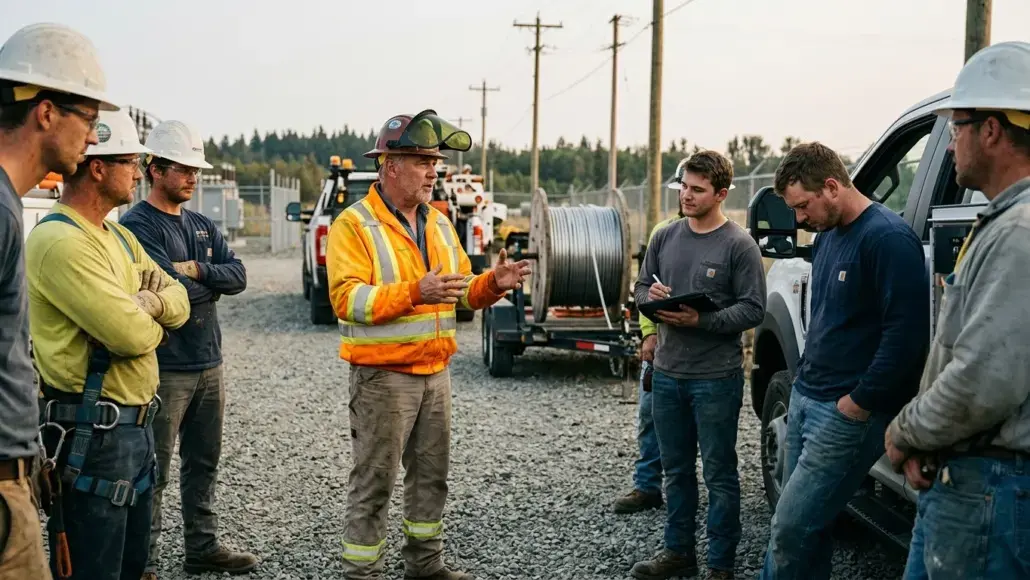
The foundation of psychological safety utility field crews is laid by leadership, starting from the executive suite and extending down to the crew lead in the field. Leaders must move away from the “command and control” style and toward a model of “inclusive leadership.” This involves actively soliciting input from all team members, regardless of their rank or experience. A simple question like, “What am I missing here?” or “Does anyone see a way this could go wrong?” can open the door for critical safety communications that might otherwise remain unspoken.
Crucially, leaders must also model vulnerability. When a supervisor admits to a mistake or shares a story about a time they felt unsafe, it gives the rest of the crew permission to do the same. This humanizes the leadership and breaks down the barriers that prevent open communication. If a leader reacts to a reported error with curiosity and a focus on learning rather than blame, they reinforce the psychological safety utility field crews. This behavioral alignment is essential; if a leader says they want to hear concerns but then reacts poorly when those concerns are raised, they will quickly shut down the very communication they claim to value.
The Power of “Stop Work Authority” and Peer Accountability
One of the most tangible expressions of psychological safety is the effective use of “Stop Work Authority” (SWA). Most utilities have a policy that allows any employee to stop work if they see an unsafe condition. However, a policy on paper is meaningless if the worker doesn’t feel psychologically safe enough to exercise it. Building psychological safety utility field crews involves ensuring that when a worker calls a “timeout,” they are supported by their peers and thanked by their supervisors, even if the concern turns out to be unfounded.
This level of peer accountability is a force multiplier for safety. When every member of the crew feels responsible for the safety of their colleagues, they create a redundant system of observation. This is particularly important for high-risk tasks like helicopter work or live-line maintenance. In these scenarios, the ability of a teammate to say, “Hey, wait a minute, your grounding isn’t secure,” can prevent a tragedy. Psychological safety ensures that these communications are received in the spirit they are intended as a collaborative effort to keep everyone safe rather than as an affront to someone’s professional pride.
Transforming Incident Investigations into Learning Opportunities
How an organization handles failures is the ultimate test of its psychological safety. If an incident or near-miss leads to a search for a “guilty party,” the workforce will quickly learn to hide their mistakes and suppress information. Building psychological safety utility field crews requires a shift toward “Learning Teams” and “Root Cause Analysis” that focuses on the systemic factors that led to the event. The goal is to understand “how” the mistake made sense to the person at the time, rather than just “who” made the mistake.
By treating the person involved in an incident as a source of information rather than a target for discipline, the organization gains a deeper understanding of the latent hazards in its systems. This transparency is vital for safety culture improvement. When workers see that their honest reporting of an error leads to better training, improved equipment, or clearer procedures, they are more likely to continue reporting. This creates a “virtuous cycle” of continuous improvement, where the collective knowledge of the workforce is used to build a more resilient and safer organization.
Addressing the “Macho” Culture and Mental Wellbeing
The utility sector has a long history of a “tough” culture where admitting to physical or mental struggle was seen as a weakness. Building psychological safety utility field crews involves challenging these outdated norms and recognizing the importance of mental wellbeing. Fatigue, stress, and distraction are significant safety risks in the power sector. A worker who is dealing with a personal crisis or who is feeling overwhelmed by their workload needs to feel safe enough to communicate that to their team.
Psychological safety provides a space for these conversations. When a crew looks out for each other’s mental state as much as their physical safety, they become a more effective and durable team. This includes recognizing the signs of burnout and providing support during particularly demanding project phases. By fostering an environment where it is “okay to not be okay,” utilities can reduce the human errors that are often the result of mental exhaustion or emotional distraction. This holistic approach to worker safety recognizes that a healthy mind is just as important as a healthy body in the high-stakes environment of the electrical grid.
Conclusion: The Strategic Importance of Cultural Resilience
As the utility industry faces a period of rapid change with an aging workforce retiring and new technologies being introduced the importance of cultural resilience has never been higher. Building psychological safety utility field crews is the best way to ensure that the “Practical Wisdom” of the experienced workers is passed down and that the “Fresh Eyes” of the new workers are utilized. A psychologically safe culture is one that is agile, learning-oriented, and profoundly protective of its people.
In conclusion, the journey toward psychological safety is not a “soft” HR initiative; it is a hard-nosed operational strategy for risk reduction. By investing in the social and emotional intelligence of our crews and leaders, we are building a grid that is safe not just in its design, but in its daily execution. The ultimate goal is a culture where every worker feels valued, every voice is heard, and every person returns home safely. By mastering the art of psychological safety utility field crews, the power industry can reach a new level of excellence, proving that the strongest bond in the field is the trust we have in each other.