











Events Date: 9

Australia Looks To Add 32GW Renewable Energy By Decade-End

Note* - All images used are for editorial and illustrative purposes only and may not originate from the original news provider or associated company.

Subscribe

- Never miss a story with notifications

- Gain full access to our premium content

- Browse free from any location or device.

Media Packs

Expand Your Reach With Our Customized Solutions Empowering Your Campaigns To Maximize Your Reach & Drive Real Results!

– Access the Media Pack Now

– Book a Conference Call

Leave Message for Us to Get Back

Related stories

Ergonomics Improving Efficiency in Transmission Worksites

Optimizing the physical interaction between utility professionals and their environment, ergonomics transmission worksites initiatives are proving that worker comfort is a primary engine of operational speed. By refining tool design and harness mechanics, the power sector is reducing physical strain and fatigue, allowing crews to maintain peak performance throughout the demanding lifecycle of infrastructure projects.

Data Driven Insights Transforming Safety in Power Grids

Revolutionizing the management of risk in the energy sector, data driven safety power grids initiatives are turning vast streams of information into actionable protection strategies. By analyzing patterns of maintenance, environmental conditions, and worker behavior, utility providers are now able to predict hazards before they manifest, creating a more transparent and responsive safety environment for the modern electrical infrastructure.

Building Safety Culture Across Power Transmission Teams

Strengthening the human foundation of our energy networks, safety culture power transmission teams initiatives are moving beyond compliance to a deep-seated commitment to mutual protection. By fostering open communication, leadership accountability, and peer-to-peer engagement, utility organizations are creating an environment where every individual feels empowered to prioritize safety as a core personal and professional value.
- Advertisement -

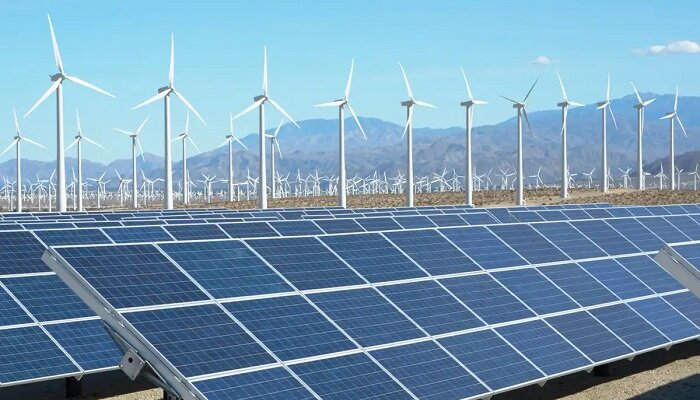
The Australian Government is looking to raise its national electricity grid’s renewable as well as clean dispatchable energy capacity by 32GW by 2030.

The federal government and the state, as well as territorial governments, seek to obtain energy by broadening the Capacity Investment Scheme- CIS as well as the National Energy Transformation Partnership.

The CIS, which happens to be a national framework looking to boost investment within the renewable energy, will go on to support the funding of 9GW of dispatchable projects along with 23GW of variable capacity throughout the country.

By 2030, the overall capacity will be raised to 32GW, which happens to be equivalent to half of the present capacity of the country’s national electricity segment. This expansion will go on to benefit 11 million customers.

The government’s look to upgrade the reliability as well as the affordability of energy markets by way of broadening of renewable capacity, especially as coal-fired power stations move forward to the end of their functional lifespan.

The government can make sure of an investor confidence and make affordable as well as clean energy accessible to households along with businesses by supporting the creation of new renewable generation and storage.

Apart from this, the government is planning to get into negotiations for bilateral agreements concerning renewable energy transformation with states and territories.

The states as well as territories will be responsible for delivering the renewable projects, while at the same time making sure to meet the agreed reliability standards, manage the shift in an orderly and efficient manner, and also invest in strategic electricity reserves.

It is expected that almost half of the 32GW capacity will be subject to these agreements. The government has also issued a warning that it may transfer capacities from jurisdictions that do not reach agreements to those that do.

The Australian government shall also take into account obstacles to renewable investments, like supply chain constraints and labor limitations.

It is well to be noted that in July 2023, the federal government announced of a Pacific offshore wind development zone in the Hunter region of New South Wales, which happens to have the capacity to generate 5GW of power.

Latest stories

Related stories

Ergonomics Improving Efficiency in Transmission Worksites

Optimizing the physical interaction between utility professionals and their environment, ergonomics transmission worksites initiatives are proving that worker comfort is a primary engine of operational speed. By refining tool design and harness mechanics, the power sector is reducing physical strain and fatigue, allowing crews to maintain peak performance throughout the demanding lifecycle of infrastructure projects.

Data Driven Insights Transforming Safety in Power Grids

Revolutionizing the management of risk in the energy sector, data driven safety power grids initiatives are turning vast streams of information into actionable protection strategies. By analyzing patterns of maintenance, environmental conditions, and worker behavior, utility providers are now able to predict hazards before they manifest, creating a more transparent and responsive safety environment for the modern electrical infrastructure.

Building Safety Culture Across Power Transmission Teams

Strengthening the human foundation of our energy networks, safety culture power transmission teams initiatives are moving beyond compliance to a deep-seated commitment to mutual protection. By fostering open communication, leadership accountability, and peer-to-peer engagement, utility organizations are creating an environment where every individual feels empowered to prioritize safety as a core personal and professional value.

Human Factors Shaping Safety in Power Transmission Work

Understanding the cognitive and psychological drivers of performance, human factors power transmission safety initiatives are refining the interface between the worker and the high-voltage environment. By addressing issues like cognitive load, decision-making biases, and fatigue, the energy sector is moving beyond physical protection to a sophisticated model of error prevention that acknowledges the inherent limitations and strengths of the human mind.

Subscribe

- Never miss a story with notifications

- Gain full access to our premium content

- Browse free from any location or device.

Media Packs

Expand Your Reach With Our Customized Solutions Empowering Your Campaigns To Maximize Your Reach & Drive Real Results!

– Access the Media Pack Now

– Book a Conference Call

Leave Message for Us to Get Back

Translate »