







Events Date: 9

For Clean Energy Tech EU Brings Green Deal Industrial Plan

Note* - All images used are for editorial and illustrative purposes only and may not originate from the original news provider or associated company.

Subscribe

- Never miss a story with notifications

- Gain full access to our premium content

- Browse free from any location or device.

Media Packs

Expand Your Reach With Our Customized Solutions Empowering Your Campaigns To Maximize Your Reach & Drive Real Results!

– Access the Media Pack Now

– Book a Conference Call

Leave Message for Us to Get Back

Related stories

Ergonomics Improving Efficiency in Transmission Worksites

Optimizing the physical interaction between utility professionals and their environment, ergonomics transmission worksites initiatives are proving that worker comfort is a primary engine of operational speed. By refining tool design and harness mechanics, the power sector is reducing physical strain and fatigue, allowing crews to maintain peak performance throughout the demanding lifecycle of infrastructure projects.

Data Driven Insights Transforming Safety in Power Grids

Revolutionizing the management of risk in the energy sector, data driven safety power grids initiatives are turning vast streams of information into actionable protection strategies. By analyzing patterns of maintenance, environmental conditions, and worker behavior, utility providers are now able to predict hazards before they manifest, creating a more transparent and responsive safety environment for the modern electrical infrastructure.

Building Safety Culture Across Power Transmission Teams

Strengthening the human foundation of our energy networks, safety culture power transmission teams initiatives are moving beyond compliance to a deep-seated commitment to mutual protection. By fostering open communication, leadership accountability, and peer-to-peer engagement, utility organizations are creating an environment where every individual feels empowered to prioritize safety as a core personal and professional value.
- Advertisement -

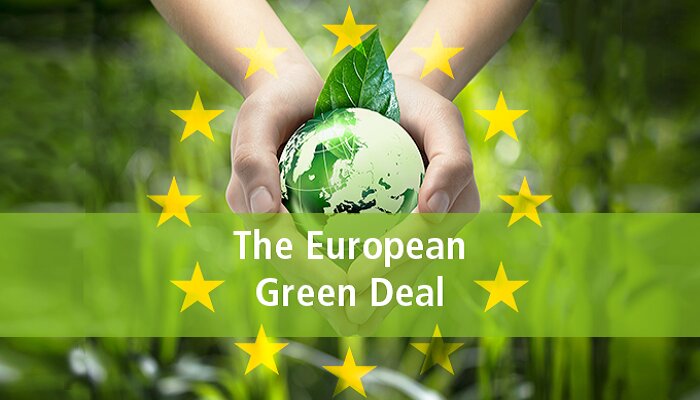
The European Union (EU) has brought to the fore its intention for the Green Deal Industrial Plan, a support program for clean energy technologies, including energy, which is modelled like the Inflation Reduction Act.

Ursula von der Leyen, president of the European Commission, made an announcement last week ending January 21 after senior decision-makers expressed concern that the recent US investment of a $369 billion-plus incentives package for both upstream and downstream renewable energy sectors was syphoning off potential investment from Europe.

According to von der Leyen, it is no secret that some aspects of the Inflation Reduction Act’s design prompted several questions regarding some of the targeted incentives for businesses.

To address this, the bloc has a new strategy to make Europe the headquarters of clean technology and industrial development on the road to net zero.

The first pillar of the strategy, is to establish the legislative framework necessary for the quick scale-up of industries essential to achieving net zero, such as wind, heat pumps, solar, clean hydrogen, and storage.

The Commission President continued by emphasising how Europe was unduly dependent on outside nations for the supply of rare earth elements necessary for the production of technology like wind turbines and batteries, particularly lithium, and how they needed to increase the refining, processing, as well as recycling of raw materials in the region.

The idea is to help Europe reach its elevated renewable energy targets under the REPowerEU plans, which have come into existence in response to Ukraine’s invasion by Russia.

Another three pillars of the Green Deal Industrial Plan include:

  • Giving clean tech production investment and financing a boost
  • Developing the abilities that are needed to get the transition in place
  • Help in open, fair trade so as to benefit one and all

Elaborating on the fourth pillar and referring to the Inflation Reduction Act, von der Leyen opined that they should work on making sure that their respective incentive programmes are mutually enforceable and fair too. Besides, it should also be ascertained as to how they can jointly benefit from this huge investment, such as by creating economies of scale throughout the Atlantic and even setting common benchmarks.

Since the time the US passed its assistance product in August 2022, its anticipated domestic battery manufacturing capacity for 2031 has been expanding twice as quickly as Europe’s, despite the latter’s head start, meaning it still has a higher figure at this time.

In the meantime, the US Act has expanded the production tax credit (PTC) and investment tax credit (ITC) incentives for solar and wind, which have accelerated industry growth and deployments of both technologies. Additionally, the US act has included an ITC for standalone energy storage projects.

Latest stories

Related stories

Ergonomics Improving Efficiency in Transmission Worksites

Optimizing the physical interaction between utility professionals and their environment, ergonomics transmission worksites initiatives are proving that worker comfort is a primary engine of operational speed. By refining tool design and harness mechanics, the power sector is reducing physical strain and fatigue, allowing crews to maintain peak performance throughout the demanding lifecycle of infrastructure projects.

Data Driven Insights Transforming Safety in Power Grids

Revolutionizing the management of risk in the energy sector, data driven safety power grids initiatives are turning vast streams of information into actionable protection strategies. By analyzing patterns of maintenance, environmental conditions, and worker behavior, utility providers are now able to predict hazards before they manifest, creating a more transparent and responsive safety environment for the modern electrical infrastructure.

Building Safety Culture Across Power Transmission Teams

Strengthening the human foundation of our energy networks, safety culture power transmission teams initiatives are moving beyond compliance to a deep-seated commitment to mutual protection. By fostering open communication, leadership accountability, and peer-to-peer engagement, utility organizations are creating an environment where every individual feels empowered to prioritize safety as a core personal and professional value.

Human Factors Shaping Safety in Power Transmission Work

Understanding the cognitive and psychological drivers of performance, human factors power transmission safety initiatives are refining the interface between the worker and the high-voltage environment. By addressing issues like cognitive load, decision-making biases, and fatigue, the energy sector is moving beyond physical protection to a sophisticated model of error prevention that acknowledges the inherent limitations and strengths of the human mind.

Subscribe

- Never miss a story with notifications

- Gain full access to our premium content

- Browse free from any location or device.

Media Packs

Expand Your Reach With Our Customized Solutions Empowering Your Campaigns To Maximize Your Reach & Drive Real Results!

– Access the Media Pack Now

– Book a Conference Call

Leave Message for Us to Get Back

Translate »