















Events Date: 9

Renewable Energy Investment Plan Introduced By Indonesia

Note* - All images used are for editorial and illustrative purposes only and may not originate from the original news provider or associated company.

Subscribe

- Never miss a story with notifications

- Gain full access to our premium content

- Browse free from any location or device.

Media Packs

Expand Your Reach With Our Customized Solutions Empowering Your Campaigns To Maximize Your Reach & Drive Real Results!

– Access the Media Pack Now

– Book a Conference Call

Leave Message for Us to Get Back

Related stories

Ergonomics Improving Efficiency in Transmission Worksites

Optimizing the physical interaction between utility professionals and their environment, ergonomics transmission worksites initiatives are proving that worker comfort is a primary engine of operational speed. By refining tool design and harness mechanics, the power sector is reducing physical strain and fatigue, allowing crews to maintain peak performance throughout the demanding lifecycle of infrastructure projects.

Data Driven Insights Transforming Safety in Power Grids

Revolutionizing the management of risk in the energy sector, data driven safety power grids initiatives are turning vast streams of information into actionable protection strategies. By analyzing patterns of maintenance, environmental conditions, and worker behavior, utility providers are now able to predict hazards before they manifest, creating a more transparent and responsive safety environment for the modern electrical infrastructure.

Building Safety Culture Across Power Transmission Teams

Strengthening the human foundation of our energy networks, safety culture power transmission teams initiatives are moving beyond compliance to a deep-seated commitment to mutual protection. By fostering open communication, leadership accountability, and peer-to-peer engagement, utility organizations are creating an environment where every individual feels empowered to prioritize safety as a core personal and professional value.
- Advertisement -

Recently, Indonesia went on to initiate an investment plan so as to utilize the $20 billion in financing that’s committed by global lenders, with the US as well as Japan taking the lead. The idea is to speed up the decarbonization of Indonesia’s power sector. It is well to be noted that Indonesia has also urged for the prompt disbursement of funds.

The country looks to reduce carbon dioxide emissions in its on-grid power sector to 250 million metric tons by this decade-end by way of the Just Energy Transition Partnership- JETP. This target is in complete contrast to the projected business-as-usual emissions of more than 350 million metric tons.

The investment proposal, known as the Comprehensive Investment and Policy Plan- CIPP, has been officially announced after a period of public consultation. It is well to be noted that the draft of the proposal was made public earlier in November.

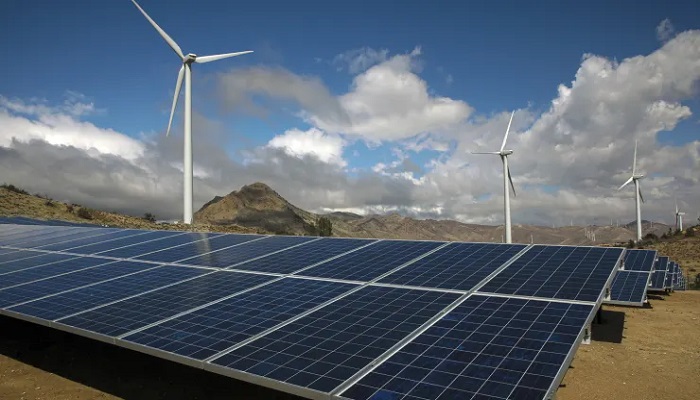
Indonesia, which happens to be among the largest contributors in terms of greenhouse gas emissions worldwide, has set itself a target to boost the share of renewable energy in its power generation to a significant extent. The country looks to increase this portion to 44% by 2030, which is indeed a substantial rise considering the current level, which is almost 12% as of 2022.

One indeed needs to act swiftly, as 2030 is less than seven years from now. At the launch, Erick Thohir, who happens to be the ad-interim chief minister for investment affairs of Indonesia, stressed upon the need to strengthen as well as speed up the partnership so as to prioritize and also promptly implement the projects, including taking care of financing commitments.

As per CIPP, a total investment of $97.3 billion is needed so as to meet the set targets. Out of this funding, $66.9 billion happens to be allocated for 400 projects that must begin by 2030 at the latest.

Michael Kleine, the U.S. charge d’affaires in Jakarta, says that the funding provided by JETP is expected to serve as a catalyst for energy shift investment and also encourage additional financing.

But there were concerns among environmentalists with regards to the significant proportion of commercial loans included in the mix.

It is worth noting that half of the funds pledged would be taken from private financing, which may comprise commercial loans with market rates, equity investments, as well as other debt instruments.

Apparently, the JETP in Indonesia is indeed the largest of its kind, with Vietnam’s $15 billion scheme coming in second.

Latest stories

Related stories

Ergonomics Improving Efficiency in Transmission Worksites

Optimizing the physical interaction between utility professionals and their environment, ergonomics transmission worksites initiatives are proving that worker comfort is a primary engine of operational speed. By refining tool design and harness mechanics, the power sector is reducing physical strain and fatigue, allowing crews to maintain peak performance throughout the demanding lifecycle of infrastructure projects.

Data Driven Insights Transforming Safety in Power Grids

Revolutionizing the management of risk in the energy sector, data driven safety power grids initiatives are turning vast streams of information into actionable protection strategies. By analyzing patterns of maintenance, environmental conditions, and worker behavior, utility providers are now able to predict hazards before they manifest, creating a more transparent and responsive safety environment for the modern electrical infrastructure.

Building Safety Culture Across Power Transmission Teams

Strengthening the human foundation of our energy networks, safety culture power transmission teams initiatives are moving beyond compliance to a deep-seated commitment to mutual protection. By fostering open communication, leadership accountability, and peer-to-peer engagement, utility organizations are creating an environment where every individual feels empowered to prioritize safety as a core personal and professional value.

Human Factors Shaping Safety in Power Transmission Work

Understanding the cognitive and psychological drivers of performance, human factors power transmission safety initiatives are refining the interface between the worker and the high-voltage environment. By addressing issues like cognitive load, decision-making biases, and fatigue, the energy sector is moving beyond physical protection to a sophisticated model of error prevention that acknowledges the inherent limitations and strengths of the human mind.

Subscribe

- Never miss a story with notifications

- Gain full access to our premium content

- Browse free from any location or device.

Media Packs

Expand Your Reach With Our Customized Solutions Empowering Your Campaigns To Maximize Your Reach & Drive Real Results!

– Access the Media Pack Now

– Book a Conference Call

Leave Message for Us to Get Back

Translate »