

















Events Date: 9

$ 2B Investment For German And Dutch Power Grid Upgradation

Note* - All images used are for editorial and illustrative purposes only and may not originate from the original news provider or associated company.

Subscribe

- Never miss a story with notifications

- Gain full access to our premium content

- Browse free from any location or device.

Media Packs

Expand Your Reach With Our Customized Solutions Empowering Your Campaigns To Maximize Your Reach & Drive Real Results!

– Access the Media Pack Now

– Book a Conference Call

Leave Message for Us to Get Back

Related stories

Ergonomics Improving Efficiency in Transmission Worksites

Optimizing the physical interaction between utility professionals and their environment, ergonomics transmission worksites initiatives are proving that worker comfort is a primary engine of operational speed. By refining tool design and harness mechanics, the power sector is reducing physical strain and fatigue, allowing crews to maintain peak performance throughout the demanding lifecycle of infrastructure projects.

Data Driven Insights Transforming Safety in Power Grids

Revolutionizing the management of risk in the energy sector, data driven safety power grids initiatives are turning vast streams of information into actionable protection strategies. By analyzing patterns of maintenance, environmental conditions, and worker behavior, utility providers are now able to predict hazards before they manifest, creating a more transparent and responsive safety environment for the modern electrical infrastructure.

Building Safety Culture Across Power Transmission Teams

Strengthening the human foundation of our energy networks, safety culture power transmission teams initiatives are moving beyond compliance to a deep-seated commitment to mutual protection. By fostering open communication, leadership accountability, and peer-to-peer engagement, utility organizations are creating an environment where every individual feels empowered to prioritize safety as a core personal and professional value.
- Advertisement -

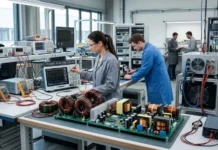
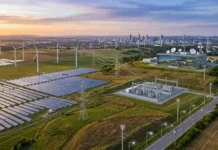
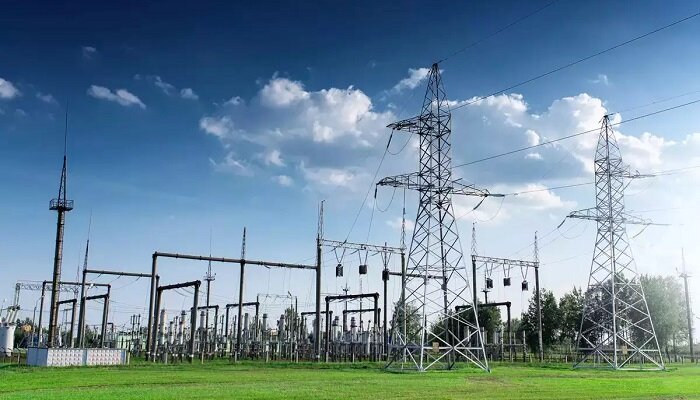
Transmission system operator (TSO) TenneT has inked a substantial framework contract worth €1.9 billion ($2 billion) for the enhancement of substations, encompassing the delivery of 110 compensation coils and 160 power transformers destined for deployment in both Germany and the Netherlands.

This comprehensive agreement, officially signed between TenneT and key players Siemens Energy, Hitachi Energy, GE Grid, and Royal SMIT, designates €1.16 billion ($1.23 billion) for the revitalization of German substations and €730 million ($772.7 million) for their Dutch counterparts.

In sum, the procurement encompasses 98 power transformers allocated to Germany and 61 designated for the Netherlands. Additionally, 68 compensation coils are destined for the Netherlands, while 38 will be deployed in Germany. It’s worth noting that these assets will not only serve maintenance initiatives but also play a pivotal role in new construction projects.

The primary mission of these substations is to shoulder the responsibilities of system services related to frequency and voltage stability, a role that was traditionally carried out by conventional power plants.

Moreover, this framework agreement underscores a strategic alliance with the four selected suppliers, with each securing approximately a quarter of the overall contract volume.

The contract comes with a minimum duration of two years, extendable up to five times, each extension spanning one year. The transformers and compensation coils acquired under this contract will find utility in a spectrum of projects, encompassing both maintenance endeavors and fresh construction ventures.

Tim Meyerjürgens, the Chief Operating Officer of TenneT, explained that the energy transition necessitated a comprehensive overhaul of their system. He emphasized that this overhaul was not limited to the installation of new power lines but also included the integration of state-of-the-art substations. Meyerjürgens pointed out that to enable the seamless integration of renewable energies into the transmission grid through the distribution network, a significant quantity of cutting-edge high-performance transformers was required.

He further elaborated that their substations would simultaneously assume the critical role of providing system services for frequency and voltage stability, duties that had previously been carried out by conventional power plants. He emphasized the need for additional equipment, such as compensation coils, to fulfill this mandate.

Latest stories

Related stories

Ergonomics Improving Efficiency in Transmission Worksites

Optimizing the physical interaction between utility professionals and their environment, ergonomics transmission worksites initiatives are proving that worker comfort is a primary engine of operational speed. By refining tool design and harness mechanics, the power sector is reducing physical strain and fatigue, allowing crews to maintain peak performance throughout the demanding lifecycle of infrastructure projects.

Data Driven Insights Transforming Safety in Power Grids

Revolutionizing the management of risk in the energy sector, data driven safety power grids initiatives are turning vast streams of information into actionable protection strategies. By analyzing patterns of maintenance, environmental conditions, and worker behavior, utility providers are now able to predict hazards before they manifest, creating a more transparent and responsive safety environment for the modern electrical infrastructure.

Building Safety Culture Across Power Transmission Teams

Strengthening the human foundation of our energy networks, safety culture power transmission teams initiatives are moving beyond compliance to a deep-seated commitment to mutual protection. By fostering open communication, leadership accountability, and peer-to-peer engagement, utility organizations are creating an environment where every individual feels empowered to prioritize safety as a core personal and professional value.

Human Factors Shaping Safety in Power Transmission Work

Understanding the cognitive and psychological drivers of performance, human factors power transmission safety initiatives are refining the interface between the worker and the high-voltage environment. By addressing issues like cognitive load, decision-making biases, and fatigue, the energy sector is moving beyond physical protection to a sophisticated model of error prevention that acknowledges the inherent limitations and strengths of the human mind.

Subscribe

- Never miss a story with notifications

- Gain full access to our premium content

- Browse free from any location or device.

Media Packs

Expand Your Reach With Our Customized Solutions Empowering Your Campaigns To Maximize Your Reach & Drive Real Results!

– Access the Media Pack Now

– Book a Conference Call

Leave Message for Us to Get Back

Translate »