




















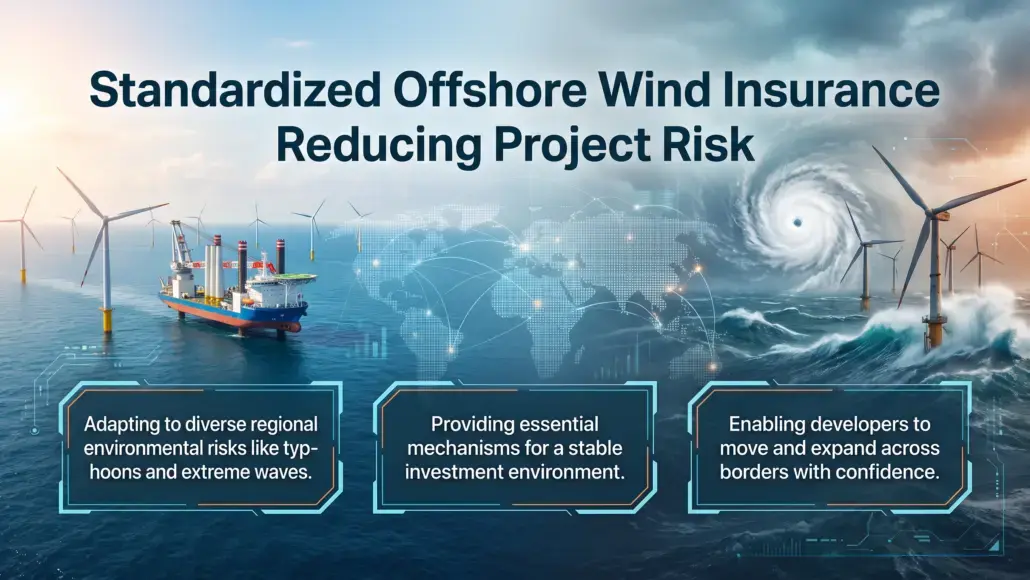

The rapid globalization of the offshore wind sector has introduced a complex array of regional risks that insurers must account for when drafting policies. From the typhoons of the East China Sea to the extreme wave heights of the North Atlantic, the physical environment presents unique challenges that vary significantly by geography. Specialized offshore wind insurance is an essential mechanism for creating a stable investment environment, allowing developers to move across borders with a clear understanding of their financial exposure. By establishing a common language for risk assessment, the industry can avoid the fragmentation that often plagues emerging markets, ensuring that capital remains available for large scale deployments.
A harmonized underwriting framework allows for a more consistent evaluation of project viability. When insurers use the same metrics to assess the reliability of a particular turbine model or the competence of a subsea contractor, it creates a level playing field for all stakeholders. This consistency is particularly important for project finance, where lenders require a high degree of certainty before committing billions of dollars to a single development. The use of standardized data sets, gathered from thousands of hours of operational experience, enables underwriters to price risk more accurately, leading to more competitive premiums and better coverage for the insured.
The move toward standardization also simplifies the due diligence process for international investors. Instead of navigating a maze of bespoke policies, they can rely on established industry standards that have been vetted by legal and technical experts. This transparency reduces the administrative burden on developers and allows them to focus on the technical execution of their projects. As the industry scales, the ability to replicate successful offshore wind insurance models across different jurisdictions will be a key driver of growth, providing a stable foundation for the global transition to renewable energy.
Quantifying Technical Risks in Next Generation Turbine Arrays
As wind turbines grow in size and complexity, the technical risks associated with their operation also increase. The transition from 8 MW units to 15 MW and 20 MW machines introduces new mechanical stresses that are not yet fully understood over long time horizons. Effective offshore wind insurance requires a thorough examination of the engineering data to ensure that these massive machines are insured appropriately. Insurers are now working closely with manufacturers to analyze prototype testing data and early operational results, seeking to identify potential failure modes before they become systemic issues across an entire fleet.
The insurance industry plays a vital role in providing the feedback loop necessary for technical innovation. When an insurer identifies a recurring problem with a specific component, such as a bearing or a blade pitch system, they can adjust their coverage terms to incentivize the manufacturer to improve the design. This relationship creates a powerful incentive for quality control and long term reliability. By standardizing the way these technical risks are reported and analyzed, the industry can build a more comprehensive database of component performance, which in turn leads to more precise risk modeling.
In addition to component failure, the interaction between turbines within a large array presents a unique set of challenges. Wake effects, which can reduce the energy yield and increase the mechanical loading on downstream turbines, must be factored into the insurance calculations. Advanced computational fluid dynamics models are now being used to simulate these interactions, providing insurers with a clearer picture of the operational risks. The standardization of these modeling techniques ensures that all parties have a common understanding of the technical challenges, reducing the likelihood of disputes during the claims process.
Supply Chain Resilience and Delay in Start Up Coverage
The offshore wind supply chain is a global network of specialized vessels, fabrication yards, and logistics providers. Any disruption in this network can lead to significant delays in project completion, resulting in lost revenue and increased financing costs. Comprehensive offshore wind insurance includes the development of robust Delay in Start Up (DSU) coverage that protects developers from these unforeseen events. Whether it is a shortage of specialized installation vessels or a delay in the delivery of a critical substation component, DSU coverage provides a financial safety net that ensures the project remains viable even in the face of logistical setbacks.
The complexity of the supply chain requires a sophisticated approach to risk management. Insurers must look beyond the primary contractor to understand the risks inherent in the sub tier suppliers. This “look through” approach allows for a more holistic view of the project’s vulnerability to global events, such as trade disputes or pandemic related disruptions. By standardizing the requirements for supply chain transparency, insurers can help developers identify and mitigate potential bottlenecks before they impact the construction schedule. This proactive approach to risk management is essential for maintaining the momentum of large scale energy projects.
In addition, the insurance sector is increasingly focused on the availability of replacement parts during the operational phase. As turbine fleets age, the risk of obsolescence grows, making it more difficult to source components for older models. Standardized offshore wind insurance policies can include provisions for “like for like” replacement or even upgrades to newer technology, ensuring that the asset continues to produce power even if the original parts are no longer available. This long term perspective on asset health is a critical component of a sustainable insurance strategy, providing the stability needed for decades of operation.
Standardized Claims Management for Complex Subsea Operations
Subsea operations are among the most difficult and expensive activities in the offshore wind industry. Repairing a damaged export cable or a foundation structure requires specialized equipment and highly skilled personnel, often in challenging weather conditions. Modern offshore wind insurance involves the creation of clear protocols for managing claims related to these subsea events. By establishing agreed upon procedures for damage assessment and repair, insurers and developers can avoid lengthy disputes and ensure that the asset is returned to service as quickly as possible.
The use of remote sensing technology and underwater drones has revolutionized the way subsea damage is inspected. Insurers now accept data from these autonomous systems as evidence in the claims process, speeding up the time it takes to reach a settlement. Standardizing the requirements for this data ensures that it is gathered in a way that is legally and technically sound, providing a reliable basis for financial decisions. This integration of technology into the claims process is a major step forward for the industry, reducing the uncertainty and cost associated with subsea failures.
Collaboration between insurers and salvage companies is also a key part of the standardized claims management process. By having pre arranged agreements with vessel operators and repair specialists, insurers can ensure that the necessary resources are available when an incident occurs. This level of preparedness is essential for minimizing the downtime associated with major failures, protecting the revenue stream of the project and the interests of the investors. The development of these standard operating procedures represents a significant maturation of the market, providing a level of professionalism and reliability that matches the scale of the technology.
Financial Stability through Uniform Policy Wording and Clauses
The legal structure of an insurance policy is just as important as the technical data it is based on. In the early days of the offshore wind industry, many policies were bespoke documents that were negotiated on a project by project basis. This led to a lack of clarity and frequent legal challenges. Today, the move toward standardized offshore wind insurance has led to the adoption of uniform policy wording and standard clauses that are recognized by all major market participants. This legal clarity reduces the risk of misinterpretation and ensures that both the insurer and the insured have a clear understanding of their rights and obligations.
Standardized clauses cover a wide range of issues, from force majeure events to the definitions of specific technical terms. Having a common set of definitions is particularly important in an industry where the technology is constantly evolving. For example, the definition of a “mechanical breakdown” must be clear enough to apply to both traditional gearboxes and next generation direct drive systems. By establishing these definitions in a standardized way, the industry can avoid the confusion that often leads to litigation. This legal stability is a key factor in attracting the long term capital needed for the energy transition.
The role of insurance brokers in this process cannot be overstated. Brokers act as the intermediaries between developers and insurers, helping to shape the standard policy documents that govern the industry. Their expertise in both the technical and legal aspects of offshore wind allows them to identify gaps in coverage and advocate for new standards that reflect the changing risk profile of the sector. As the industry continues to mature, the collaboration between all parties, including developers, insurers, brokers, and regulators, will remain essential for maintaining the financial stability of the offshore wind market. Through a commitment to standardization and transparency, the sector can ensure that it remains a safe and attractive destination for global investment.