




























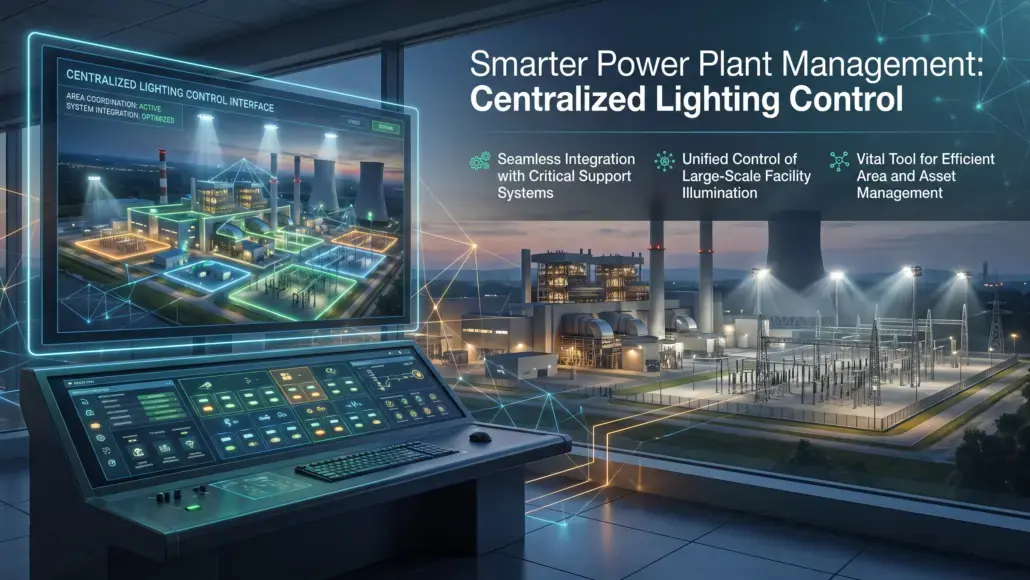

Effective management of large-scale power generation facilities requires an integrated approach to all support systems, including illumination. Centralized lighting controls have emerged as a vital tool for area management, providing facility operators with the ability to coordinate lighting states across vast physical footprints from a single interface. In a traditional power plant setting, lighting was often treated as a decentralized utility, with individual circuits controlled by manual switches or local timers. This fragmented approach led to significant energy waste and made it difficult to respond to changing operational requirements. By centralizing these functions, power generation sites can now implement sophisticated scheduling, dimming, and occupancy-based strategies that align lighting usage with actual facility needs. This technological shift supports a more efficient allocation of resources, ensuring that lighting is available when and where it is needed while minimizing unnecessary energy expenditure in unoccupied zones. The adoption of such systems marks a significant evolution in the way industrial facilities approach utility management, moving toward a more holistic and data-driven model.
The transition to centralized systems also facilitates a more proactive approach to safety and security. In a power plant environment, the ability to instantly adjust light levels in response to an emergency or an unauthorized entry is a significant advantage. Centralized lighting controls allow security personnel to illuminate specific corridors or switchyard areas at full intensity during an incident, providing clear visibility for response teams. Conversely, during periods of low activity, these systems can maintain a minimum baseline of illumination for safety while dimming non-essential fixtures to reduce the facility’s overall carbon footprint. The granular level of control provided by these systems allows for the creation of lighting zones that reflect the specific functional requirements of different plant areas, from the high-activity turbine hall to the relatively quiet administrative annexes. As the energy industry moves toward higher levels of digitalization, the role of these controls in maintaining operational continuity becomes increasingly significant, providing the backbone for a smarter and more responsive physical infrastructure.
Operational Efficiency through Integrated Scheduling and Automation
One of the primary benefits of centralized management is the ability to automate lighting schedules based on the plant’s operational calendar. In power generation facilities, certain areas may only be accessed during specific shifts or during planned maintenance outages. Centralized lighting controls enable the programming of complex schedules that ensure light is provided during these windows and deactivated or dimmed during off-hours. This automation removes the reliance on manual intervention, which is often prone to human error, particularly in large facilities where checking every light switch is impractical. By integrating with the plant’s overall building management system, lighting can be synchronized with other utilities, such as ventilation and heating, creating a cohesive operational environment that maximizes energy efficiency. This level of synchronization is essential for modern facilities aiming to optimize their utility costs while maintaining high standards of workplace safety. The ability to automatically adjust lighting levels in response to changing production volumes or seasonal shifts further enhances the facility’s overall agility.
The data generated by these centralized systems provides valuable insights into facility usage patterns. Facility managers can analyze occupancy data to identify areas that are frequently left illuminated when not in use, allowing for the refinement of lighting schedules and the implementation of additional sensors where necessary. This data-driven approach to area management supports continuous improvement initiatives, helping power plants to achieve their sustainability targets while maintaining high standards of operational availability. The ability to monitor the status of every fixture from a central dashboard also streamlines the identification of failures, allowing maintenance teams to address issues before they impact facility operations. This visibility into system health is essential for maintaining the reliability of the lighting infrastructure over its entire service life, as it allows for the transition from reactive to proactive maintenance models. By leveraging these insights, plant operators can make informed decisions about future infrastructure investments and operational adjustments.
Dynamic Load Management and Energy Conservation Strategies
Power generation facilities are increasingly focused on reducing their internal energy consumption, known as parasitic load, to maximize the amount of electricity delivered to the grid. Centralized lighting controls play a significant role in this effort by enabling dynamic load management strategies. Through the use of daylight harvesting sensors, these systems can automatically adjust the output of indoor fixtures in response to natural light entering through windows or skylights. In large warehouses or storage areas within the plant, this can lead to substantial energy savings without any perceptible change in light quality. The ability to dim lights rather than simply switching them on or off also extends the life of the components, as it reduces the thermal stress associated with full-power operation. This gradual adjustment of light levels is particularly beneficial in areas where personnel spend long periods, as it minimizes the visual fatigue associated with abrupt changes in luminance.
The implementation of centralized control also allows for participation in demand response programs. In situations where the grid is under stress, power plants can temporarily reduce their internal lighting load to contribute to overall grid stability. While the lighting load of a single plant may be relatively small compared to its total output, the cumulative effect of such reductions across multiple facilities is significant. Centralized lighting controls provide the necessary communication interface to receive signals from grid operators and execute pre-defined dimming protocols instantly. This capability transforms the lighting system from a static utility into a flexible asset that can actively contribute to the reliability of the broader energy infrastructure. The integration of advanced power metering within the lighting control system provides real-time data on energy savings and load reduction, allowing facility managers to document the impact of their conservation efforts. This level of detail is critical for meeting internal sustainability goals and external reporting requirements.
Enhanced Security and Emergency Response Capabilities
The security of power generation infrastructure is a matter of national importance, and lighting is a fundamental component of a comprehensive security strategy. Centralized lighting controls enhance this strategy by allowing for the integration of lighting with perimeter intrusion detection systems and closed-circuit television cameras. When an alarm is triggered, the centralized system can instantly bring perimeter lights to full brightness and initiate flashing sequences to deter intruders and alert security personnel. This rapid response is only possible through a centralized architecture that can bypass local controls and execute global commands. The ability to control lighting remotely also allows security teams to manage visibility across the site without leaving the safety of the control room. This capability is particularly useful during night-time patrols or during periods of adverse weather when physical visibility is reduced. The inclusion of remote diagnostic features ensures that the security team is aware of any sensor failures that could compromise the integrity of the system.
In the event of a facility-wide emergency, such as a fire or a chemical leak, the centralized lighting control system becomes a critical part of the life safety infrastructure. It can be programmed to automatically illuminate designated egress routes and emergency assembly points, guiding personnel to safety even in low-visibility conditions. By interfacing with the fire alarm system, the lighting can be set to provide specific visual cues to indicate the nature of the emergency and the required response. This level of coordination ensures that lighting supports, rather than hinders, the orderly evacuation of the facility. The centralized nature of the system also ensures that emergency lighting can be tested and monitored automatically, guaranteeing that battery-backed fixtures are fully functional when they are needed most. Regular automated testing cycles provide the necessary compliance documentation for safety regulators, reducing the administrative burden on plant staff. This automated oversight ensures that the facility is always prepared for the unexpected, maintaining a constant state of readiness.
Streamlining Maintenance and Reducing Operational Complexity
The complexity of managing a modern power plant requires tools that simplify routine tasks and reduce the administrative burden on facility staff. Centralized lighting controls achieve this by providing a unified platform for monitoring and maintaining the entire lighting estate. Instead of manually inspecting thousands of fixtures across the site, maintenance teams can receive automated alerts for any component failure or communication error. This targeted approach to maintenance reduces the time spent on inspections and allows resources to be focused on high-priority repairs. The system can also track the operating hours of each fixture, enabling the implementation of predictive maintenance strategies where components are replaced before they fail based on their remaining useful life. This long-term planning capability is essential for managing the lifecycle costs of the facility’s lighting infrastructure, ensuring that budget allocations are optimized for maximum impact.
Reducing operational complexity also involves the ease of reconfiguring the lighting system as plant requirements change. In a centralized architecture, changes to lighting zones or dimming levels can be made through software updates rather than physical rewiring. This flexibility is particularly valuable during plant upgrades or expansions, where new equipment or structural changes may require a different lighting profile. Centralized lighting controls allow for the rapid deployment of these changes, ensuring that the lighting infrastructure always reflects the current operational state of the facility. The use of standardized communication protocols ensures that the system is interoperable with a wide range of fixtures and sensors, protecting the facility’s investment against future technological shifts. As power generation facilities continue to evolve toward higher levels of automation and digital integration, centralized management will remain a cornerstone of efficient area management, providing a scalable and adaptable solution for future energy needs. The resulting reduction in operational friction allows plant personnel to dedicate more time to core generation activities, improving the overall efficiency of the entire site.