

























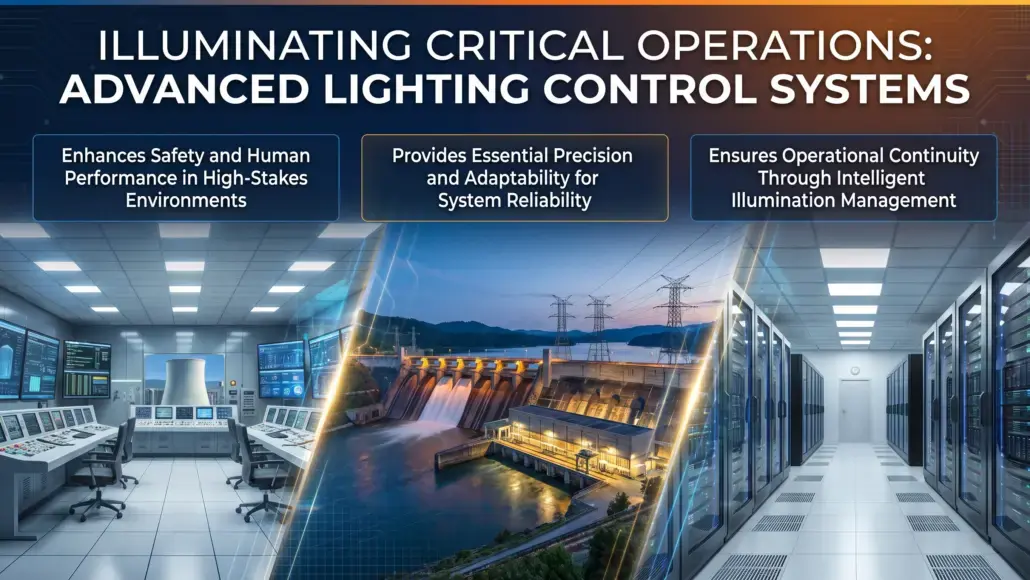

The operational continuity of critical power facilities rests upon the reliability of numerous interconnected systems, with illumination serving as a primary enabler of safety and human performance. Advanced lighting control systems provide the necessary framework for managing these requirements, offering a level of precision and adaptability that is essential for high-stakes environments. In facilities such as nuclear power stations, large-scale hydroelectric plants, and mission-critical peaking units, the lighting system must be capable of providing consistent, high-quality illumination under all conditions. This includes the ability to maintain baseline safety levels during equipment failures and to quickly adapt to the needs of emergency response teams. Modern lighting control systems achieve this through the integration of distributed intelligence, where sensors and controllers work in unison to optimize light levels based on real-time environmental data and operational status. By removing the limitations of legacy switching, these systems provide a dynamic environment that supports both routine tasks and emergency interventions.
Implementation of these systems requires a deep understanding of the specific risks and challenges inherent in power generation. Unlike standard commercial applications, lighting control systems in critical power facilities must be designed for extreme durability and long-term stability. They must be resistant to electromagnetic interference, high temperatures, and the constant vibration generated by massive rotating machinery. By utilizing industrial-grade communication protocols and hardened hardware, facility engineers can ensure that the lighting system remains responsive even in the most demanding circumstances. The shift toward digital control also enables the implementation of sophisticated redundancy strategies, where multiple controllers and power supplies are used to prevent a single point of failure from compromising the entire facility’s illumination. This focus on system integrity is a fundamental requirement for any technology deployed within a critical energy infrastructure.
Enhancing Human Factors and Safety in High-Stress Environments
In the control rooms and operational centers of critical power facilities, the quality of light directly influences the cognitive performance and decision-making abilities of the staff. Lighting control systems allow for the fine-tuning of color temperature and intensity to align with the circadian rhythms of operators working rotating shifts. By adjusting these parameters throughout the 24-hour cycle, the system helps to maintain alertness and reduce the risk of errors during critical operational phases. This human-centric approach to lighting is a vital component of a comprehensive safety management strategy, recognizing that the well-being of the personnel is just as important as the integrity of the mechanical systems. The ability to create specific lighting presets for different tasks (such as high-intensity illumination for detailed maintenance work or soft, glare-free light for monitoring screens) further enhances the efficiency of the workforce. By reducing the physical strain associated with poor lighting, these systems contribute to a more sustainable and productive work environment.
Safety is also improved through the use of automated occupancy and motion detection. In areas that are only visited during periodic inspections, such as remote cable galleries or high-voltage switchgear rooms, the lighting control systems ensure that lights are only active when personnel are present. This not only saves energy but also provides a visual cue that an area is occupied, improving situational awareness across the site. In an emergency, these sensors can track the movement of personnel through the facility, providing valuable information to incident commanders. The integration of emergency lighting with the main control system ensures that during a total power loss, critical pathways are instantly illuminated using battery backup or dedicated emergency circuits. This transition must be instantaneous and reliable, as even a few seconds of darkness can lead to confusion and increased risk during a crisis. The ability to verify the status of every emergency fixture remotely ensures that these critical safety assets are always ready for deployment.
Supporting Grid Stability with Intelligent Load Shedding
As the global energy sector evolves, power generation facilities are taking on a more active role in maintaining grid stability. Lighting control systems contribute to this effort by enabling intelligent load shedding protocols. In response to signals from the grid operator or the plant’s own internal monitoring systems, the lighting controls can automatically reduce the energy consumption of non-essential lighting zones. This reduction is achieved through precise dimming rather than complete deactivation, ensuring that safety is not compromised while the facility contributes to load balancing. The speed and precision of these adjustments are critical, as the lighting system must be able to shed load within milliseconds to be effective in a rapid frequency response scenario. This capability demonstrates the versatility of modern lighting technology in supporting the broader goals of the energy transition.
The ability to monitor real-time energy consumption at the fixture level provides facility managers with a granular view of their operational costs. This data can be used to identify further opportunities for energy savings and to document the facility’s contribution to overall energy efficiency targets. Modern lighting control systems often incorporate advanced power metering and reporting tools that simplify this process, providing clear and actionable data for executive decision-making. By treating lighting as a controllable load, power plants can improve their operational flexibility and create new revenue streams through participation in various grid service markets. This integration of lighting with the broader energy management strategy is a key characteristic of the next generation of critical power infrastructure. The transparency provided by these systems also supports a more rigorous approach to sustainability reporting and corporate governance.
Maintaining Resilience through Distributed Intelligence and Redundancy
The architecture of lighting control systems in critical power facilities is designed to prioritize resilience above all else. Distributed intelligence ensures that even if a central management server fails, individual lighting zones can continue to operate based on their local sensor data and pre-programmed logic. This decentralized approach prevents a localized failure from cascading into a facility-wide blackout, which could have catastrophic consequences in a high-voltage environment. The use of redundant communication pathways (such as ring topologies for data cables or high-security wireless links) further protects the system against physical damage or interference. Each component, from the smallest occupancy sensor to the main control panel, is selected for its ability to operate independently when necessary. This structural strength is a hallmark of industrial-grade engineering, ensuring that the lighting system is as reliable as the generators it illuminates.
Regular automated self-testing is another essential feature of these resilient systems. The lighting control systems can perform daily diagnostic checks on every fixture and driver, identifying potential issues before they lead to a failure. For emergency lighting, the system can automatically cycle the batteries and report on their capacity, ensuring compliance with strict safety regulations without the need for manual labor-intensive testing. This proactive approach to maintenance ensures that the lighting infrastructure is always ready to perform, regardless of the challenges it faces. The long-term stability of the hardware is also a primary consideration, with systems designed to last for decades rather than years. This durability is essential for facilities that are expected to remain in operation for 40 years or more, providing a stable foundation for ongoing power generation activities. By minimizing the need for physical intervention, these systems reduce the overall risk profile of the facility.
Simplifying Regulatory Compliance and Operational Auditing
Power generation is one of the most heavily regulated industries in the world, and maintaining compliance with safety and environmental standards is a constant challenge. Lighting control systems simplify this process by providing comprehensive logging and reporting capabilities. Every action taken by the system, from a manual override to an automated dimming event, is recorded in a tamper-proof audit log. This data is invaluable during regulatory inspections or when investigating the causes of an operational incident. The ability to demonstrate that the facility has consistently met its required illumination levels and that all emergency systems have been tested according to schedule is a major advantage for plant managers. This digital record-keeping reduces the administrative burden and ensures that the facility is always audit-ready.
The integration of lighting controls with other facility management systems also facilitates more effective auditing of energy usage and carbon emissions. As sustainability reporting becomes a mandatory requirement for many power companies, the ability to produce accurate data on lighting-related energy savings is increasingly important. Lighting control systems provide the necessary tools to track these metrics over time, showing the impact of various conservation strategies and identifying areas for future improvement. This transparency not only helps to meet regulatory requirements but also supports the company’s broader commitment to corporate social responsibility. By providing a clear and detailed view of the facility’s lighting operations, these systems enable a more disciplined and accountable approach to facility management, ensuring that critical power facilities remain both safe and efficient for the long term. The continuous monitoring of light levels also ensures that the facility remains compliant with workplace safety regulations, protecting both the workers and the organization from liability.