




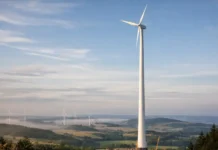


















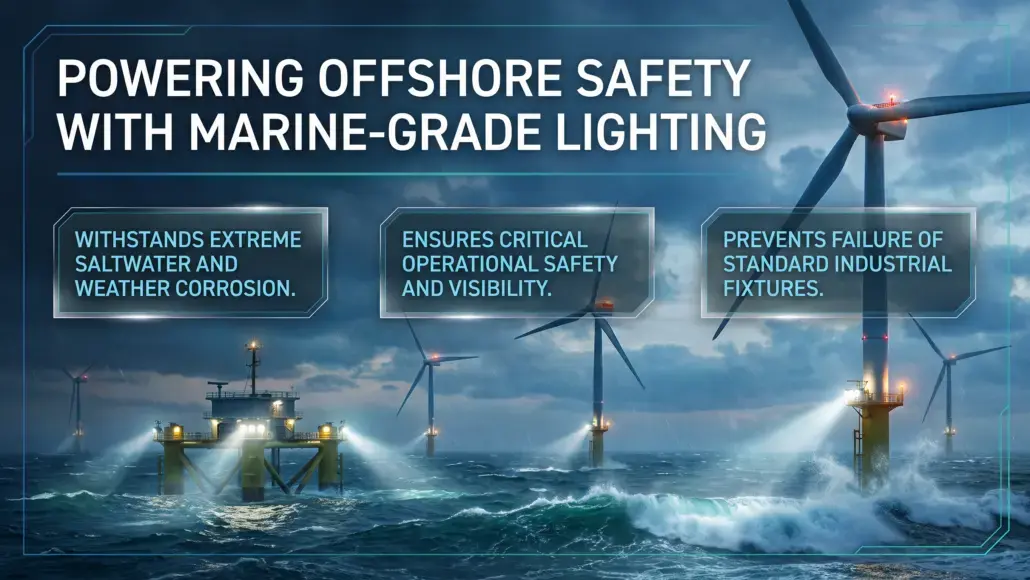

Offshore power infrastructure, including wind turbines and tidal energy platforms, operates in some of the most hostile environments on the planet. The constant exposure to saltwater, high winds, and extreme humidity requires specialized marine grade lighting solutions to ensure operational safety and navigational visibility. Standard industrial lighting fixtures quickly succumb to the corrosive effects of the marine environment, leading to premature component failure and increased maintenance costs. In contrast, marine grade lighting is engineered with specific materials and coatings that resist salt spray and moisture ingress, ensuring long-term reliability in isolated locations. The deployment of these advanced systems is essential for protecting the significant capital investment associated with offshore energy production and for ensuring the safety of personnel who must perform maintenance tasks in these challenging conditions. The reliance on these systems is particularly high during winter months when natural light is limited and storm frequency increases.
The unique requirements of offshore lighting extend beyond simple durability. These systems must also meet strict international standards for maritime navigation, providing clear visual indicators for passing vessels and aircraft. Marine grade lighting for offshore platforms often incorporates integrated signaling capabilities, including synchronized flashing patterns and specific color assignments that comply with aviation and maritime safety regulations. The ability to monitor and control these systems remotely is a critical requirement, as the remote nature of offshore assets makes physical inspections difficult and expensive. By utilizing intelligent monitoring platforms, facility operators can receive real-time updates on the status of every fixture, allowing for the rapid identification of failures and the optimization of maintenance visits. This proactive approach is vital for maintaining the continuous availability of critical navigation and operational lighting, ensuring that the facility remains a visible and safe presence in the maritime environment.
Corrosion Resistance and Material Selection for Offshore Environments
The longevity of lighting fixtures in marine environments is primarily determined by their resistance to galvanic and chemical corrosion. Marine grade lighting systems utilize specialized alloys, such as copper-free aluminum or 316-grade stainless steel, which form a protective oxide layer that prevents further degradation. These materials are often supplemented by multi-layer architectural coatings that provide an additional barrier against salt spray and ultraviolet radiation. The selection of these materials is not merely a design choice; it is a fundamental requirement for preventing the structural failure of the fixture housing in high-wind conditions. When a lighting system fails due to corrosion, the risk to personnel and the environment increases, as falling debris can damage equipment or cause injuries. By investing in high-quality materials, offshore operators can significantly extend the service life of their lighting infrastructure.
In addition to the housing, the internal components of marine grade lighting must be protected from moisture and salt ingress. This is achieved through the use of high-performance silicone gaskets and hermetically sealed enclosures that meet IP66 or IP67 ratings. These seals prevent the formation of condensation within the fixture, which can lead to short circuits and the degradation of electronic drivers. The integration of pressure-equalizing vents is also common, as it allows the fixture to breathe during temperature fluctuations without drawing in moisture-laden air. This level of environmental protection ensures that the LED arrays and drivers operate within their optimal parameters, maintaining consistent light output over their entire service life. The result is a more resilient and predictable lighting system that requires minimal intervention in the field. The use of specialized potting compounds for internal electronics further enhances this protection by providing a physical barrier against vibrational stress and corrosive gases.
Navigational Safety and Regulatory Compliance for Offshore Assets
Offshore power generation facilities represent significant obstacles for maritime and aviation traffic, requiring clear and reliable signaling systems. Marine grade lighting fulfills this requirement by providing high-intensity navigational beacons and obstruction lights that are visible from great distances. These systems are designed to operate in all weather conditions, from dense fog to heavy rain, ensuring that the facility remains visible to pilots and mariners. Compliance with international standards is mandatory, as these regulations specify the color, intensity, and timing of navigational signals. By utilizing synchronized GPS timing, offshore operators can ensure that all beacons on a large wind farm flash in unison, providing a clear visual outline of the site. This synchronization reduces the visual confusion for mariners and improves the overall safety of the navigational channel.
The reliability of these navigational lights is critical for preventing collisions and ensuring the safety of maritime traffic. Marine grade lighting systems often incorporate redundant LED circuits and power supplies to ensure that a single component failure does not lead to a total loss of signaling. The ability to monitor these systems via satellite or long-range radio links allows for immediate notification of any issues, fulfilling the reporting requirements of maritime authorities. In addition to navigational signals, offshore platforms require specialized perimeter lighting to assist in search and rescue operations and to provide visibility for transport vessels during personnel transfers. These fixtures must be designed to provide high levels of illumination without creating glare for pilots or mariners, requiring sophisticated optical designs that control the distribution of light with extreme precision. The use of infrared-compatible LEDs also supports the needs of modern night-vision systems used by coast guard and search teams.
Thermal Management and Power Efficiency in Remote Locations
Managing heat in a sealed, waterproof enclosure is a significant challenge for high-power LED lighting. Marine grade lighting systems incorporate advanced thermal management strategies, such as integral fins and heat pipes, to dissipate heat into the surrounding environment. This is particularly important for offshore assets, as the high ambient humidity and salt build-up on the fixture surface can reduce the efficiency of traditional convection cooling. By maintaining a low junction temperature for the LEDs, these systems ensure long-term color stability and prevent the rapid lumen depreciation that can compromise navigational safety. The efficiency of the lighting system also has a direct impact on the power budget of the offshore facility. In many cases, these assets rely on internal power generation or battery storage, making energy conservation a high priority.
The transition to LED technology in marine grade lighting has provided significant benefits in terms of power consumption and maintenance intervals. Compared to traditional discharge lamps, LEDs consume far less electricity for the same light output, reducing the load on the facility’s auxiliary power systems. The long life of LED sources means that fixtures may not need to be opened for ten years or more, reducing the risk of seal failure during maintenance. This reliability is a major advantage in remote locations where a simple bulb change could cost thousands of dollars in vessel fees and personnel time. The integration of smart dimming and occupancy sensors further optimizes energy usage, ensuring that illumination is only provided when personnel are present or when operational conditions require it. The resulting reduction in energy demand allows for smaller and more cost-effective power storage systems to be used on the platform.
Structural Integrity and Vibration Resistance in High Wind Conditions
Offshore structures are subject to constant vibration from wind, waves, and the rotating machinery of wind turbines. Marine grade lighting must be engineered to withstand these mechanical stresses without losing its structural integrity or electrical connectivity. This is achieved through the use of vibration-damping mounts, reinforced internal wiring, and locking hardware that prevents the fixture from loosening over time. The structural design of the fixture must also account for the high wind loads experienced during storms, ensuring that the housing and mounting brackets do not deform or fail. Rigorous testing, including shake-table simulations and wind-tunnel evaluations, is essential for validating the performance of these systems before they are deployed in the field. By ensuring that the lighting remains securely attached and functional, operators can prevent costly damage to other components and maintain a safe working environment.
The ability to maintain a stable light beam under constant movement is also important for navigational signaling. Marine grade lighting optics are designed to provide a consistent vertical and horizontal beam spread that remains effective even as the structure sways in the wind. This precision ensures that the signal remains visible to vessels at different distances and altitudes, maintaining the safety of the navigational environment. The use of impact-resistant lenses further protects the system from damage caused by bird strikes or flying debris during high-wind events. This holistic approach to structural engineering ensures that marine grade lighting remains a reliable and permanent part of the offshore power infrastructure. As the industry moves toward larger turbines and deeper water locations, the demands on these systems will only increase, requiring continuous innovation in materials and design to maintain the highest standards of safety and reliability. The integration of automated self-leveling mounts is one example of how the industry is addressing the challenge of increasing platform motion.