
















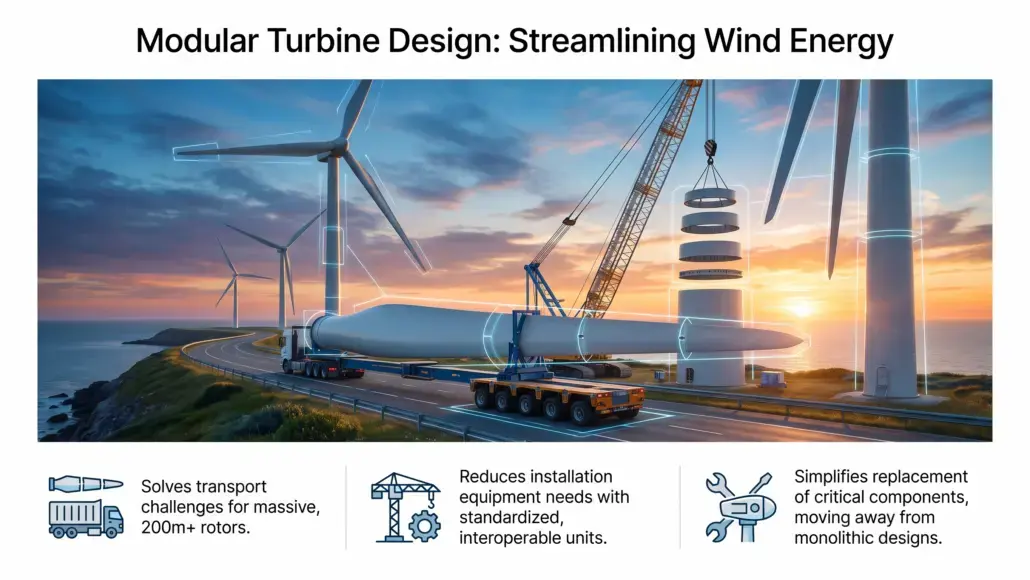

As rotor diameters exceed two hundred meters, the industry is adopting turbine component modularization to overcome the challenges of transportation and installation. This engineering philosophy involves breaking down complex turbine systems into standardized, interoperable units. By moving away from monolithic designs, the power generation sector can reduce the equipment requirements for installation and simplify the replacement of critical components. Integrating turbine component modularization into the design phase is essential for cost reductions. Modular systems allow for flexibility in the supply chain, as modules can be sourced from various regional suppliers. This approach mitigates the risks associated with supply failures. As the industry scales, the ability to iterate on individual modules without redesigning the entire turbine will drive technical advancement.
Standardization of Nacelle and Blade Assemblies
The nacelle is the most complex part of a wind turbine, housing the generator, gearbox, transformer, and control systems within a confined space. Historically, these components were integrated into a single, massive housing that required extremely high-capacity cranes for both installation and major repairs. Through turbine component modularization, manufacturers are redesigning the nacelle as a series of distinct functional blocks. For instance, the power conversion module can be separated from the primary drivetrain, allowing for easier access and replacement if electrical faults occur. This segmentation significantly reduces the downtime associated with major component failures, as specialized crews can replace a single module rather than attempting complex on-site repairs on a monolithic system.
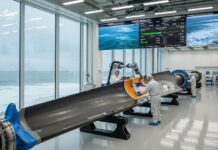
Blade design is also undergoing a transition toward modularity, particularly as lengths surpass one hundred meters. Transporting these massive structures through narrow roads or through crowded ports has become a major logistical bottleneck. Modular blades, which are manufactured in two or more segments and joined during installation, offer a solution to these transportation limits. These joints are engineered to maintain structural integrity and aerodynamic efficiency under extreme fatigue loads, utilizing advanced carbon fiber reinforcements and precision-engineered bolt systems. The ability to transport blades in smaller sections expands the range of viable wind farm sites and reduces the cost of specialized transport vessels and trailers. Additionally, if a blade sustains localized damage, the modular approach may allow for the replacement of a single segment rather than the entire structure, providing a more sustainable maintenance model.
Standardization across different turbine models is another critical benefit of modularity. By utilizing common interfaces and connection points, manufacturers can use the same modules across various power ratings and rotor configurations. This reduces the inventory costs for spare parts and allows for more streamlined training for maintenance technicians. When a new, more efficient generator or cooling system becomes available, it can be integrated into existing turbine platforms with minimal modifications, provided the interface standards are maintained. This flexibility ensures that wind farm operators can benefit from technical improvements throughout the life of their assets without requiring a full repowering project.
Logistical Improvements Through Segmented Tower Construction
The height of wind turbine towers is a factor in capturing wind speeds. Traditional tubular steel towers have reached their maximum diameter for road transport. Turbine component modularization in tower construction has led to the development of segmented designs that can be transported in containers. Segmented steel towers utilize joints that allow for larger base diameters, providing stability for the next generation of turbines. This shift in tower engineering allows for heights exceeding one hundred and sixty meters, boosting the energy yield of projects.
Innovative materials, such as modular concrete blocks or hybrid steel-concrete designs, are also becoming more common. These systems utilize pre-cast concrete segments that are tensioned together on-site using steel tendons. Modular concrete towers offer exceptional durability and dampening properties, which are beneficial for mitigating the vibrations generated by large rotors. The logistics of transporting concrete segments are much simpler than moving massive steel sections, as they can be manufactured in local facilities near the project site, reducing the carbon footprint associated with long-distance transport. This localization of manufacturing also provides economic benefits to the regions where wind farms are located, supporting the industry’s social license to operate.
The assembly process for modular towers is designed for speed and safety. By utilizing self-climbing cranes or specialized internal lifting systems, developers can reduce the reliance on massive external crawler cranes, which are expensive and highly susceptible to weather delays. Modular towers also provide better internal access for maintenance, with standardized platforms and ladder systems that can be pre-installed in the factory. As the industry moves toward deeper offshore sites, the ability to assemble these towers in a controlled port environment before towing the completed units to their final location is a significant operational advantage.
Predictive Maintenance Cycles in Modular Wind Systems
The transition to modular designs is fundamentally changing how wind farm operators approach operations and maintenance. In a monolithic turbine, a failure in a small internal component can often require the removal of the entire nacelle, leading to weeks of lost production. Turbine component modularization allows for a more granular maintenance strategy, where individual modules can be monitored independently and replaced before a catastrophic failure occurs. Integrating advanced sensors within each module provides a continuous stream of data on temperature, vibration, and electrical performance, which is analyzed by machine learning algorithms to predict the remaining useful life of each component.
This shift toward predictive maintenance is supported by the standardized nature of modular units. Because the modules are designed for easy removal and replacement, operators can maintain a rotating stock of refurbished units. When a sensor indicates that a generator module is approaching its wear limit, a replacement can be scheduled during a period of low wind speed. The technician team simply disconnects the old module and installs the refurbished one, returning the turbine to service in a matter of hours. The removed module is then sent to a centralized facility for detailed inspection and refurbishment, ensuring a high level of quality control that is difficult to achieve during on-site repairs.
The use of digital twins is also enhanced by modularity. Each physical module has a corresponding digital model that tracks its entire service history, including manufacturing data, historical load patterns, and past maintenance interventions. This allows operators to optimize the deployment of modules across their fleet, placing newer or more durable units in the most demanding locations. The ability to track the performance of specific module designs across thousands of installations provides manufacturers with invaluable feedback for future engineering iterations. This continuous loop of data and improvement is a key driver for the long-term reliability and efficiency of the power generation sector.
On-Site Assembly Efficiencies and Labor Cost Reductions
The assembly of a wind turbine is a high-cost operation that requires specialized workers. Turbine component modularization simplifies the site-work by shifting complex integration into the factory. Standardized connectors reduce the time required for electrical hook-ups at the top of the tower. This reduction in time is critical for offshore wind farms, where every hour of technician time is expensive. Modular assembly also improves safety. By reducing the number of tasks performed at height, developers minimize the risk of accidents. Modular units are designed to be self-aligning, utilizing precision guides. This alignment reduces the physical strain on technicians. As the industry faces a shortage of labor, the simplification of the assembly process allows for faster training and the use of automated tools, reducing the labor cost per megawatt.
The efficiency of modular assembly extends to the commissioning phase of the project. Because each module is tested and verified in the factory before shipping, the number of issues discovered during site commissioning is significantly reduced. This leads to a more predictable project schedule and a faster transition to commercial operation. For developers, this predictability is essential for managing the financial risks associated with large-scale energy projects. The ability to demonstrate a consistent and efficient installation process also makes wind projects more attractive to institutional investors, who value the lower risk profile provided by standardized, modular technologies.
End-of-Life Decommissioning Benefits of Modular Units
As the first generation of large-scale wind farms approaches the end of their operational lives, the industry must address the challenge of decommissioning thousands of massive structures. Turbine component modularization provides a clear advantage in this phase, as the same features that simplify installation also make it easier to dismantle the turbines. Modular units can be disconnected and lowered individually, allowing for a more controlled and safer decommissioning process. The ability to recover standardized modules also creates a secondary market for refurbished components, which can be used to maintain older wind farms or in smaller-scale power generation projects in developing markets.
The material recovery aspect of decommissioning is also enhanced by modularity. By designing modules with a focus on disassembly, manufacturers can ensure that different materials,such as high-grade steel, copper, and specialized polymers,are easily separated for recycling. This is a significant improvement over monolithic designs, where materials are often bonded together in ways that make clean separation impossible. The transition to a circular economy in the wind industry depends on the ability to recover these high-value materials efficiently, reducing the environmental impact of manufacturing the next generation of turbines.
The decommissioning benefits of modularity also extend to the foundations and towers. Modular concrete towers can be dismantled in sections and the materials crushed for use in new construction projects, while segmented steel towers are easily transported to recycling facilities. By reducing the complexity and cost of the end-of-life phase, turbine component modularization helps to lower the total lifecycle cost of wind energy. This long-term perspective is essential for ensuring that wind power remains a sustainable and economically viable pillar of the global energy mix. The continued refinement of modular designs will remain a central focus for engineers as they seek to build more efficient, reliable, and sustainable power generation assets for the future.