


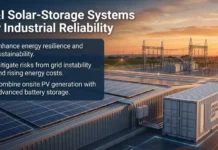












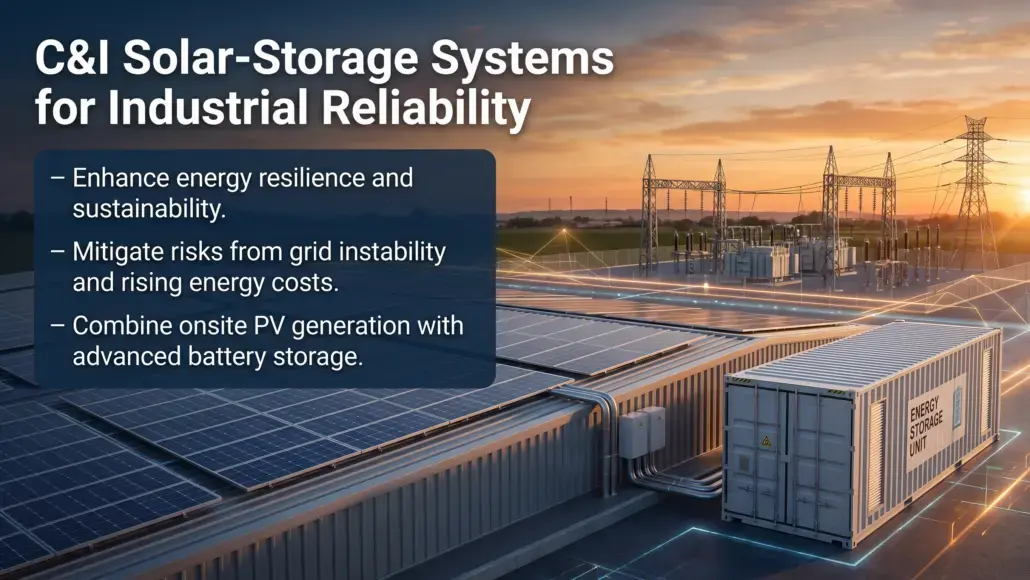

The industrial sector is undergoing a profound transformation as businesses seek to enhance their energy resilience and sustainability in an increasingly volatile global market. For many large-scale manufacturing, processing, and logistics operations, the adoption of C&I solar-storage systems has emerged as a strategic priority to mitigate the risks associated with grid instability and rising energy costs. By combining onsite photovoltaic generation with sophisticated battery energy storage, industrial facilities can secure a reliable source of power that operates independently of the local distribution network during emergencies. This localized energy infrastructure not only reduces the carbon footprint of the enterprise but also provides a level of operational certainty that is critical for maintaining productivity in a highly competitive environment. The integration of these systems is particularly valuable for industries with continuous production processes, where even a brief interruption in power can lead to significant financial losses and equipment damage.
Effective industrial energy management requires a holistic approach that balances the need for cost reduction with the imperative for reliability. C&I solar-storage systems offer a versatile solution that addresses both of these objectives by allowing facilities to optimize their energy consumption patterns and participate in grid-edge services. During periods of high irradiance, the solar array provides the primary source of power for the facility, with any excess energy directed into the batteries for later use. This stored energy can then be discharged during peak demand periods to avoid high utility charges or during the night to maintain baseline operations. The ability to manage these energy flows in real-time is a major technical advantage, enabling businesses to become more self-sufficient and less exposed to the fluctuations of the wholesale energy market. As the technology continues to mature, the economic case for these integrated solutions is becoming increasingly compelling for a wide range of industrial applications.
Technical Architectures and Component Integration in C&I Systems
The design and implementation of C&I solar-storage systems involve a complex interplay of power electronics, battery chemistry, and control software. Unlike smaller residential setups, industrial systems must be engineered to handle high voltages and large, variable loads, often requiring custom configurations to fit the specific needs of the facility. The choice of inverter technology is a critical factor, with many industrial users opting for string or central inverters that offer high efficiency and advanced grid-support features. These inverters are often integrated with sophisticated plant controllers that manage the synchronization of the solar, storage, and grid inputs, ensuring a seamless transition between different operational modes. The use of lithium-ion batteries remains the most common choice for C&I applications due to their high power density and declining costs, although alternative technologies such as flow batteries are gaining traction for long-duration storage needs.
Furthermore, the integration of these components requires a robust communication infrastructure that can handle the rapid exchange of data between the various subsystems and the building management system. This allows for the implementation of advanced control strategies, such as load following and frequency response, which further enhance the value of the asset. The safety and reliability of C&I solar-storage systems are also paramount, necessitating the use of advanced monitoring and protection devices to prevent thermal runaway or electrical faults. By incorporating these safety features into the initial design, industrial users can ensure that their energy infrastructure remains operational even under extreme conditions. The ongoing development of modular and pre-configured systems is also simplifying the installation process, reducing the time and cost associated with deploying these complex energy solutions at the scale required for large industrial sites.
Economic Value Drivers and Return on Investment Analysis
From a financial perspective, the primary driver for the adoption of C&I solar-storage systems is the potential for significant savings on electricity bills. In many jurisdictions, industrial customers are subject to high demand charges, which are based on their peak power consumption during a given month. By using the stored energy in their batteries to shave these peaks, facilities can dramatically reduce their utility costs, often resulting in a rapid return on investment. Additionally, the ability to generate and consume their own solar power allows businesses to hedge against future increases in energy prices, providing long-term budgetary stability. The declining cost of both solar modules and battery cells has further improved the economic viability of these projects, making them accessible to a wider range of businesses across different sectors and geographies.
Moreover, many industrial users can generate additional revenue by participating in utility-led demand response programs or by providing ancillary services to the grid. These services, such as voltage support and frequency regulation, are essential for maintaining the stability of the power system as more renewable energy is integrated. By utilizing the flexibility of their C&I solar-storage systems, businesses can receive payments from the grid operator for their contribution to system reliability. This diversification of revenue streams further enhances the financial attractiveness of these projects and supports the broader transition to a decentralized and resilient energy grid. For many companies, the ability to demonstrate a clear commitment to sustainability through the use of onsite renewable power also provides a significant competitive advantage in the eyes of investors, customers, and employees who are increasingly prioritizing environmental, social, and governance factors.
Enhancing Operational Reliability and Business Continuity
The most direct benefit of C&I solar-storage systems for industrial users is the improvement in operational reliability and the protection against grid-related disruptions. In regions where the electrical infrastructure is aging or subject to frequent weather-related outages, having a localized source of power is a critical component of a business continuity plan. These systems can be configured to operate in “island mode,” where the facility is disconnected from the main grid and powered entirely by the onsite solar and storage assets. This capability is essential for protecting sensitive equipment and ensuring that critical processes can be brought to a safe and controlled shutdown or maintained indefinitely during extended outages. The peace of mind that comes with this level of energy security is a major factor in the decision-making process for industrial leaders who cannot afford the risks associated with an unreliable power supply.
Additionally, the use of advanced energy management software allows facilities to prioritize their most critical loads during an outage, ensuring that the available energy is used as efficiently as possible. This granular level of control is a significant improvement over traditional backup generators, which often have limited capacity and require ongoing maintenance and fuel deliveries. The integration of solar firming technologies at the C&I level also ensures that the power provided by the solar array is stable and high-quality, further protecting the facility’s electrical infrastructure. As the frequency and severity of extreme weather events continue to increase, the role of onsite solar and storage in building industrial resilience will only grow in importance. By investing in these technologies today, businesses can ensure that they are prepared for the challenges of tomorrow while contributing to the overall stability and decarbonization of the global energy system.
Regulatory and Policy Landscape for Industrial Energy Projects
The deployment of C&I solar-storage systems is also being shaped by a dynamic regulatory and policy environment. In many countries, governments are providing a range of incentives to encourage industrial businesses to invest in renewable energy and storage, including tax credits, grants, and accelerated depreciation. These policies are intended to lower the initial capital barriers and support the achievement of national carbon reduction targets. At the same time, new regulations are being introduced to facilitate the interconnection of these systems to the grid and to ensure that they can participate in energy markets on a fair and transparent basis. The evolution of these rules is a critical factor in determining the overall pace of adoption and the long-term success of the industrial solar sector.
However, challenges remain, particularly in regions where the regulatory framework has not kept pace with the rapid technological advancements in the energy storage space. This can include complex permitting processes, restrictive interconnection requirements, and a lack of clear rules for the participation of C&I assets in wholesale energy markets. To address these hurdles, industry associations and policy-makers are working together to develop more standardized and supportive regulations that reflect the value of decentralized energy resources. The ongoing dialogue between these stakeholders is essential for creating a predictable and attractive investment environment for industrial users. As the benefits of C&I solar-storage systems become more widely recognized, we can expect to see a further expansion of supportive policies that will drive the next phase of growth in the industrial renewable energy market.
Future Innovations in Industrial Energy Systems and Sustainability
Looking forward, the future of C&I solar-storage systems will be characterized by continued innovation in technology, business models, and integration strategies. The development of next-generation battery chemistries, such as solid-state or sodium-ion, promises to further increase the safety and performance of industrial storage assets while reducing their environmental impact. At the same time, the expansion of digital energy platforms will allow for even more sophisticated optimization of onsite energy resources, including the integration of electric vehicle fleets and hydrogen production. These advancements will move industrial facilities closer to the goal of becoming “net-zero” or even “energy-positive” entities that contribute more to the grid than they consume. The ability to manage these complex energy systems will become a core competency for industrial leaders, requiring a deep understanding of both physical assets and digital platforms.
In addition, the rise of energy-as-a-service models is making it easier for businesses to adopt C&I solar-storage systems without having to commit significant upfront capital. Under these arrangements, a third-party provider designs, builds, and operates the energy infrastructure, with the customer paying a fixed monthly fee or a performance-based rate. This approach removes the financial and operational risks for the business, allowing them to focus on their core activities while reaping the benefits of clean and reliable power. As these new business models gain traction, we can expect to see a rapid acceleration in the deployment of onsite solar and storage across a wide range of industrial sectors. The resulting improvements in energy efficiency, reliability, and sustainability will be a major driver of global economic growth and a critical component of the effort to address the urgent challenges of climate change. The continued collaboration between technologists, financiers, and industrial leaders will be the key to unlocking the full potential of these transformative energy solutions.