

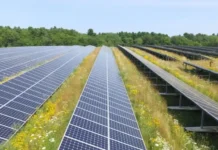


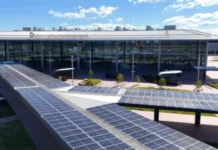
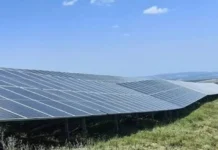



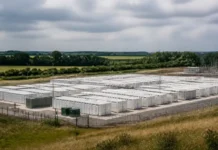






















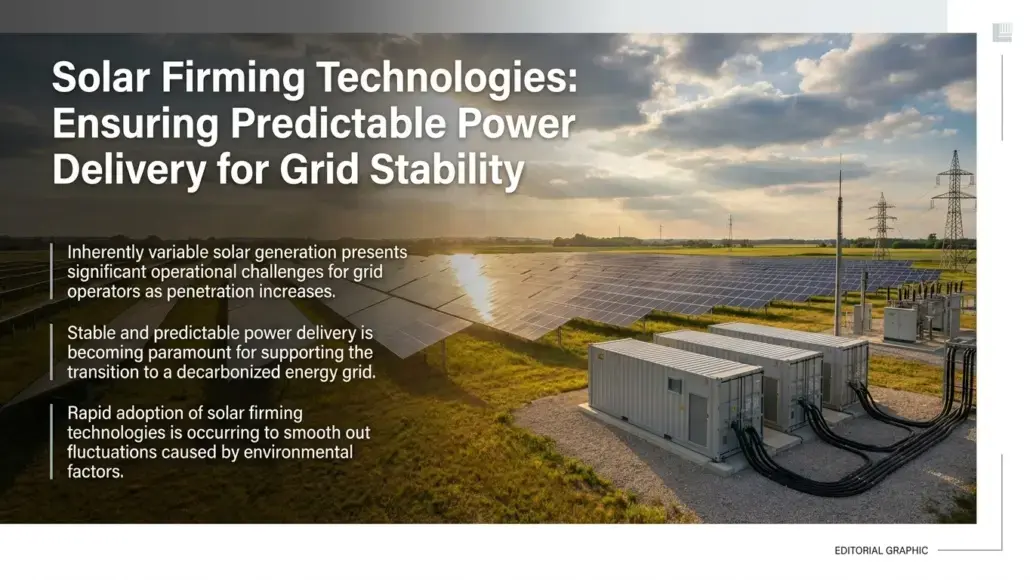

The transition toward a decarbonized energy grid relies heavily on the expansion of utility-scale solar installations, yet the inherent variability of photovoltaic generation presents significant challenges for grid operators. As solar penetration increases across global markets, the need for stable and predictable power delivery becomes paramount, leading to the rapid adoption of solar firming technologies. These systems are designed to smooth out the fluctuations caused by cloud cover or diurnal cycles, ensuring that the power injected into the high-voltage transmission network meets strict reliability standards. By utilizing advanced hardware and software solutions, project developers can now offer firm power blocks that rival traditional thermal generation in terms of dispatchability and ancillary service provision. This paradigm shift is essential for maintaining the synchronous stability of the grid, as the displacement of traditional rotating mass with inverter-based resources requires new methods for managing inertia and frequency response. The primary objective of implementing solar firming technologies is to eliminate the volatility associated with direct current to alternating current conversion under varying irradiance levels. When a solar farm operates without firming, its output can drop by as much as eighty percent in a matter of seconds due to passing clouds, creating massive ramp-rate issues for balancing authorities. Firming solutions, primarily based around electrochemical storage or hybridized thermal assets, act as a buffer that absorbs excess generation during peaks and discharges it during troughs. This capability allows plant owners to guarantee a specific level of output over a defined period, which is essential for meeting the requirements of power purchase agreements that demand high levels of availability and performance. The deployment of these technologies also facilitates the management of the duck curve, where the mid-day surplus of solar energy is shifted to meet the early evening peak, thereby reducing the strain on conventional peaking plants and lowering overall carbon emissions.
Technical Architectures of Modern Storage Integration and Inverter Control
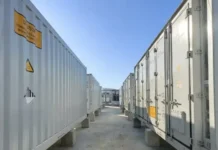
The integration of battery energy storage systems represents the most prevalent approach to firming solar generation at the utility scale. These systems are typically deployed using either AC-coupled or DC-coupled architectures, each offering distinct advantages for power smoothing and energy shifting. In a DC-coupled system, the solar arrays and the battery stacks share a common bus behind a central inverter, which reduces conversion losses and allows for more efficient clipping recapture. This architecture is particularly effective for solar firming technologies because it enables the battery to respond almost instantaneously to changes in solar output without the latency associated with multiple conversion steps. Furthermore, DC-coupling simplifies the control logic required for voltage regulation, as the battery can directly stabilize the DC bus voltage before it reaches the main inverter stage. Conversely, AC-coupled systems provide greater flexibility for retrofitting existing solar plants with firming capabilities. In these configurations, the solar inverters and battery inverters operate independently but are coordinated through a plant-level controller. This arrangement allows for the independent scaling of power and energy capacities, which is beneficial for meeting specific grid codes that require frequency response or voltage support. The choice between these architectures depends on the specific operational goals of the facility, such as whether the priority is long-duration energy shifting or short-duration ramp-rate control. Both methods utilize sophisticated power electronics to manage the bidirectional flow of electricity, ensuring that the solar firming technologies operate within their optimal state-of-charge windows while maintaining the required output profile. Advanced pulse-width modulation techniques and high-speed digital signal processors are employed within the inverters to maintain harmonic distortion levels well within the limits prescribed by international standards, ensuring that the firm power delivered is of the highest quality.
Economic Implications of Enhanced Power Predictability and Market Participation
From a commercial perspective, the ability to deliver predictable power transforms solar assets from intermittent energy sources into high-value capacity resources. Grid operators increasingly prioritize plants that can offer firm capacity, as this reduces the need for expensive spinning reserves provided by gas-fired turbines. By employing solar firming technologies, developers can capture higher market prices during peak demand periods when solar generation naturally declines, such as the early evening hours. This energy shifting capability is a critical component of project bankability in markets with high renewable penetration, where midday energy prices often approach zero or even turn negative. The ability to avoid negative pricing events significantly improves the long-term financial viability of utility-scale solar projects, making them more attractive to institutional investors and infrastructure funds. Additionally, the provision of ancillary services, such as fast frequency response and black-start capabilities, creates new revenue streams for solar-plus-storage projects. Modern solar firming technologies are capable of responding to grid frequency deviations in sub-second intervals, providing a level of precision that traditional mechanical governors cannot match. This technical advantage allows solar plants to participate in lucrative frequency regulation markets, further improving the internal rate of return for investors. As regulatory frameworks evolve to reward flexibility and reliability, the economic case for integrated firming solutions becomes even more compelling, driving the next phase of utility-scale solar development. The integration of these assets into virtual power plants also allows for the aggregation of multiple smaller solar-storage units into a single dispatchable entity, providing even greater market power and operational flexibility for portfolio managers.
Regulatory Standards and Grid Interconnection Protocols for Stability
The deployment of solar firming technologies is also being driven by tightening grid codes and interconnection requirements imposed by regional transmission organizations. In many jurisdictions, solar plants are now required to maintain specific ramp rates to prevent destabilizing the local distribution network. Failure to comply with these standards can result in significant financial penalties or even disconnection from the grid. By incorporating energy storage and advanced control logic, plant operators can ensure that their facilities meet these stringent criteria regardless of atmospheric conditions. This compliance is a vital aspect of grid constraint management as it allows for higher densities of renewable generation without compromising the integrity of the existing infrastructure. The use of smart inverters that can provide reactive power support even when the sun is not shining further enhances the value proposition of these systems to utility companies. Furthermore, the standardization of communication protocols, such as SunSpec or DNP3, has facilitated the integration of solar firming technologies into utility SCADA systems. This interoperability allows grid operators to view solar-plus-storage plants as single, controllable units of generation. The ability to remotely dispatch these assets and adjust their firming parameters in real-time enhances the overall resilience of the power system. As more utilities transition toward automated generation control, the role of firming technologies will expand from simple power smoothing to comprehensive grid management, supporting the long-term stability of the electricity supply. Cyber-security measures are also being integrated into these communication frameworks to protect critical energy infrastructure from unauthorized access and potential disruptions, ensuring that the transition to a more digitalized grid does not introduce new vulnerabilities.
Thermal Management and Life Cycle Optimization of Firming Assets
A critical but often overlooked aspect of solar firming technologies is the sophisticated thermal management required to maintain the longevity of the storage media. Whether utilizing lithium-ion, flow batteries, or other chemistries, maintaining an optimal temperature range is essential for preventing accelerated degradation and ensuring safety. Modern firming systems incorporate active cooling and heating circuits that are managed by the battery management system, which monitors the health of each individual cell or stack. By precisely controlling the internal environment, operators can extend the cycle life of the batteries, thereby reducing the total cost of ownership and improving the lifecycle environmental footprint of the project. This meticulous attention to thermal dynamics is particularly important in regions with extreme weather conditions, where the performance of outdoor energy storage systems can be significantly impacted by ambient temperatures. Moreover, the implementation of sophisticated software platforms for predictive maintenance allows operators to identify potential failures before they occur. By analyzing data from hundreds of sensors measuring voltage, current, and temperature, these platforms can detect anomalies that indicate the onset of cell imbalance or electronic component fatigue. This proactive approach to asset management ensures that the solar firming technologies remain available when the grid needs them most, maximizing the uptime and reliability of the overall power delivery system. The integration of these digital twins into the operational workflow also enables better financial forecasting, as the costs associated with component replacement and maintenance can be predicted with higher accuracy over the twenty to thirty-year lifespan of a typical utility-scale solar facility.
Future Trajectories for Hybrid Power Plant Optimization and Long Duration Storage
Looking ahead, the evolution of solar firming technologies will likely involve the integration of long-duration energy storage and advanced artificial intelligence for predictive dispatch. While lithium-ion batteries currently dominate the market for short-duration firming, emerging technologies such as iron-flow or liquid air energy storage offer the potential for multi-day capacity. These solutions would allow solar plants to maintain output even during extended periods of low irradiance, effectively providing 24/7 renewable power to the grid. The development of these long-duration assets will be critical for achieving deep decarbonization of the industrial and residential sectors, where constant power supply is non-negotiable. As the cost of these emerging technologies continues to fall, we can expect to see a shift toward hybrid storage configurations that combine the high power density of lithium-ion with the high energy density of long-duration systems. The application of machine learning algorithms to historical weather data and plant performance metrics will also refine the operation of solar firming technologies. By predicting cloud movements and temperature changes with high accuracy, these algorithms can optimize the charging and discharging cycles of the storage system to maximize efficiency and minimize degradation. This level of optimization ensures that the plant remains ready to respond to grid events while prolonging the operational life of the hardware components. As the technology matures, the boundary between variable renewable energy and firm baseload power will continue to blur, positioning solar as a foundational element of the global energy mix. The continued innovation in wide-bandgap semiconductors, such as silicon carbide and gallium nitride, will further increase the efficiency of power conversion, ensuring that the maximum amount of solar energy is delivered to the end user with minimal losses.