















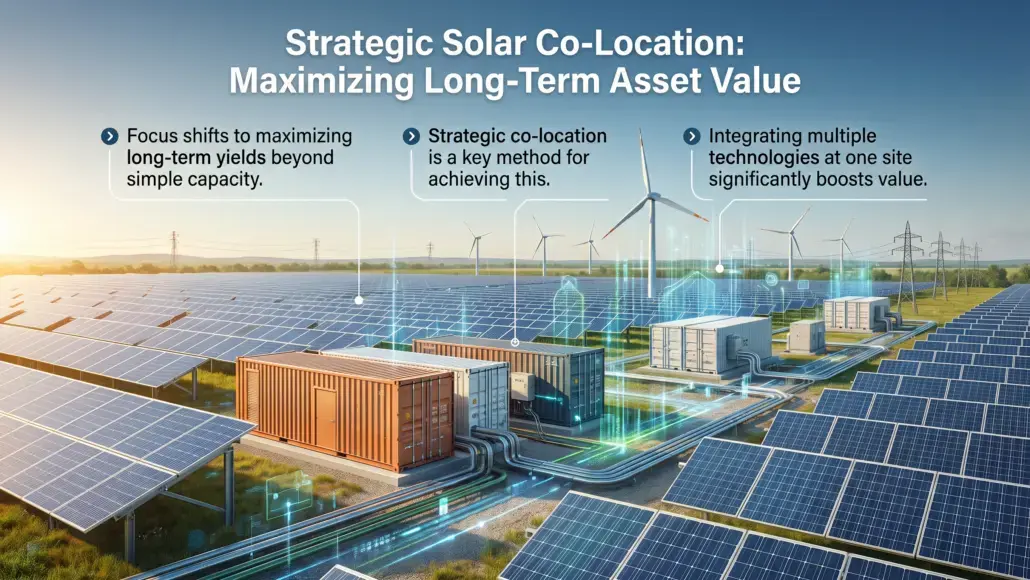

The global energy transition has placed utility-scale solar installations at the forefront of generation capacity expansion. As markets mature, the focus of developers and investors has shifted from simple capacity additions to the maximization of long-term yields. One of the most effective methods for achieving this objective involves the implementation of strategic co-location. By situating multiple generation or storage technologies at a single site, operators can significantly increase solar asset value through shared infrastructure and optimized power output. This approach addresses the increasing scarcity of suitable land and the growing complexity of grid connection processes, providing a structured pathway for improved project economics.
Utility-scale sites often face constraints related to grid capacity and land use regulations. Co-location strategies mitigate these challenges by allowing for a higher density of energy production per acre of land and per megawatt of interconnection capacity. When solar photovoltaic systems are paired with energy storage or other renewable sources, the resulting hybrid plant can deliver a more consistent and predictable power profile. This stability is highly prized by grid operators and off-takers alike, as it reduces the volatility associated with intermittent renewable generation. Consequently, the ability to provide firm capacity or follow specific dispatch signals directly enhances the bankability of the installation.
Identifying Synergies in Multi-Technology Site Development
The initial phase of increasing solar asset value through co-location involves a detailed assessment of technical and geographic synergies. Solar projects require large areas of land with specific irradiation characteristics, which often overlap with the requirements for other renewable technologies or energy storage facilities. By analyzing the diurnal and seasonal patterns of generation, developers can identify complementary technologies that fill the gaps in solar production. For instance, pairing solar with wind power can lead to a more balanced generation profile, as wind often peaks during nighttime hours or during seasons when solar production is lower.
Beyond generation, the integration of battery energy storage systems represents the most common form of co-location in the current market. These systems allow for the shifting of energy from periods of high production and low prices to periods of high demand. This capability not only prevents energy curtailment but also allows the plant to capture higher market prices, thereby increasing the overall solar asset value. The site selection process must account for the physical footprint of these additional components, ensuring that the layout minimizes shading and maintains efficient access for maintenance operations. Proper planning at this stage prevents future operational conflicts and ensures that each technology performs at its theoretical maximum efficiency.
Financial synergies also play a critical role in the development of multi-technology sites. Centralizing the project management, permitting, and construction activities leads to significant capital expenditure savings. Shared access roads, security systems, and operations buildings represent immediate cost reductions that improve the initial internal rate of return. Investors are increasingly looking for projects that demonstrate this level of logistical efficiency, as it indicates a sophisticated approach to risk management and cost control. The reduction in soft costs alone can make the difference between a project that is marginally viable and one that attracts premium financing terms.
Technical Optimization of Shared Grid Interconnection Points
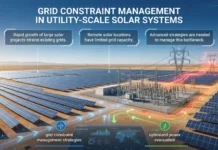
Grid interconnection remains one of the most significant bottlenecks in the development of utility-scale solar projects. The costs associated with building new substations and transmission lines can be prohibitive, often accounting for a substantial portion of the total project budget. Co-location strategies address this issue by maximizing the utilization of existing or planned interconnection capacity. By using sophisticated power electronics and control systems, developers can manage the combined output of multiple technologies to stay within the limits of a single grid connection agreement. This technical optimization is a primary driver for improving solar asset value in regions where the grid is congested.
Modern inverter technology allows for precise control over the flow of electricity from both the PV array and the storage system. These advanced systems can perform reactive power compensation and frequency regulation, providing essential services to the grid that were previously the domain of traditional thermal power plants. By offering these ancillary services, co-located assets can access additional revenue streams that are not available to standalone solar installations. The ability to support grid stability increases the attractiveness of the project to regulators and system operators, potentially leading to faster permitting timelines or more favorable connection terms.
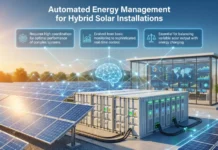
The management of export limits requires real-time monitoring and automated dispatch algorithms. During periods of peak solar irradiation, the system may produce more power than the grid connection can handle. Instead of curtailing this excess energy, a co-located storage system can absorb the surplus for later use. This ensures that every photon captured by the PV panels contributes to the financial performance of the asset. The precision of these control systems is vital for maintaining compliance with utility requirements and avoiding penalties. As grid codes become more stringent, the technical sophistication of the interconnection strategy will become an even more critical component of the project lifecycle.
Operational Efficiencies and Cost Reduction Through Site Integration
Once a co-located facility is operational, the benefits of site integration extend into the long-term maintenance and management of the assets. A single operations and maintenance team can oversee the entire facility, reducing the labor costs associated with site visits and equipment inspections. Shared monitoring platforms provide a unified view of the system performance, allowing for faster identification of faults and more efficient scheduling of repairs. These operational efficiencies contribute directly to the reduction of ongoing expenditure, which in turn elevates the solar asset value over the life of the project.
Standardization of equipment across different parts of the site can also lead to savings in spare parts inventory. When inverters, transformers, and monitoring hardware are compatible or identical, the cost of maintaining a backup supply is significantly lower. The data gathered from integrated monitoring systems allows for predictive maintenance strategies. By analyzing the performance trends of both the solar panels and the storage components, operators can predict when a component is likely to fail and address the issue before it leads to unplanned downtime. This proactive approach ensures maximum availability and revenue generation.
The environmental monitoring and reporting requirements for a single large site are often less burdensome than those for multiple smaller, geographically dispersed projects. Integrated environmental management plans can address the impacts of the entire facility, streamlining the compliance process. This is particularly important for utility-scale assets that must adhere to strict biodiversity and land use standards. By centralizing these functions, the project owner reduces the administrative overhead and focuses resources on core generation activities. The resulting lean operational structure is a key factor in maintaining the competitive position of the asset in a crowded market.
Enhancing Revenue Profiles via Strategic Portfolio Co-Location
The ultimate goal of any co-location strategy is to create a more resilient and diverse revenue profile. Standalone solar projects are inherently exposed to the volatility of daily and seasonal weather patterns. By diversifying the generation mix on-site, owners can hedge against the risk of low production in any single technology. This diversification is especially valuable in markets where merchant market strategies reshaping solar project financing are becoming the norm. As projects move away from fixed-price power purchase agreements, the ability to manage market exposure through varied generation profiles becomes essential for financial stability.
Strategic co-location allows for participation in multiple market segments simultaneously. While the solar component provides bulk energy during daylight hours, the integrated storage system can participate in high-frequency trading or provide capacity reserves. This multi-layered revenue approach ensures that the asset is generating value even when solar irradiation is low or when energy prices are depressed during the midday peak. The flexibility to switch between different market activities based on real-time price signals is a powerful tool for maximizing the return on investment. This adaptability is what truly defines a high-value energy asset in the modern grid.
The bankability of hybrid projects is often higher than that of standalone installations because of this reduced revenue volatility. Lenders are more comfortable providing capital at lower interest rates when a project can demonstrate multiple paths to profitability. The inclusion of storage, in particular, acts as a form of insurance against the “cannibalization” effect, where high solar penetration drives down energy prices during the hours when solar plants are most productive. By shifting production away from these low-price windows, the owner protects the solar asset value and ensures a more stable cash flow for debt service and investor distributions.
Risk Mitigation Through Diverse Technology Deployment
Risk management is a fundamental aspect of utility-scale energy development. Co-location serves as a physical and financial hedge against a variety of project-specific and market-wide risks. Technical risks, such as the underperformance of a specific type of PV module or a failure in the tracking system, are mitigated when other technologies on the site continue to function. This ensures that the facility as a whole maintains a minimum level of output, protecting the project from total revenue loss. The geographic concentration of assets also allows for more effective physical security and disaster recovery planning.
Regulatory risks are also addressed through the flexible nature of co-located sites. As energy policies evolve, the ability to add or modify components at an existing site allows the owner to adapt to new requirements without the need for entirely new project developments. For example, if a market introduces a new requirement for grid-forming capabilities, an existing solar site with co-located storage can be upgraded with new inverter software to meet the standard. This future-proofing is a significant component of the long-term solar asset value, as it preserves the relevance of the installation in a changing regulatory environment.
The long-term success of the solar industry depends on the ability to integrate high levels of renewable generation without compromising grid reliability. Co-location strategies provide a scalable solution to this challenge by internalizing the costs and complexities of integration at the project level. As more developers adopt these practices, the overall efficiency of the renewable energy fleet will improve, leading to lower costs for consumers and higher returns for investors. The continued evolution of co-location techniques will remain a cornerstone of the strategy to enhance the value and impact of solar power on the global stage. Provision of these advanced strategies ensures that solar energy remains a dominant force in the global power mix for decades to come. Provision of clear and actionable pathways for site optimization allows the industry to move beyond simple installation and toward sophisticated energy management. Each step taken toward better integration is a step toward a more sustainable and economically viable future. By focusing on these core areas, stakeholders can ensure that their investments are protected and that the transition to clean energy continues at an accelerated pace. The integration of these elements forms a comprehensive approach to asset management that is essential in the current competitive environment.
Over the coming years, the refinement of these strategies will likely lead to even greater improvements in performance and profitability. Final assessments of site potential must always prioritize these integrated approaches to ensure the highest possible returns. Through constant innovation and rigorous analysis, the solar sector will continue to redefine the boundaries of what is possible in renewable energy production. Provision of reliable and cost-effective energy is the ultimate metric of success, and co-location is a vital tool for reaching that goal. Success in this field requires a deep understanding of both the technical and financial drivers of the industry. As the market continues to mature, those who master these strategies will be best positioned to lead the next wave of energy infrastructure development. Optimizing the relationship between different technologies at the site level is not just a trend but a fundamental requirement for the future of the industry. The collective impact of these improvements will be a more resilient energy system for everyone. Through careful planning and execution, the full potential of every solar site can be realized, delivering maximum value to all stakeholders involved. This focus on long-term stability and growth is what will sustain the industry through the challenges of the coming years. By embracing these concepts, developers can create a lasting legacy of clean, reliable, and profitable energy production. Provision of these insights is intended to guide the industry toward a more efficient and effective model of development. Each project represents an opportunity to refine these techniques and push the boundaries of excellence. The dedication to improving asset value through co-location is a testament to the ingenuity and resilience of the solar power generation sector.