









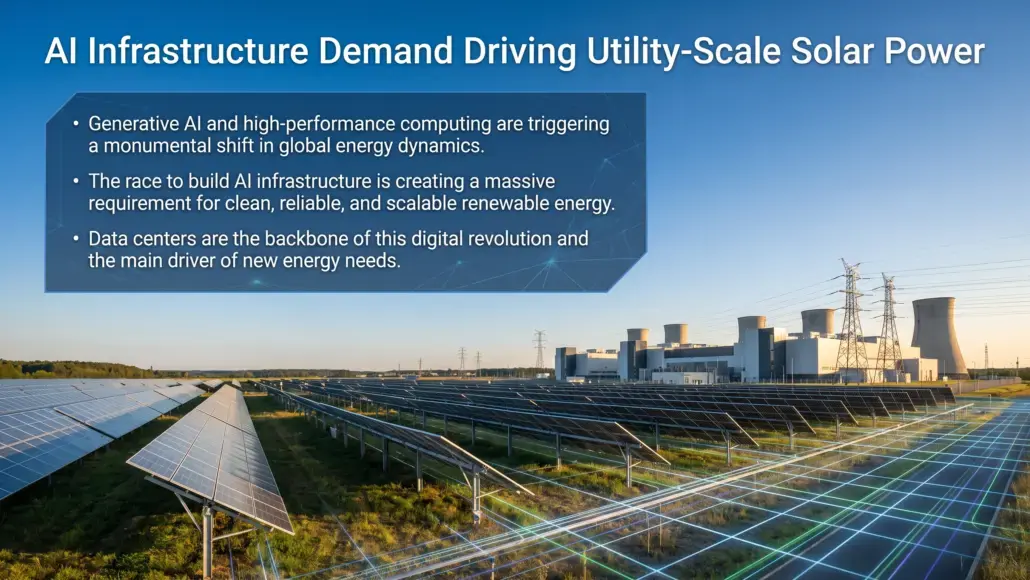

The explosion of interest in generative artificial intelligence and high-performance computing has triggered a monumental shift in global energy dynamics, specifically in the realm of utility-scale solar power. As technology corporations race to build out the necessary hardware to support these workloads, the resulting AI infrastructure demand is creating a massive new requirement for clean, reliable, and scalable renewable energy. Data centers, which serve as the backbone of this digital revolution, are notorious for their high power density and constant load profiles, making them a unique challenge and opportunity for the solar industry. To meet their ambitious carbon-neutral goals, major tech firms are increasingly turning to large-scale photovoltaic installations, often coupled with energy storage, to provide the gigawatts of power needed to fuel their expansion. This surge in demand is reshaping the project development landscape, driving larger deal sizes and faster deployment timelines in key markets around the world.
The scale of the energy requirements associated with modern AI workloads is unprecedented. Unlike traditional cloud computing, which can often be managed through energy efficiency improvements, the training and inference processes of large language models require vast amounts of computational power that translate directly into increased electricity consumption. This AI infrastructure demand is not just a temporary spike but a sustained trend that is expected to accelerate as more industries integrate artificial intelligence into their core operations. For the solar sector, this represents a stable and high-volume off-taker class that is willing to sign long-term power purchase agreements, providing the financial certainty needed to bring massive new projects to fruition. However, the localized nature of data center clusters often places additional strain on the grid, requiring innovative approaches to interconnection and regional power balancing.
The Role of Utility-Scale Solar in Decarbonizing Data Centers
The primary motivation for technology companies to prioritize solar energy in their procurement strategies is the need to decouple their growth from carbon emissions. As the public and regulatory focus on the environmental impact of artificial intelligence intensifies, these firms are under immense pressure to ensure that their operations are powered by 100% renewable energy. Utility-scale solar is uniquely positioned to meet this need due to its rapid scalability and decreasing cost profile. In many regions, the levelized cost of solar energy is now well below that of traditional fossil fuel generation, making it the most economical choice for large-scale power procurement. The ability to deploy solar assets in proximity to data center hubs further enhances their value, as it can reduce transmission losses and support local energy resilience.
However, the intermittency of solar generation remains a significant hurdle for data centers that require constant, 24/7 power supply. To address this, many tech companies are moving beyond simple renewable energy credits and toward more sophisticated procurement models that involve direct investment in hybrid solar-plus-storage projects. By combining solar arrays with large-scale battery systems, these facilities can provide a more consistent power profile that matches the baseline load of the AI infrastructure. This transition toward firm renewable power is essential for maintaining the operational integrity of high-performance computing clusters while fulfilling corporate sustainability mandates. The development of these advanced energy solutions is being accelerated by the very AI infrastructure demand that they are designed to support, creating a virtuous cycle of innovation in both the tech and energy sectors.
Grid Challenges and Interconnection Bottlenecks for Large Load Growth
The rapid expansion of data centers driven by AI infrastructure demand is exposing significant weaknesses in the current electrical grid. In many popular data center markets, the volume of new interconnection requests has overwhelmed the capacity of local utilities to process them, leading to years of delays for both generation and load projects. The massive power requirements of AI-focused facilities can quickly exhaust the available capacity of existing transmission lines, necessitating expensive and time-consuming upgrades. For solar developers, this means that finding sites with both high irradiance and available grid capacity is becoming increasingly difficult. The coordination between data center developers, solar generators, and grid operators is therefore critical to ensure that the necessary infrastructure is in place to support this growth without compromising the stability of the system for other users.
Furthermore, the concentration of large loads in specific geographic areas can lead to localized voltage instability and other power quality issues. To mitigate these risks, utilities are exploring new grid management techniques, such as the use of smart inverters and synchronous condensers, to provide the necessary reactive power support. The integration of C&I solar-storage systems at the data center site itself can also provide a level of local balancing, reducing the overall impact on the wider network. By utilizing these decentralized resources, data center operators can improve their own reliability while contributing to the stability of the regional grid. As the demand for AI continues to grow, the ability of the power sector to adapt to these new load profiles will be a major determinant of the pace of digital innovation.
Economic and Strategic Implications for Solar Project Developers
For the solar industry, the rise of AI infrastructure demand represents a paradigm shift in the customer base. Historically, developers focused on selling power to utilities or a broad range of corporate off-takers with diverse load profiles. Today, a handful of hyperscale technology companies account for a significant and growing share of the utility-scale solar market. This concentration of buying power has led to more standardized contract terms and a greater emphasis on project size and speed of delivery. Developers who can successfully navigate the complexities of permitting, interconnection, and supply chain management for multi-gigawatt portfolios are well-positioned to capture this market. The strategic importance of these customers is also driving developers to explore new financing structures and partnerships that can support the rapid deployment of capital needed to meet the tech sector’s needs.
Moreover, the specific requirements of data center off-takers are driving innovation in project design and technology selection. There is an increasing demand for high-efficiency modules, advanced tracking systems, and integrated storage solutions that can maximize the energy yield from a given land area. The focus on reliability and uptime also means that developers must prioritize the quality of the underlying hardware and the sophistication of the plant management systems. The ability to provide granular, real-time data on carbon impact and energy provenance is another key differentiator for developers working with tech-savvy customers. As the AI sector continues to evolve, the solar industry must remain agile and responsive to the changing needs of this influential off-taker class, ensuring that the transition to a digital economy is powered by a sustainable and resilient energy foundation.
Policy and Regulatory Drivers for Clean Energy Procurement
The procurement of solar energy for AI infrastructure is also being shaped by a complex web of national and regional policies. In many jurisdictions, governments are introducing new incentives and mandates to encourage the use of renewable power by large energy users. This includes tax credits for solar and storage projects, as well as regulations that require data centers to report on their energy efficiency and carbon intensity. At the same time, the regulatory frameworks governing grid interconnection and wholesale energy markets are being overhauled to accommodate the rapid growth of both renewable generation and large-scale load. The outcome of these policy debates will have a significant impact on the cost and availability of clean power for the AI sector, as well as the overall pace of the energy transition.
International cooperation is also playing a role, as tech companies look to deploy their AI infrastructure across multiple countries. The ability to source renewable energy in diverse markets, each with its own regulatory environment, is a major challenge for global operations. The standardization of carbon accounting and renewable energy certification systems is essential for ensuring that the environmental benefits of these projects are recognized and rewarded consistently. As the global competition for AI leadership intensifies, the availability of clean, affordable power will become a key factor in determining where these facilities are located. Governments that can provide a stable and supportive environment for renewable energy development will be more likely to attract the investment and jobs associated with the AI revolution, creating a powerful economic incentive for climate action.
Future Outlook for AI-Powered Energy Optimization
Looking ahead, the relationship between artificial intelligence and the solar industry is expected to become even more deeply integrated. Beyond being a major consumer of power, AI technologies are also being used to optimize the operation and maintenance of solar assets. From predicting generation levels with unprecedented accuracy to identifying potential component failures before they occur, AI-driven tools are improving the efficiency and reliability of utility-scale solar plants. This synergy between the tech and energy sectors will be essential for managing the complexities of a grid dominated by variable renewables and massive, concentrated loads. The development of new energy-efficient computing architectures and the expansion of long-duration storage will further enhance the sustainability of the AI ecosystem, ensuring that the benefits of digital innovation are not achieved at the expense of the environment.
The potential for data centers to act as flexible grid resources is another exciting area of development. By adjusting their workloads in response to grid signals, AI facilities could help balance the supply and demand of renewable power, reducing the need for traditional peaking plants. This “demand-side flexibility” would turn data centers from a challenge for grid operators into a valuable tool for maintaining stability. The integration of these facilities into the broader energy system will require a holistic approach to planning and regulation, encompassing everything from land use and water consumption to electricity and fiber connectivity. As the AI infrastructure demand continues to reshape our world, the solar industry will remain at the forefront of the effort to power this new era with clean, sustainable, and reliable energy. The continued collaboration between technologists, energy experts, and policy-makers will be the key to ensuring that the digital and green transitions go hand in hand, creating a more prosperous and sustainable future for all.