




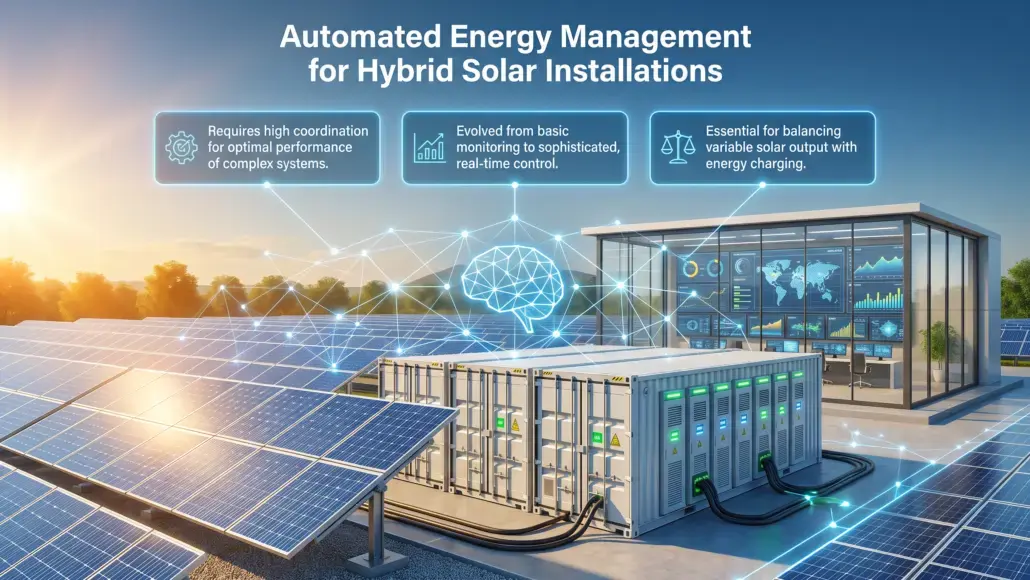

The operation of hybrid power plants, which integrate solar photovoltaic generation with energy storage systems or other dispatchable resources, requires a high level of coordination to achieve optimal performance. As these facilities become more complex, the role of automated energy management systems has evolved from basic monitoring to sophisticated, real-time control of multiple energy streams. These platforms are essential for balancing the variable output of solar arrays with the charging and discharging cycles of batteries, ensuring that the plant can meet its contractual obligations while maximizing its economic value. By automating the decision-making process, plant operators can respond to grid signals and market price fluctuations with sub-second precision, providing a level of reliability that is difficult to achieve through manual intervention. The integration of these advanced control systems is a critical factor in the successful deployment of utility-scale hybrid assets, as they allow for the seamless blending of variable and firm generation sources.
One of the primary drivers for adopting automated energy management is the need to navigate the increasingly complex requirements of modern power purchase agreements. Many utilities and corporate off-takers now demand firm power profiles that require the hybrid plant to provide a guaranteed level of output regardless of atmospheric conditions. To meet these targets, the management system must constantly assess the state of the plant, including the current solar irradiance, the state of charge of the batteries, and the predicted generation for the coming hours. By utilizing weather-based solar forecasting, the system can proactively adjust the operation of the storage system to ensure that sufficient energy is available to cover any shortfall in solar output. This predictive capability reduces the risk of non-compliance and the associated financial penalties, thereby improving the overall bankability of the project.
Coordination of Multi-Asset Generation and Storage
The core functionality of automated energy management lies in its ability to coordinate the diverse components of a hybrid power plant as a single, unified entity. In a typical utility-scale installation, this involves managing hundreds of thousands of solar modules, dozens of inverters, and a massive battery energy storage system. The management platform acts as the brain of the facility, processing vast amounts of data from field sensors and external sources to determine the optimal dispatch strategy. This coordination is particularly important during periods of high ramp rates, where the sudden onset of cloud cover can cause a rapid drop in solar production. The automated system must immediately trigger a discharge from the battery to compensate for the loss, maintaining a steady flow of power to the grid. This capability is essential for preserving the stability of the local network and preventing voltage fluctuations that could damage sensitive equipment.
Furthermore, the automation of these processes allows for the implementation of advanced operational modes, such as frequency regulation and peak shaving. By monitoring grid frequency in real-time, the automated energy management system can adjust the output of the plant to provide corrective power injections or withdrawals. This fast-acting response is highly valued by grid operators and can provide significant additional revenue for the plant owner. Similarly, the system can be programmed to maximize the recapture of clipped energy, where solar production exceeds the capacity of the main inverter. By diverting this excess energy into the batteries instead of curtailing it, the facility can improve its overall round-trip efficiency and capture more value from the available solar resource. This level of granular control is a major technical advantage of hybrid systems over standalone solar installations.
Predictive Analytics and Operational Efficiency
The effectiveness of automated energy management is significantly enhanced by the integration of predictive analytics and machine learning. These technologies allow the system to identify patterns in historical data and use them to forecast future performance with high accuracy. For example, by analyzing past irradiance data alongside current meteorological trends, the system can predict the timing and duration of shading events caused by cloud movements. This information is then used to optimize the charging schedule of the battery, ensuring that it is fully charged before a predicted drop in solar generation. This proactive approach minimizes the depth of discharge and reduces the number of cycles required to maintain output, which in turn extends the operational life of the battery cells. The reduction in degradation-related costs is a key benefit of using advanced automation in hybrid plant operations.
Moreover, the use of digital twins allows for the continuous monitoring of individual component health within the automated energy management framework. By comparing real-time performance data against a high-fidelity simulation of the plant, the system can detect subtle deviations that may indicate the onset of a fault. This capability enables predictive maintenance strategies, where components are repaired or replaced before they fail, minimizing unplanned downtime and maximizing the availability of the facility. The ability to monitor the health of every inverter, string, and battery module from a centralized platform provides operators with unprecedented visibility into the status of their assets. This data-driven approach to operation and maintenance is essential for managing large, geographically dispersed portfolios of hybrid power plants.
Integration with Grid Services and Market Signals
As the energy transition progresses, hybrid power plants are increasingly expected to participate in a wider range of grid services and energy markets. The automated energy management system serves as the interface between the physical plant and the external market environment, translating price signals and dispatch instructions into operational commands. This integration allows the plant to participate in day-ahead and real-time markets, as well as specialized services such as spinning reserves and black-start capabilities. By automatically adjusting the plant’s output based on the prevailing market conditions, the system can capture the highest possible price for every megawatt-hour generated. This dynamic optimization is particularly valuable in markets with high price volatility, where the ability to respond quickly to spikes can significantly improve the project’s bottom line.
In addition to economic optimization, the management platform also ensures that the plant operates within the technical constraints of the interconnection agreement. This includes maintaining specific power factors, harmonic levels, and reactive power support as required by the grid operator. The automated nature of these controls ensures that the facility remains compliant at all times, even as grid conditions change. The ability to provide reactive power independently of solar generation is a major benefit of hybridized systems, as it allows the plant to support the local voltage even at night. This technical versatility positions hybrid solar-storage facilities as a cornerstone of the future grid, providing the flexibility and reliability needed to displace traditional fossil-fuel-based generation.
Cyber-Security and Communication Infrastructure in Automation
The increasing reliance on automated energy management systems highlights the importance of a secure and resilient communication infrastructure. These platforms depend on the rapid and reliable exchange of data between the plant site, the utility control center, and external service providers. To protect against potential cyber-threats, modern management systems incorporate multiple layers of security, including data encryption, firewalls, and multi-factor authentication. The use of standardized communication protocols, such as IEC 61850 or DNP3, ensures interoperability while providing a framework for secure data transmission. Ensuring the integrity of these communication channels is a top priority for developers and operators, as any disruption could lead to loss of control over the facility or unauthorized access to sensitive operational data.
Furthermore, the deployment of edge computing devices within the automated energy management architecture allows for faster processing of critical control signals. By performing data analysis and decision-making locally at the plant site, these devices reduce the latency associated with cloud-based platforms and ensure that the plant can continue to operate even if the primary communication link is lost. This decentralized approach to control enhances the overall resilience of the facility and provides an additional layer of protection against systemic failures. As the grid becomes more digitalized, the boundary between information technology and operational technology will continue to blur, requiring a holistic approach to security that encompasses both physical and cyber assets. The ongoing development of AI-driven threat detection systems will further enhance the ability of automated platforms to identify and mitigate potential security risks in real-time.
Future Developments in Autonomous Plant Management
Looking forward, the next generation of automated energy management systems will likely involve even higher levels of autonomy and self-optimization. The development of multi-agent systems, where individual components can communicate and negotiate with each other to achieve collective goals, represents a major shift in control philosophy. This decentralized intelligence would allow for even more granular optimization, as every inverter and battery module could adjust its operation based on its own health and the needs of the surrounding assets. The integration of advanced AI models that can process unstructured data, such as satellite imagery or social media feeds, could further improve the accuracy of generation and demand forecasts. These advancements will move hybrid power plants closer to the goal of becoming fully autonomous, self-healing units of generation.
In addition, the expansion of automated management to include the coordination of diverse technologies beyond solar and storage, such as hydrogen electrolyzers or carbon capture systems, will create new opportunities for industrial energy optimization. The ability to manage the production and consumption of multiple energy vectors from a single platform will be essential for achieving the deep decarbonization of the global economy. As these technologies mature and costs continue to fall, the adoption of advanced automation will become the standard for all new utility-scale renewable projects. The resulting improvements in efficiency, reliability, and economic performance will accelerate the displacement of traditional energy sources and pave the way for a sustainable and resilient energy future. The continued collaboration between power engineers, data scientists, and policy-makers will be key to unlocking the full potential of these transformative technologies.