


































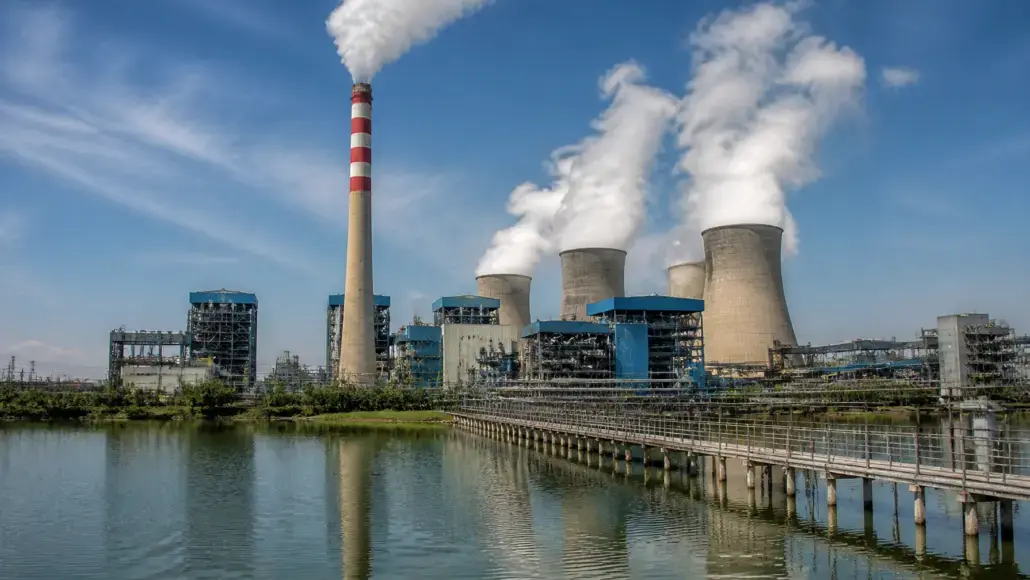
The Thermal Power Plant Benchmarking Report 2026, released by the CII Energy Efficiency Council at the 25th CII Energy Efficiency Summit, reveals significant performance variations among thermal power plants of similar capacity. Across the plants assessed, significant variations in Station Net Heat Rate (SNHR), Auxiliary Power Consumption (APC), water consumption, and flexibility-readiness were observed despite comparable unit sizes and technologies, highlighting substantial opportunities for improving efficiency and resource utilization through operational excellence and targeted interventions. Closing these gaps can enable generators to extract more value from existing infrastructure without relying solely on capital-intensive capacity additions.
These findings come at a critical juncture for India’s power sector. Rising electricity demand, growing renewable energy penetration, and the need to maintain grid stability are redefining the role of thermal power plants. In this context, resource efficiency is no longer only an environmental concern; it is a strategic lever for improving plant performance, containing operating costs, and strengthening energy security.
India’s electricity requirement is projected to grow by 29.7%, from 1,907,835 MU in 2026 27 to 2,473,776 MU in 2031-32, while peak demand is expected to increase by 32.2%, from 277 GW to 366 GW over the same period. Growth on this scale makes it essential to maximize the performance of existing generation assets while preparing the system for a much larger share of renewable energy.
Turning Performance Gaps into Savings
Resource efficiency starts with a clear view of how well a plant converts fuel and other inputs into electricity. In thermal generation, SNHR, APC, boiler efficiency, and water consumption have a direct bearing on both performance and generation cost.
The benchmarking report assessed coal-based plants in the 300 MW (units between 150 MW to 350 MW), 600 MW (units between 500 MW to 600 MW) and 660 MW (supercritical units) categories. The best performance recorded in each category is as follows:
-
SNHR: 2,450 kcal/kWh (300 MW), 2,377 kcal/kWh (600 MW) and 2,232 kcal/kWh (660 MW).
-
APC: 6.76% (300 MW), 5.11% (600 MW) and 4.45% (660 MW).
-
Boiler efficiency: 87.25% (300 MW), 87.43% (600 MW) and 88% (660 MW).
-
Sp. raw water consumption: 2.0 m³/MWh (300 MW), 1.9 m³/MWh (600 MW), 1.8 m³/MWh (660 MW).
The report finds that supercritical units outperform subcritical units across key performance parameters due to higher cycle efficiency, superior steam conditions, lower APC enabled by Turbine-Driven Boiler Feed Pumps (TDBFPs) and Natural Draft Cooling Towers (NDCTs), and advanced control systems that maintain critical parameters close to their design values.
Comparing a unit’s performance with similar plants helps identify improvement opportunities that can be achieved through better operation and maintenance, while recognizing limitations imposed by the plant’s design.
For instance, a 600 MW unit operating at a THR of 1,995 kcal/kWh, APC of 5.5%, boiler efficiency of 87%, and SNHR of 2,427 kcal/kWh would experience an increase in SNHR of approximately 12 kcal/kWh for every 0.5 percentage-point increase in APC, 14 kcal/kWh for every 0.5 percentage-point reduction in boiler efficiency, and 12 kcal/kWh for every 0.5% increase in turbine heat rate. Minimizing these deviations can significantly improve plant efficiency, reduce coal consumption, lower generation costs, and reduce associated CO₂ emissions.
The priority is to identify, in a systematic way, the gap between design parameters and actual operating performance, set measurable improvement targets and track progress through regular review.
Digitalisation and Continuous Monitoring
Sustained efficiency requires a shift from periodic assessments to continuous performance monitoring. Real-time tracking allows operators to spot deviations early, diagnose their causes and act before inefficiencies become costly.
The benchmarking report recommends online heat-rate monitoring, continuous condenser vacuum monitoring, and maintaining critical operating parameters close to design values. Even small deviations can have a significant impact on unit performance. For a 660 MW unit, a loss of just 0.025 kg/cm² in condenser vacuum can increase the unit heat rate by approximately 2%, making it one of the most critical parameters for sustaining efficiency.
Optimized soot-blowing schedules, evaluation of variable frequency drive (VFD) applications, improved auxiliary and compressor performance, and Energy Management Systems can further tighten operational control and enhance overall plant efficiency.
Emerging technologies add to these options. Artificial Intelligence (AI) and advanced analytics can uncover patterns across operating parameters that conventional monitoring may miss. Digital Twins enable simulation of operating scenarios, predictive maintenance can flag potential equipment failures before they cause unplanned outages, and Advanced Process Controls help maintain stable, consistent operation.
Technology, however, delivers results only when supported by sound operating discipline. Reliable instrumentation, accurate data, clear ownership and skilled personnel are essential to convert digital insight into measurable improvement. The aim should be a continuous loop of monitoring, diagnosis, intervention and verification.
Preparing Thermal Plants for a Renewable-Rich Grid
As India moves towards its renewable energy ambitions, thermal plants will increasingly need to complement variable solar and wind generation. This means operating flexibly, responding to shifting demand and absorbing fluctuations in renewable output without compromising reliability.
The report found flexibility-readiness levels ranging from 50.8% to 65.1% (average: 56.86%) for assessed subcritical plants and 48.5% to 69.0% (average: 60.31%) for assessed supercritical plants. The wide variation highlights the need for plant-specific interventions rather than a one-size-fits-all approach. Moreover, the larger spread within the supercritical fleet suggests that flexibility-readiness is influenced not only by technology but also by the effectiveness of flexibility measures and operational practices implemented at the plant level.
The report identifies several measures to enhance plant flexibility, including sliding-pressure operation, improved standard operating procedures (SOPs), extended metal-temperature monitoring, installation of Steam Coil Air Preheaters (SCAPH), fine-tuning of regulating and control systems, and advanced flame scanners. The assessment highlights that all top-performing supercritical plants operate in sliding-pressure mode, underscoring its importance in improving flexibility. It further emphasizes that SOPs should comprehensively address low-load operation and emergency handling to ensure safe and reliable flexible operation.
Operator training and skill development are also identified as among the most critical enablers of flexibility, given the increased operational complexity associated with flexible operation. The assessment indicates that, with implementation of these measures, subcritical units can also achieve flexibility levels comparable to those of supercritical units.
Flexibility must be pursued alongside efficiency and equipment reliability. More responsive operating regimes require appropriate monitoring, maintenance, and control strategies to manage equipment stress and ensure safe operation. As flexibility requirements and plant conditions vary widely, solutions should be tailored to the unit’s existing technology, level of automation, and vintage. Unit-level assessments can help prioritize interventions that deliver the greatest benefits while balancing technical needs against investment and operating costs.
For generators, the business case goes beyond fuel savings. Greater flexibility improves a plant’s ability to meet grid requirements, while better maintenance and operational control support reliability in a system with increasingly variable supply.
Extending Efficiency Beyond Fuel
Fuel is only one dimension of resource-efficient generation. Water use, ash utilization, emissions and material recovery also shape a plant’s environmental performance and operating expenditure.
Water management merits particular attention. Better condensate recovery, greater recycling and reuse, optimized cooling-tower cycles of concentration, and systematic water consumption monitoring can all reduce freshwater demand. The report also identifies Zero Liquid Discharge (ZLD) systems as an area for implementation across power plants, to be evaluated against plant-specific water balances, regulatory requirements, and lifecycle costs.
These measures are critical for compliance with the water-consumption norms notified by the MoEFCC dated 7 December 2015 (as amended in 2018), which prescribe a maximum specific water consumption of 3.5 m³/MWh for existing thermal power plants and 3.0 m³/MWh for new plants, along with requirements for zero liquid discharge.
Ash management can turn an operational burden into a productive resource. Long-term agreements with cement and brick manufacturers, stronger ash-transport infrastructure and value-added ash products can raise utilization, provided planning and logistics are reliable.
On emissions, the key levers are biomass co-firing, waste-heat recovery, optimisation of cycle heat rate and reduction of unburnt carbon. Building these into plant-level efficiency programmes allows generators to address resource use and environmental performance together rather than as separate goals.
The principle is simple: every tonne of fuel, every m³ of water and every material stream should be measured and managed with a clear understanding of its operational value, its cost and its potential for recovery or reuse.
Building Accountability Through Benchmarking
The impact of efficiency initiatives depends on how consistently they are implemented and measured. Benchmarking offers a structured basis for setting targets, comparing performance and replicating good practice across similar plants.
Performance indicators should be reviewed regularly, with accountability running from plant leadership to individual operating teams. Energy audits and equipment-level assessments can pinpoint specific interventions, and financial evaluation can rank projects by expected savings, implementation requirements and payback period.
Not every gap calls for major capital expenditure. Many improvements can come from better operating procedures, maintenance discipline, process adjustments and workforce capability. Others will need equipment upgrades or advanced control systems. A prioritized approach lets plants capture near-term gains while building a pipeline of longer-term investments.
New installations should build efficiency in at the design stage. The report highlights supercritical and ultra-supercritical technologies, alongside renewable energy, energy storage and carbon capture, utilization and storage (CCUS), as relevant elements of the evolving generation landscape. Each must be assessed for technical suitability, system requirements and lifecycle economics.
Making Efficiency Central to India’s Power Transition
India’s installed generation capacity stood at 552 GW as of 31 July 2026, with non-fossil sources accounting for 54.4% and fossil-fuel sources for 45.6%. As renewable capacity expands towards the national target of 500 GW by 2030, efficient and flexible thermal generation will remain important for grid stability and energy security.
Resource efficiency offers a practical way to reconcile these priorities. By cutting avoidable fuel consumption, utilizing biomass, operating near design parameters, improving auxiliary systems, strengthening water management, and using digital tools to optimise operations, power plants can improve cost competitiveness while reducing environmental impact. The benchmarking exercise demonstrates that significant gaps remain among comparable plants in key parameters such as heat rate, auxiliary power consumption, flexibility readiness, and water use, highlighting that much of the sector’s efficiency potential is already within reach through proven operational and technological measures.
The opportunity lies not only in adopting individual technologies but in embedding efficiency into everyday operating decisions. Continuous benchmarking, measurable targets, technology adoption, and clear accountability can turn performance improvement from an occasional exercise into a sustained management priority.
Ultimately, the most resource-efficient plant is one that reliably delivers electricity while using less fuel, water, and other inputs per unit generated. Achieving this will be essential for India to meet rising demand, manage the shift to cleaner energy, and keep operational excellence at the heart of a resilient and competitive power system.