




























Close
MCE 2026
World Hydrogen & Carbon Americas

Siemens tech boosts energy efficiency in Alpine hut with advanced battery solution

Note* - All images used are for editorial and illustrative purposes only and may not originate from the original news provider or associated company.

Subscribe

- Never miss a story with notifications

- Gain full access to our premium content

- Browse free from any location or device.

Media Packs

Expand Your Reach With Our Customized Solutions Empowering Your Campaigns To Maximize Your Reach & Drive Real Results!

– Access the Media Pack Now

– Book a Conference Call

Leave Message for Us to Get Back

Related stories

Transformation of Power Distribution through Advanced Metering Infrastructure

The distribution level of the energy value chain is undergoing a fundamental redesign as utilities replace legacy equipment with intelligent monitoring systems that optimize flow and efficiency.

Strengthening Grid Reliability Through Advanced Metering Infrastructure

Grid stability and uptime are becoming increasingly critical as extreme weather events and fluctuating demand patterns challenge the resilience of traditional power systems.

The Role of Advanced Metering Infrastructure in Driving Smart Grid Growth

Modern energy systems are undergoing a radical transformation as digital communication layers integrate with traditional power hardware to facilitate a more responsive and scalable grid architecture.
- Advertisement -

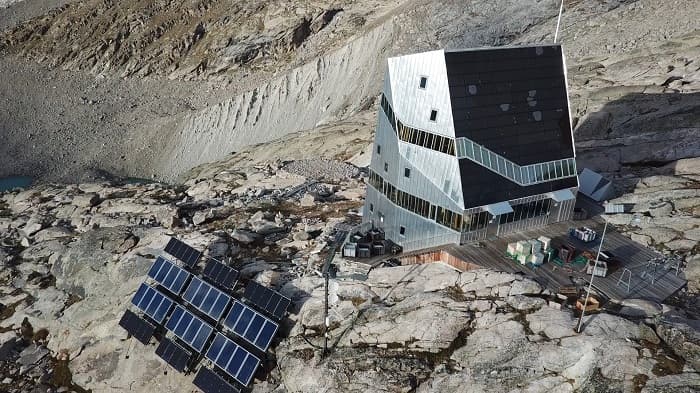
The “Bergkristall” (Mountain Crystal), a mountain hut situated at an altitude of 2,883 meters in the Monte Rosa Massif of the Valais Alps, has been largely energy self-sufficient since 2010. Along with thermal solar collectors, a photovoltaic system integrated in the hut’s southern facade ensures a high degree of energy self-sufficiency and a reliable energy supply. Since 2010, all of the building’s performance data, such as solar energy generated and battery capacity, have been bundled in Siemens Navigator, the cloud-based building performance platform.

Lithium instead of lead
Ongoing analysis of the energy flows revealed that the lead batteries in use since the hut’s opening would soon reach the end of their life. This prompted the operators to put a new solution in place. Siemens was awarded the contract to design the entire solution and replace 48 lead batteries with 14 lithium iron phosphate (LFP) batteries with a capacity of 215 kWh. Thanks to regional airline Air Zermatt, approximately 8.6 tons of lead batteries were transported out and the nearly 2.7 tons of lithium batteries helicoptered in to the
Monte Rosa Hut. Following an initial trial with two batteries, technicians successfully connected the newly installed batteries to the energy supply system in just two days.

The new battery solution has pushed the hut’s energy self-sufficiency to even greater heights by lightening the load on the generator used in bad weather.

In addition, the new batteries offer more usable capacity. The completed project considerably boosts the Monte Rosa Hut’s secure, energy-efficient and sustainable energy supply at any time of day and in any weather condition.

Monte Rosa Hut: key figures

  • Opened in 1895 as Betemps Hut, renamed Monte Rosa Hut in 1940
  • Planning and development of a new “mountain hut of the future” by the Swiss Federal Institute of Technology (ETH) in Zurich
  • Opened in July 2010; old hut demolished in 2011
  • 120 beds, approximately 8,000 overnight stays per year
  • High degree of energy self-sufficiency, 215 kWh battery capacity
  • Waste water treatment and ventilation run autonomously, even in winter
  • All technical systems are digitalized and can be controlled remotely

Latest stories

Related stories

Transformation of Power Distribution through Advanced Metering Infrastructure

The distribution level of the energy value chain is undergoing a fundamental redesign as utilities replace legacy equipment with intelligent monitoring systems that optimize flow and efficiency.

Strengthening Grid Reliability Through Advanced Metering Infrastructure

Grid stability and uptime are becoming increasingly critical as extreme weather events and fluctuating demand patterns challenge the resilience of traditional power systems.

The Role of Advanced Metering Infrastructure in Driving Smart Grid Growth

Modern energy systems are undergoing a radical transformation as digital communication layers integrate with traditional power hardware to facilitate a more responsive and scalable grid architecture.

Advanced Metering Infrastructure Powering Data Driven Utilities

The transition from analog management to digital intelligence is redefining the utility sector as data becomes the primary driver for operational excellence and strategic decision-making.

Subscribe

- Never miss a story with notifications

- Gain full access to our premium content

- Browse free from any location or device.

Media Packs

Expand Your Reach With Our Customized Solutions Empowering Your Campaigns To Maximize Your Reach & Drive Real Results!

– Access the Media Pack Now

– Book a Conference Call

Leave Message for Us to Get Back

Translate »