












Close
MCE 2026
World Hydrogen & Carbon Americas

Iberdrola strengthens its leadership by increasing renewable capacity by 9.2% worldwide in 2021

Note* - All images used are for editorial and illustrative purposes only and may not originate from the original news provider or associated company.

Subscribe

- Never miss a story with notifications

- Gain full access to our premium content

- Browse free from any location or device.

Media Packs

Expand Your Reach With Our Customized Solutions Empowering Your Campaigns To Maximize Your Reach & Drive Real Results!

– Access the Media Pack Now

– Book a Conference Call

Leave Message for Us to Get Back

Related stories

Industrial Decarbonisation and Power Sector Synergy

The path to a net-zero economy requires the deep integration of heavy industry with the electrical grid. By exploring the concept of sector coupling and the role of hydrogen in difficult-to-abate sectors, this analysis details how industrial decarbonisation and power sector synergy can create a more resilient, flexible, and efficient energy system through shared infrastructure and coordinated strategy.

Hydrogen Trade Corridors Reshape Global Energy Supply

The emergence of international hydrogen trade is fundamentally redrawing the world's energy maps. By establishing dedicated corridors that connect resource-rich exporters with high-demand industrial centers, the global energy transition is moving toward a more diversified and resilient supply chain underpinned by advanced maritime logistics and rigorous certification standards.

Largest Solar-Plus-Storage Project Hits Initial Grid Sync

The first phase of the MTerra Solar project in...
- Advertisement -

The Iberdrola group has increased its renewable capacity by 9.2% in 2021, to over 38,000 MW ‘green’ – specifically 38.035 MW. The company has commissioned 3.484 MW of new renewables, in line with its strategy based on a decarbonised and competitive economy, as reported today by the company to the Spanish National Securities Market Commission (CNMV).

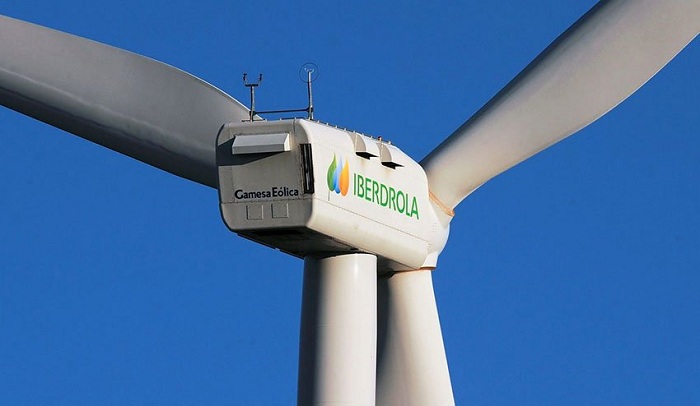
The group strengthens its global leadership in wind energy, with a 4,9% increase in onshore wind capacity to 19.376 MW. Offshore wind, meanwhile, reached 1,258 MW installed. Hydropower increased by 7.7% with 985 MW of new capacity, reaching 13.849 MW in the period. Iberdrola’s photovoltaic capacity also grew strongly in the period, increasing by 63% – with 1,182 MW of new installed capacity – and exceeding 3.000 MW at the end of the year 2021. Battery storage systems have an installed capacity of 193 MW.

The Iberian Peninsula is the region where the company has increased its renewable capacity the most, with 1,800 MW of new renewables – 56% of the total installed capacity in 2021 – to reach 19.210 MW green, mainly driven by the Tâmega complex project – where it has started up the first group of the Gouvães hydroelectric plant – and the development of 986 MW of new photovoltaic capacity, especially with the incorporation of the Francisco Pizarro photovoltaic plant with 516 MW and Arenales, with 150 MW.

Iberdrola’s renewable capacity has also improved in all the countries where the company operates: United Kingdom (+5%), United States (+%4,1), Brazil (+31.2%), Mexico (+1%), and the rest of the world, whose renewable capacity has grown by 26%.

Investments in clean energy have also boosted the company’s clean energy production, which grew by 8.7% to 73,719 green GWh. In total, the company’s production has increased by 4.8% to 129.331 GWh.

CO2 emissions continue to fall

In line with its commitment to a long-term environmentally and economically sustainable model, Iberdrola continues with its commitment to reduce its polluting emissions. At the end of 2021, 81% of the group’s installed capacity at global level was emission-free (compared to 79% the previous year) and 75% of its global production in 2021 was emission-free (in Europe this figure already exceeds 87%).

Iberdrola thus continues to make progress in its intention to reduce its emissions intensity to be carbon neutral by 2050. These objectives are aligned with the group’s commitment to the Sustainable Development Goals (SDGs) of the United Nations 2030 agenda. The company is focusing its efforts on two of them: point 7 – affordable and clean energy – and point 13 – climate action.

Latest stories

Related stories

Industrial Decarbonisation and Power Sector Synergy

The path to a net-zero economy requires the deep integration of heavy industry with the electrical grid. By exploring the concept of sector coupling and the role of hydrogen in difficult-to-abate sectors, this analysis details how industrial decarbonisation and power sector synergy can create a more resilient, flexible, and efficient energy system through shared infrastructure and coordinated strategy.

Hydrogen Trade Corridors Reshape Global Energy Supply

The emergence of international hydrogen trade is fundamentally redrawing the world's energy maps. By establishing dedicated corridors that connect resource-rich exporters with high-demand industrial centers, the global energy transition is moving toward a more diversified and resilient supply chain underpinned by advanced maritime logistics and rigorous certification standards.

Largest Solar-Plus-Storage Project Hits Initial Grid Sync

The first phase of the MTerra Solar project in...

India, UK Launch Offshore Wind Taskforce to Scale Capacity

India and the United Kingdom formally launched the India-UK...

Subscribe

- Never miss a story with notifications

- Gain full access to our premium content

- Browse free from any location or device.

Media Packs

Expand Your Reach With Our Customized Solutions Empowering Your Campaigns To Maximize Your Reach & Drive Real Results!

– Access the Media Pack Now

– Book a Conference Call

Leave Message for Us to Get Back

Translate »