
























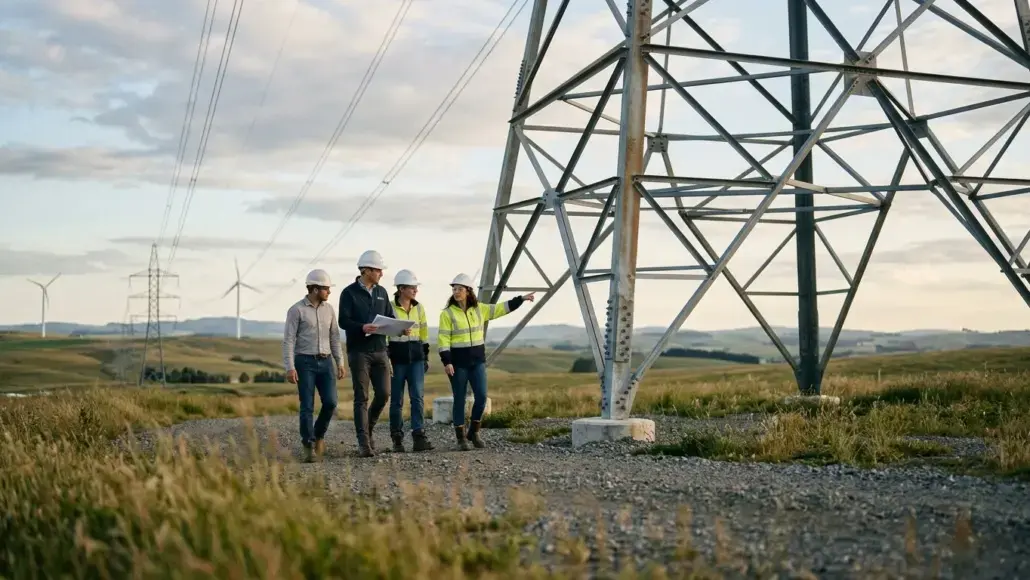

The traditional approach to safety in the power sector often focused on the “behavioral” side of the equation ensuring that workers used the correct PPE and followed established procedures. While these elements remain vital, the industry is increasingly embracing a more fundamental and effective philosophy: safety by design transmission infrastructure. Also known as “Prevention through Design” (PtD), this approach integrates safety considerations into the very beginning of the engineering and design phases. The goal is to design out hazards at the source, creating infrastructure that is inherently safer to build, operate, and maintain throughout its entire lifecycle. By addressing safety during the “pencil-to-paper” stage, utilities can eliminate risks that would otherwise require complex and costly administrative controls in the field.
Implementing safety by design transmission infrastructure requires a shift in the engineering mindset. It necessitates a collaborative process where design engineers, safety professionals, and experienced field personnel work together to identify potential hazards long before construction begins. This proactive approach not only protects the workforce but also improves grid reliability and reduces long-term operational costs. When an asset is designed for easy and safe maintenance, it is more likely to receive the care it needs, leading to fewer unexpected failures and a more resilient electrical grid. In the high-stakes world of high-voltage transmission, “designing for safety” is the ultimate expression of professional excellence and duty of care.
Eliminating Hazards through Intelligent Layout and Clearances
One of the primary applications of safety by design is the optimization of spatial layouts and electrical clearances. In a substation or on a transmission tower, every inch of space matters. Designing for safety by design transmission infrastructure involves ensuring that there is adequate “Working Space” around all energized components. This allows technicians to perform inspections and repairs without the constant threat of accidental contact or arc flash. By increasing the physical separation between phases and providing clearly defined “Safe Zones,” engineers can significantly reduce the risk profile of a site.
Furthermore, the design of access routes is a critical safety consideration. Traditionally, workers often had to climb over equipment or navigate cramped spaces to reach a maintenance point. A PtD approach prioritizes the inclusion of permanent ladders, platforms, and catwalks that are ergonomically designed and equipped with robust fall protection. This ensures that the worker can reach their destination safely and perform their work from a stable, secure position. By eliminating the need for temporary scaffolding or high-risk climbing, safety by design transmission infrastructure makes maintenance tasks more predictable and significantly safer.
Standardization and Human Factors in Equipment Design
Safety by design also extends to the granular level of equipment and component selection. Standardization is a powerful safety tool; when a utility uses the same types of switches, insulators, and connectors across its entire network, workers become intimately familiar with how they operate. This reduces the cognitive load and the potential for error that comes with having to learn a different system at every jobsite. Furthermore, safety by design transmission infrastructure involves selecting equipment that is designed for “Ease of Use” and “Clear Status Indication.”
For example, a switch that provides a clear, unmistakable visual confirmation of its position (open vs. closed) is infinitely safer than one that requires a complex sequence of checks. Similarly, designing equipment with “Ground-Level Operation” capabilities allows workers to perform switching or diagnostic tasks without ever leaving the safety of the ground. This eliminates the risks associated with working at heights and reduces the time workers spend in close proximity to energized equipment. By applying human factors engineering to the design of infrastructure components, we ensure that the physical world of the grid is aligned with the cognitive and physical capabilities of the workforce.
Integrating Maintenance Safety into Asset Management
A truly robust safety by design transmission infrastructure strategy considers the entire lifecycle of the asset, including the inevitable decommissioning phase. Asset management and safety are inextricably linked; an asset that is designed to be easily inspected is more likely to be maintained properly, extending its life and improving its reliability. Design engineers are now using “Life Cycle Costing” to justify the inclusion of safety features that might have a higher upfront cost but result in significant savings through reduced incident rates and more efficient maintenance cycles.
For instance, installing permanent structural health monitoring sensors on a transmission tower allows for “Condition-Based Maintenance” rather than “Time-Based Maintenance.” This means that workers only need to climb the tower when a specific issue is identified, reducing their overall exposure to the hazards of working at heights. Furthermore, the use of “Remotely Operated” diagnostic tools such as infrared cameras or LiDAR mounted on the tower allows for many inspections to be performed without any human presence in the hazard zone. This synergy between technology and safety by design transmission infrastructure represents the future of a safer and more intelligent power grid.
The Role of Virtual Design and Construction (VDC)
The digital revolution has provided engineers with powerful tools to visualize and test safety concepts before a single piece of steel is erected. Building Information Modeling (BIM) and Virtual Reality (VR) allow for a “Digital Rehearsal” of construction and maintenance tasks. By creating a high-fidelity virtual twin of the transmission infrastructure, engineers and safety professionals can “walk through” the site and identify potential safety clashes or ergonomic issues. This collaborative virtual environment allows for workforce input early in the design phase, where changes can be made at a fraction of the cost of field modifications.
For example, a VR simulation might reveal that a proposed transformer location makes it difficult for an emergency vehicle to access the site, or that a cable tray is positioned in a way that blocks a critical egress path. Identifying these issues in the virtual world is a key component of safety by design transmission infrastructure. It ensures that when the physical infrastructure is built, it has already been “safety-vetted” by the people who will actually work on it. This bridge between the digital and physical worlds is one of the most exciting developments in modern utility engineering, leading to unprecedented levels of precision and safety.
Conclusion: The Enduring Value of Designing for Life
The shift toward safety by design is more than a change in engineering standards; it is a commitment to the value of human life. It recognizes that while training and PPE are important, the most effective way to protect workers is to remove the danger before they ever arrive. By embedding safety into the DNA of our transmission infrastructure, we are creating a legacy of protection that will last for generations. This proactive approach is the ultimate form of risk management, ensuring that the power grid is not only a marvel of engineering but also a sanctuary of safety.
In conclusion, safety by design transmission infrastructure is the future of the energy industry. It requires a commitment to collaboration, a willingness to innovate, and a steadfast focus on the human element of infrastructure. As we continue to build and modernize the electrical grid to meet the challenges of the energy transition, let us ensure that every tower, every line, and every substation is designed with the safety of its workers as the primary objective. By designing for life, we are building a more resilient, efficient, and ethical energy future for everyone. The grid of tomorrow must be as safe as it is powerful, proving that in the world of high-voltage engineering, safety and excellence are one and the same.