

















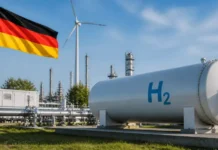


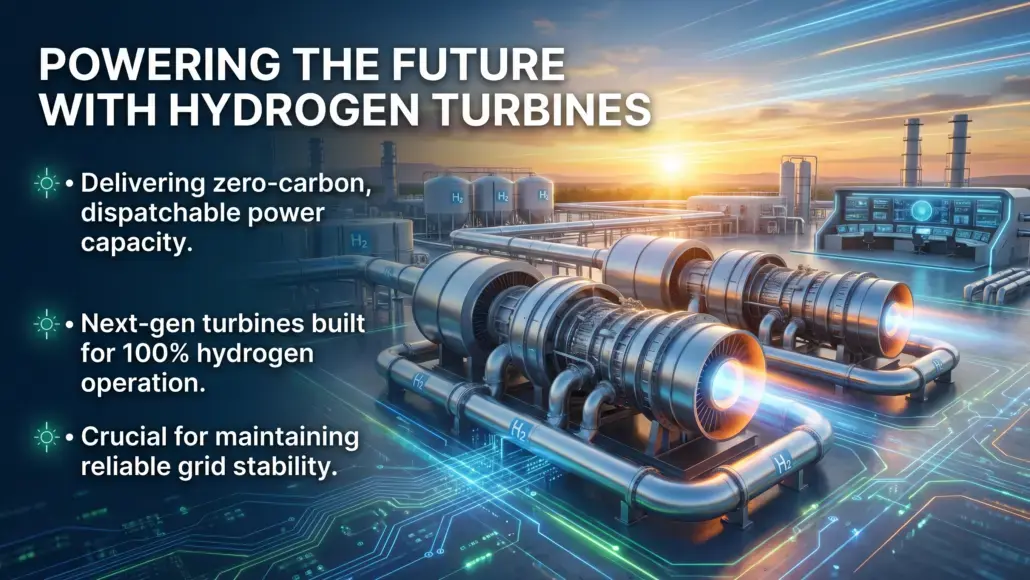

Major turbine manufacturers are now delivering Hydrogen-Fired Turbines Enabling Low-Carbon Power Generation to utility operators seeking zero-carbon dispatchable capacity for modern power grids. Major turbine manufacturers, including General Electric, Siemens Energy, and Mitsubishi Power, have accelerated their development programs to ensure that the next generation of gas turbines can operate on 100 percent hydrogen fuel. This transition is essential for maintaining the dispatchable capacity required to balance the inherent variability of solar and wind energy. Unlike traditional natural gas plants, turbines fueled by hydrogen produce zero carbon dioxide at the point of combustion, offering a pathway to utilize existing power plant infrastructure while meeting stringent net-zero targets. The repurposing of natural gas assets to accommodate hydrogen blends, and eventually pure hydrogen, allows utilities to preserve their significant capital investments in grid-connected generation sites. This technological evolution is not merely a theoretical possibility but a practical reality, with several pilot projects already demonstrating the feasibility of high-hydrogen combustion in commercial settings. The ability to scale this technology to the hundreds of megawatts required for utility applications makes it a uniquely powerful tool for decarbonizing the backbone of the electricity grid.
Combustion Dynamics and Flame Speed Challenges
The technical implementation of hydrogen-fired turbines enabling low-carbon power generation requires a deep understanding of the unique combustion characteristics of hydrogen compared to methane. Hydrogen possesses a much higher flame speed and a significantly lower ignition energy, which increases the risk of flashback, a phenomenon where the flame propagates backward into the fuel premixing section. To manage these risks, engineers are developing new burner geometries and fuel injection systems designed to maintain stable combustion across a wide range of operating conditions. Micromix combustion, which involves hundreds of small flamelets rather than a single large flame, is one such innovation that allows for precise control over the combustion process by minimizing the residence time of the fuel and air mixture. These advanced burner designs ensure that the turbine can handle the higher temperatures and faster reaction rates associated with hydrogen without damaging the internal components of the machine. Additionally, the use of sophisticated computational fluid dynamics modeling allows designers to simulate the complex interactions between the fuel and air in real time, optimizing the combustion chamber for maximum efficiency and minimum risk. This digital optimization is critical for ensuring that the burner can transition smoothly between different fuel blends during the initial stages of hydrogen adoption.
Mitigation Strategies for Nitrogen Oxide Emissions
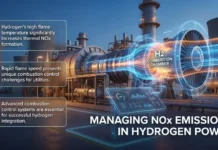
A primary environmental consideration for hydrogen-fired turbines enabling low-carbon power generation is the potential for increased nitrogen oxide (NOx) emissions due to the higher adiabatic flame temperature of hydrogen. NOx is a potent air pollutant and a contributor to smog, making its control a critical regulatory requirement for any new power generation asset. Manufacturers are employing two main strategies to address this issue: Dry Low NOx (DLN) combustion and Selective Catalytic Reduction (SCR) systems. DLN technology focuses on optimizing the fuel-air mixture to keep the peak flame temperature below the threshold where NOx formation becomes significant. In cases where pure hydrogen is used, SCR systems provide an additional layer of protection by using a catalyst to convert NOx into harmless nitrogen and water vapor before it is released from the stack. By combining these hardware and software solutions, the industry is demonstrating that hydrogen power can be both carbon-free and compliant with the strictest local air quality standards. This focus on environmental performance is essential for securing the social license needed to operate large scale hydrogen power plants in proximity to urban centers. The integration of ammonia based SCR systems requires careful management of the storage and injection of the reagent, adding a layer of logistical complexity that must be addressed in the plant design.
Materials Science and Component Longevity
The internal environment of hydrogen-fired turbines enabling low-carbon power generation is considerably more demanding than that of a standard natural gas turbine. The combustion of hydrogen produces a higher proportion of water vapor in the exhaust gas, which can lead to increased oxidation and corrosion of the turbine blades and vanes. Additionally, the higher temperatures required for high-efficiency operation place additional thermal stress on the advanced alloys and ceramic coatings used in the hot section of the machine. To ensure long term reliability, researchers are developing new thermal barrier coatings that offer superior resistance to water vapor penetration and high-temperature degradation. Additionally, the cooling systems within the turbine blades are being redesigned to handle the different heat transfer characteristics of hydrogen-derived exhaust. These material innovations are critical for maintaining the operational lifespan and maintenance intervals that utilities expect from their thermal assets. By ensuring that hydrogen-ready turbines can operate with the same level of availability as their natural gas counterparts, the industry is paving the way for a smooth and cost-effective energy transition. This includes the development of self-healing coatings and advanced sensors that can detect early signs of material fatigue or corrosion before they lead to component failure.
Control Systems and Black Start Capabilities
Modern hydrogen-fired turbines enabling low-carbon power generation require highly sophisticated control systems to manage the transition between natural gas and hydrogen fuel. These systems must be capable of adjusting the fuel flow and air intake in millisecond increments to ensure that the combustion remains stable and efficient throughout the ramp cycle. The control logic also integrates data from a network of sensors that monitor flame stability, exhaust temperature, and NOx levels. Beyond steady state operation, hydrogen turbines are increasingly being considered for black start duties, where a power plant is used to restart the grid following a total blackout. The high power density and rapid startup capabilities of hydrogen turbines make them ideal for this role, providing a reliable source of power when other assets are unavailable. By utilizing stored hydrogen, utilities can ensure that they have a zero-carbon backup system capable of restoring electricity to millions of customers in the shortest possible time. This capability adds a critical layer of resilience to the power generation network, demonstrating that decarbonization and grid security can be achieved simultaneously.
Economic Competitiveness and Market Dynamics
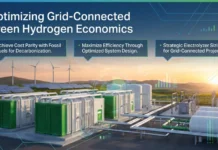
The economic viability of hydrogen-fired turbines enabling low-carbon power generation is closely tied to the cost of green hydrogen and the price of carbon emissions. As the scale of electrolysis increases and the cost of renewable energy continues to fall, the price gap between hydrogen and natural gas is expected to narrow. In markets with reliable carbon pricing mechanisms, the environmental benefits of hydrogen-fired generation provide a significant competitive advantage over fossil-fueled alternatives. Additionally, the ability of these turbines to provide firm, dispatchable power makes them highly valuable in grids with high renewable penetration, where they can earn a premium for their capacity and reliability. Governments are also providing targeted support through subsidies and investment tax credits to encourage the deployment of hydrogen power technology. These policy drivers, combined with the technological maturation of turbine hardware, are creating a strong market signal for the widespread adoption of hydrogen in the power sector. As more projects reach the commercial stage, the learning rate for hydrogen combustion will accelerate, further driving down costs and improving the overall efficiency of the system. The development of dedicated hydrogen markets and the standardization of fuel quality will also be essential for creating a transparent and liquid market for the gas.
Integration with National Hydrogen Backbones
The final step in the deployment of hydrogen-fired turbines enabling low-carbon power generation involves the integration of power plants with emerging national hydrogen backbones. These dedicated pipeline networks, often repurposed from existing natural gas infrastructure, will provide a reliable and large scale supply of hydrogen to power generation sites. By connecting to a central backbone, power plants can avoid the costs and logistical challenges of on-site hydrogen production and storage. This integrated approach allows for the creation of regional hydrogen economies where power generation, industrial heat, and transport sectors share a common fuel source. The synergy between the gas and electricity grids is a powerful tool for optimizing energy flows and ensuring that the entire energy system remains resilient and efficient. In this context, the hydrogen-fired turbine serves as a critical interface between the two networks, converting the chemical energy of the hydrogen molecule back into the high-value electricity needed by the modern economy. The development of these backbones is already a strategic priority for many countries, reflecting the central role that hydrogen will play in the future of global energy and the necessity of building a multi-vector energy system that can adapt to the challenges of the twenty-first century.