























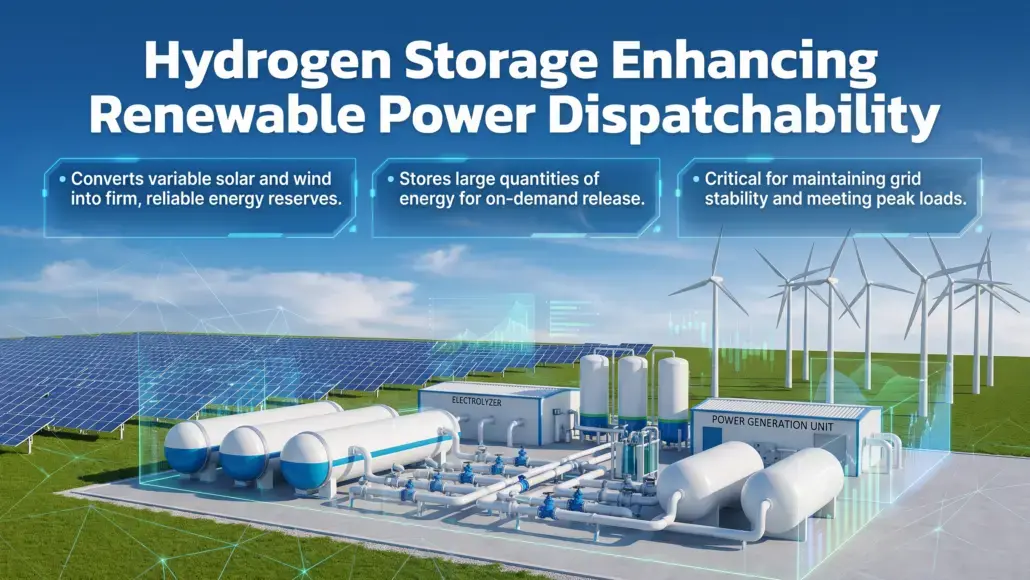

Power generators are now installing Hydrogen Storage Systems Enhancing Renewable Power Dispatchability to convert variable solar and wind output into firm, reliable energy reserves for the grid. As these variable resources become the primary sources of electricity, the ability to store large quantities of energy and release it on demand is critical for maintaining grid stability and meeting peak load requirements. Hydrogen serves as an ideal storage medium, offering high energy density and the capacity for long-duration buffering that surpasses the capabilities of conventional battery technologies. By converting excess renewable power into hydrogen through electrolysis, power generators can effectively decouple energy production from the immediate needs of the grid. This stored energy can then be reconverted to electricity during periods of low renewable output or high consumer demand, ensuring that the power supply remains reliable and predictable. The deployment of integrated storage solutions is essential for transforming variable renewables into a firm, dispatchable resource that can compete directly with traditional thermal baseload plants.
Technical Architectures for Energy Buffering
The implementation of Hydrogen Storage Systems Enhancing Renewable Power Dispatchability involves a variety of technical architectures tailored to the specific needs of the power plant and the local grid. High-pressure gaseous storage in steel or composite tanks is the most common solution for short-to-medium duration buffering, providing the rapid response needed to manage daily fluctuations in renewable output. For larger scale applications, liquid hydrogen storage offers a significantly higher volumetric energy density, though it requires energy-intensive cryogenic cooling to maintain the fuel at temperatures below minus 253 degrees Celsius. Each storage method presents unique trade-offs in terms of capital expenditure, operational efficiency, and footprint. Power generators must carefully evaluate these factors to determine the optimal storage mix for their specific generation profile. Advanced control systems are now being used to manage these multi-layered storage assets, ensuring that the hydrogen is stored and withdrawn in the most efficient and cost-effective manner possible. The integration of these systems directly into the power plant design allows for a seamless transition between generation and storage modes, maximizing the utilization of the available renewable resources.
Compression and Liquefaction Efficiency
A critical technical challenge for hydrogen storage systems enhancing renewable power dispatchability is the energy required for the compression or liquefaction of the gas. The process of compressing hydrogen to the high pressures needed for gaseous storage can consume between 7 and 12 percent of the energy contained in the hydrogen itself. Liquefaction is even more energy-intensive, often requiring up to 30 percent of the fuel’s energy content to achieve the necessary cryogenic temperatures. To improve the overall round-trip efficiency of the storage cycle, researchers are developing new compression technologies, such as electrochemical hydrogen compressors and ionic liquid pistons, which offer higher efficiency and lower maintenance requirements compared to traditional mechanical compressors. In the realm of liquefaction, the development of magnetic refrigeration and advanced heat exchangers is showing promise in reducing the energy penalty of cooling the gas. Improving these auxiliary processes is essential for lowering the levelized cost of energy storage and making hydrogen a more competitive option for grid balancing. By optimizing the entire storage chain, from production to reconversion, the power generation sector can ensure that the maximum amount of renewable energy is preserved for future use.
Role of Hydrogen in Providing Firm Capacity
The ultimate goal of Hydrogen Storage Systems Enhancing Renewable Power Dispatchability is to provide the firm capacity needed to support a stable power grid. Firm capacity refers to the amount of energy that can be guaranteed to be available at any given time, regardless of weather conditions or time of day. In a system dominated by renewables, achieving this level of reliability without fossil fuel backups requires massive amounts of energy storage. Hydrogen provides the necessary scale, allowing for the creation of strategic reserves that can sustain power generation for days or even weeks. This capability is particularly important during extreme weather events, such as prolonged cold spells or heatwaves, which can drive demand to record levels while simultaneously suppressing renewable output. By maintaining a significant stockpile of hydrogen, power generators can ensure that they are always able to meet their contractual obligations and support the needs of the grid operator. The development of capacity markets and other incentive structures is essential for encouraging the investment needed to build these large scale storage assets. As these systems become more common, the role of hydrogen as a primary provider of grid reliability will continue to grow, demonstrating its essential contribution to the energy transition.
Grid Interaction and Demand Response
The integration of Hydrogen Storage Systems also enables more sophisticated interactions between the power plant and the grid through demand response and ancillary services. Power generators can use their storage assets to absorb excess energy from the grid during periods of oversupply, helping to stabilize voltage and prevent the curtailment of other renewable resources. Conversely, during periods of grid stress, the stored hydrogen can be rapidly deployed to provide frequency response and voltage support. This two-way flexibility makes the power plant a more valuable asset for the grid operator and creates additional revenue streams for the plant owner. The use of advanced power electronics, such as grid-forming inverters, allows these systems to provide synthetic inertia and other essential services that were once the sole domain of large thermal plants. As grid codes evolve to recognize the value of these services, the economic case for integrated hydrogen storage will become even stronger. The development of automated trading platforms also allows power generators to participate in real-time energy markets, optimizing their storage and generation schedules based on the latest price signals and grid conditions.
Strategic Siting and Infrastructure Development
The effectiveness of hydrogen storage systems enhancing renewable power dispatchability is heavily dependent on the strategic siting of storage assets and the development of supporting infrastructure. Ideally, storage systems should be located in proximity to both large scale renewable generation sites and major load centers to minimize transmission losses and infrastructure costs. The development of dedicated hydrogen pipelines, often referred to as a hydrogen backbone, is essential for connecting these sites and creating a liquid and transparent market for the gas. In regions where pipelines are not feasible, the use of trucks, ships, and rail to transport hydrogen in the form of ammonia or other chemical carriers provides a flexible alternative. The choice of infrastructure depends on the distance, volume, and required purity of the hydrogen. For power generation applications, the ability to receive a steady and reliable supply of fuel is critical for maintaining dispatchability. Utilities are increasingly collaborating with industrial partners and infrastructure developers to build the multi-modal networks needed to support a hydrogen-based power system. This collaborative approach ensures that the storage assets are integrated into a larger, more resilient energy ecosystem that can adapt to the changing needs of the modern economy.
Future Perspectives and Technological Innovation
The future of hydrogen storage systems will be shaped by ongoing technological innovation and the continuous improvement of conversion efficiencies. New storage materials, such as metal hydrides and carbon nanotubes, are being researched for their potential to store hydrogen at lower pressures and higher densities, potentially reducing the cost and complexity of the storage system. Additionally, the development of reversible fuel cells, which can operate both as an electrolyzer and a generator, offers the possibility of a more compact and efficient storage solution. As these technologies mature, the cost of hydrogen storage is expected to fall significantly, making it an even more attractive option for power generators. The integration of digital technologies, such as the internet of things and artificial intelligence, will also play a critical role in optimizing the operation of large scale storage networks. By providing real-time data on asset health, storage levels, and market conditions, these tools allow for a more precise and efficient management of the energy system. The combination of physical innovation and digital intelligence will ensure that hydrogen storage remains at the cutting edge of the power generation sector, providing the flexibility and reliability needed to achieve a truly sustainable future.
Safety Standards and Risk Management in Large Scale Storage
The successful operation of hydrogen storage systems is predicated on the establishment of rigorous safety standards and comprehensive risk management protocols. Hydrogen is a highly flammable gas with a wide range of explosive limits, necessitating specialized engineering controls and operational procedures. In large scale storage facilities, this includes the use of advanced leak detection systems, redundant pressure relief valves, and explosion-proof electrical equipment. The design of storage tanks and piping systems must also account for the potential for hydrogen embrittlement, a process where hydrogen atoms penetrate the metal lattice and cause it to become brittle and prone to cracking. To mitigate these risks, engineers use high-strength alloys and specialized coatings that are specifically designed for hydrogen service. Additionally, the integration of automated shutdown systems ensures that the facility can be safely isolated in the event of a malfunction or emergency. Beyond the physical hardware, the training of personnel in hydrogen handling and emergency response is a critical component of a reliable safety culture. Regulatory bodies are currently working to harmonize hydrogen safety codes across different jurisdictions, providing a consistent framework for the design and operation of storage assets. This focus on safety is essential for maintaining public confidence in hydrogen technology and ensuring that large scale storage facilities can be successfully integrated into the existing energy infrastructure. By prioritizing safety and reliability, the power generation sector can build a stable foundation for a hydrogen-based energy system that meets the highest standards of performance and protection.