









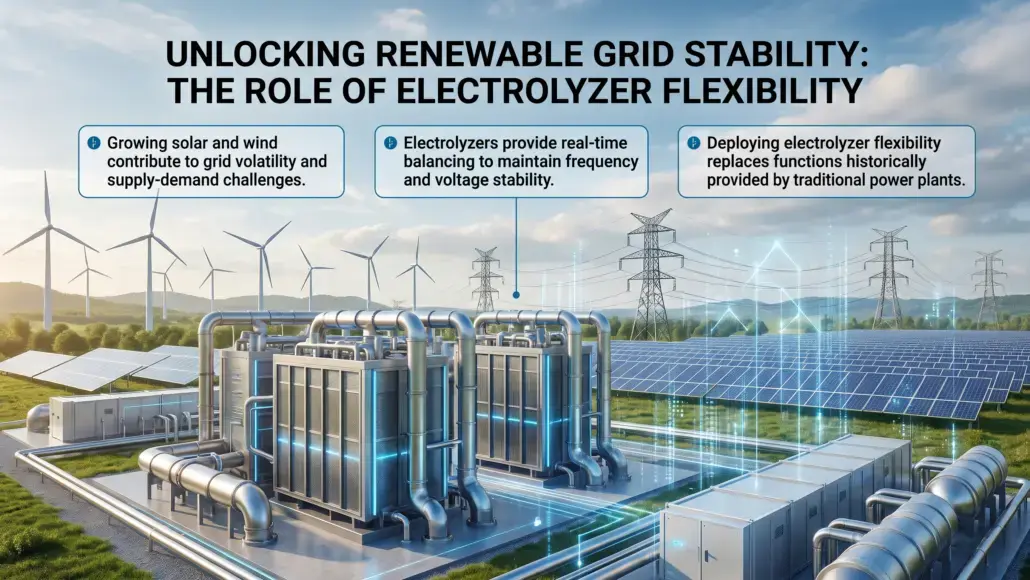

Grid operators are now accelerating the deployment of Electrolyzer Flexibility Supporting Renewable Grid Balancing to maintain frequency and voltage stability as variable energy penetration reaches record levels. As solar and wind assets contribute a growing share of the total generation mix, the inherent volatility of these sources introduces significant challenges for grid operators tasked with matching supply and demand in real time. Traditional thermal power plants, which historically provided the inertia and frequency response needed for stability, are increasingly being decommissioned or relegated to peaking roles. In this context, water electrolysis systems, particularly Proton Exchange Membrane (PEM) and advanced alkaline units, have emerged as pivotal assets capable of providing high-speed demand-side flexibility. These systems can ramp power consumption up or down within seconds, effectively acting as a synthetic buffer that absorbs excess renewable output or sheds load during periods of scarcity. This capability is no longer a peripheral benefit of hydrogen production; it is becoming a core component of modern power system architecture as the industry seeks to replace mechanical inertia with fast acting electronic responses. The shift toward a carbon neutral power system relies heavily on the ability of these industrial loads to act as dynamic balancers, ensuring that the grid remains resilient despite the loss of heavy rotating machinery that once stabilized the network through sheer physical momentum.
Technical Mechanisms of Rapid Frequency Response
The technical foundation of Electrolyzer Flexibility Supporting Renewable Grid Balancing lies in the electrochemistry of the stack and the responsiveness of the power electronics. PEM electrolyzers are particularly well-suited for grid balancing duties due to their ability to operate across a wide range of current densities and their near-instantaneous response to control signals. Unlike thermal assets that require minutes or hours to change output, a PEM stack can transition from minimum to maximum load in less than a second. This rapid response allows the electrolyzer to participate in primary frequency control markets, where assets must react to frequency deviations within a timeframe of two seconds or less. The power conversion systems, which transform alternating current from the grid into the direct current required by the stack, are engineered with high-frequency switching capabilities to ensure that the load adjustment is both precise and reliable. By providing this sub-second response, electrolyzers help to mitigate the risk of frequency-driven blackouts, providing a level of stability that was previously the sole domain of large scale spinning reserves. The integration of advanced digital twins further enhances this responsiveness by predicting grid needs and optimizing stack performance to prevent degradation during rapid cycling. These digital tools allow operators to monitor the health of the membrane and electrodes in real time, adjusting the ramp rates to balance the immediate needs of the grid with the long term preservation of the electrolyzer asset.
Comparative Analysis of PEM and Alkaline Technologies
While PEM technology is often highlighted for its responsiveness, recent advancements in alkaline water electrolysis have significantly enhanced the ability of these systems to contribute to Electrolyzer Flexibility Supporting Renewable Grid Balancing. Modern pressurized alkaline electrolyzers have improved their partial load capabilities and ramp rates, allowing them to compete in secondary and tertiary frequency response markets. Alkaline systems typically offer lower capital expenditure and longer operational lifespans, making them attractive for large scale industrial installations that prioritize long term cost efficiency. However, they generally possess narrower operating ranges, typically between 20 percent and 100 percent of nominal load, whereas PEM systems can often operate down to zero or even provide transient overloads. The choice between these technologies depends on the specific requirements of the local grid operator and the economic value of the balancing services provided. Operators must weigh the higher agility of PEM against the established reliability and lower cost of alkaline stacks to determine the optimal configuration for their specific power generation environment. Additionally, the emergence of Anion Exchange Membrane (AEM) technology promises to combine the best of both worlds, offering high flexibility without the need for expensive noble metal catalysts, potentially shifting the economic equation in favor of even more decentralized grid support assets. The evolution of these technologies is not occurring in a vacuum; it is part of a broader industrial trend toward electrification and the deep decarbonization of the energy system, where the electrolyzer serves as the primary bridge between the electrons and the molecules.
Economic Feasibility of Demand Side Management
The financial viability of Electrolyzer Flexibility Supporting Renewable Grid Balancing is increasingly driven by the monetization of ancillary services rather than hydrogen sales alone. In many jurisdictions, grid operators pay a premium for fast frequency response, frequency restoration reserves, and replacement reserves. By participating in these markets, electrolyzer operators can offset a significant portion of their electricity costs, which typically account for over 70 percent of the total cost of hydrogen production. Additionally, the ability to operate as a flexible load allows these assets to utilize low-cost or even negatively priced electricity during periods of maximum renewable generation. This symbiotic relationship between the grid and the electrolyzer creates a feedback loop where the electrolyzer provides the stability needed to install more wind and solar power, which in turn provides more low-cost energy for hydrogen production. Advanced software platforms now integrate market price signals directly into the electrolyzer control systems, ensuring that the plant operates at peak efficiency while maximizing revenue from grid services. This multi-stream revenue model is essential for the bankability of large scale hydrogen projects, providing a buffer against fluctuations in the commodity price of hydrogen and the inherent volatility of renewable energy markets. The ability to participate in multiple markets simultaneously, known as value stacking, is becoming the gold standard for project developers who must demonstrate the resilience of their business models to investors and lenders in an increasingly competitive global market.
Regulatory Frameworks and Grid Code Evolution
The widespread adoption of Electrolyzer Flexibility Supporting Renewable Grid Balancing requires a corresponding evolution in regulatory frameworks and grid codes. Historically, demand-side assets were not always permitted to participate in the same balancing markets as traditional generators. However, many regions, including the European Union and parts of the United States, are revising their market rules to allow for technology-neutral participation. This includes the development of clear standards for pre-qualification, measurement, and verification of the services provided by electrolyzers. Grid codes are also being updated to define the specific technical requirements for electrolyzer connection, ensuring that these assets do not inadvertently introduce new stability issues. Policymakers are increasingly recognizing that the decarbonization of the power sector cannot rely on energy storage alone; it must also utilize the inherent flexibility of large scale industrial loads. Establishing transparent and predictable market mechanisms is essential for attracting the private investment needed to scale electrolysis capacity to the gigawatt levels required by national net-zero targets. The harmonization of these regulations across borders will be particularly important for interconnected regions where frequency stability is a shared responsibility and where the movement of green hydrogen could potentially outpace the construction of high voltage transmission lines. In this future, the electrolyzer acts as both a stabilizer and a gateway, facilitating a truly integrated and resilient global energy network.
Material Science and Long Term Asset Health
The intensive cycling required for Electrolyzer Flexibility Supporting Renewable Grid Balancing places unique stresses on the materials within the electrolyzer stack. Frequent ramping and idling can accelerate the degradation of catalysts and membranes, particularly if the system is not properly managed. In PEM systems, the high potentials reached during rapid ramp-ups can lead to the dissolution of platinum group metals, while in alkaline systems, cycling can cause issues with gas crossover and catalyst stability. Researchers are currently developing new coatings and alloy compositions designed to withstand these dynamic operating conditions without sacrificing efficiency or longevity. Understanding the relationship between grid support activities and stack health is critical for operators who must optimize their bidding strategies in ancillary service markets. If the revenue from providing frequency response is outweighed by the cost of premature stack replacement, the economic case for flexibility collapses. Therefore, the development of sophisticated health monitoring systems and predictive maintenance algorithms is as important as the electrolysis technology itself. These systems use machine learning to correlate operational data with physical degradation patterns, allowing operators to perform maintenance only when necessary and to avoid operating regimes that are particularly harmful to the stack components. This focus on material resilience and digital oversight ensures that the flexible electrolyzer remains a dependable asset for the power generation sector for decades to come.
Strategic Integration with Renewable Energy Hubs
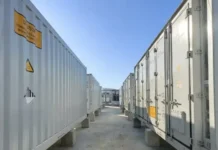
The final piece of the stability puzzle involves the strategic co-location of electrolysis plants within large scale renewable energy hubs. By placing Electrolyzer Flexibility Supporting Renewable Grid Balancing assets directly at the site of wind and solar farms, developers can reduce the strain on the transmission network. This configuration allows for the local absorption of power that would otherwise be curtailed due to transmission constraints, effectively increasing the utilization rate of the renewable assets. These hubs often integrate battery energy storage systems alongside electrolyzers, creating a multi-layered defense against grid instability. The battery provides the most immediate, millisecond-level response, while the electrolyzer handles the longer duration balancing requirements. This integrated approach optimizes the value of the electricity produced and ensures that the power generation system remains resilient even during extreme weather events or sudden shifts in atmospheric conditions. As the industry moves toward a hydrogen-centered economy, these integrated hubs will serve as the primary engines of both energy production and grid stability, demonstrating that hydrogen is as much a power system asset as it is an industrial fuel. The development of such hubs also facilitates the creation of local hydrogen economies, where the byproduct oxygen and heat can be utilized in nearby industrial processes, further improving the overall efficiency of the energy transition. By treating the electrolyzer as a multifunctional node in a complex energy ecosystem, the power sector can achieve the flexibility and reliability needed to fully embrace a renewable future.