






































In the complex and often high-stress environment of utility operations, the most sophisticated technology in the world is still subject to the limitations of the people who operate it. For decades, the industrial sector focused primarily on the mechanical reliability of equipment, often treating human error as an unavoidable and unpredictable variable. However, the emergence of human factors engineering reducing utility workplace risks has fundamentally changed this perspective. By applying the principles of cognitive psychology, ergonomics, and behavioral science to the design of systems, tools, and processes, the utility industry is creating environments that are “resilient to error,” ensuring that the human element is a source of strength rather than a point of failure.
Human factors engineering (HFE) is the practice of designing the work to fit the person, rather than forcing the person to adapt to the work. In the power sector, where a single misunderstood signal or a poorly designed control interface can lead to a catastrophic grid failure, this discipline is essential. It acknowledges that human performance is influenced by a myriad of factors including fatigue, stress, lighting, and even the layout of information on a screen. By understanding these influences, organizations can implement human factors engineering reducing utility workplace risks through interventions that simplify complex tasks, improve situational awareness, and provide a clear path to safety during a crisis.
The Cognitive Dimension: Enhancing Decision-Making under Pressure
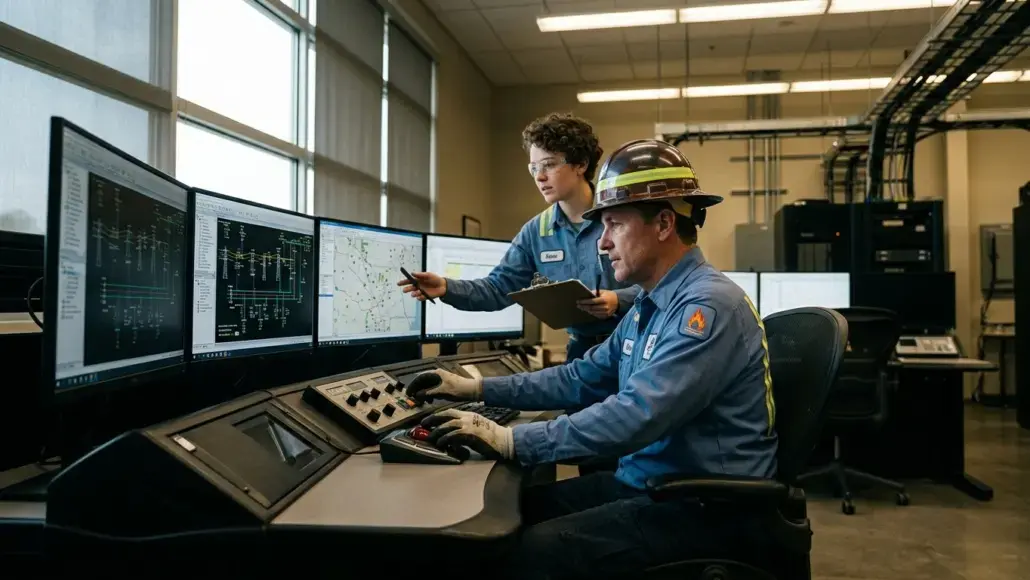
One of the primary goals of human factors engineering is to optimize the cognitive load on utility workers. In a control room during a major storm, operators are often bombarded with an overwhelming amount of information from alarms, sensors, and field reports. Without careful design, this “data deluge” can lead to cognitive paralysis or the overlooking of critical signals. Human factors engineering reducing utility workplace risks involves designing user interfaces that prioritize the most important information, using visual hierarchies, color coding, and intuitive layouts that align with how the human brain processes data.
Effective HFE also accounts for the “mental models” that workers use to understand complex systems. When a control system’s interface reflects the actual physical layout of the grid, it reduces the mental effort required to diagnose a problem. Furthermore, the implementation of decision-support tools such as automated checklists or AI-driven diagnostic assistants provides a vital safety net. These tools don’t replace human judgment; instead, they augment it, ensuring that even under high stress, the operator has access to the best available information and a structured framework for making decisions. This cognitive alignment is a fundamental component of operational safety and risk management.
Industrial Ergonomics and Physical Risk Mitigation
While cognitive factors are vital, the physical interaction between the worker and their environment is equally important. In the field, transmission workers are often required to perform tasks in awkward positions, use heavy tools, and navigate difficult terrain. Human factors engineering reducing utility workplace risks addresses these challenges through industrial ergonomics—the science of designing equipment and workspaces to minimize physical strain and fatigue. This might involve designing specialized climbing harnesses that distribute weight more evenly or developing lighter, more balanced hydraulic tools that reduce the risk of repetitive strain injuries.
Ergonomics also extends to the design of vehicles and workstations. A bucket truck control panel that is difficult to reach or poorly labeled increases the risk of accidental movement near energized lines. By applying HFE principles to the design of these interfaces, manufacturers can ensure that controls are intuitive and that the most frequently used functions are within the “optimal reach zone.” This attention to physical detail not only reduces the risk of long-term musculoskeletal disorders but also improves the precision and safety of every task performed in the field. When the equipment feels like a natural extension of the body, the worker can focus their full attention on the hazards around them.
Error-Proofing and the Design of “Forgiving” Systems
A cornerstone of human factors engineering is the concept of “error-proofing” or Poka-Yoke. This involves designing systems so that it is either impossible to make a mistake or the mistake is caught and neutralized before it causes harm. In utility workplace safety, this can take many forms. For example, using connectors that can only be joined in one specific orientation prevents incorrect wiring. Similarly, software interlocks in a substation control system can prevent an operator from opening a switch that would create a dangerous electrical arc.
Human factors engineering reducing utility workplace risks also focuses on making systems more “forgiving.” This means that the system is designed to handle a certain level of human error without a catastrophic outcome. This might include redundant safety backups, “fail-safe” mechanisms that automatically return equipment to a safe state during a failure, and clear, non-punitive feedback loops that allow workers to identify and correct their own errors. By accepting that humans will inevitably make mistakes, HFE shifts the focus from “blaming the individual” to “strengthening the system,” fostering a more mature and resilient safety culture.
Organizational Culture and Behavioral Science
Human factors engineering is not just about screens and tools; it also encompasses the organizational structures and cultures that influence behavior. A system that is perfectly designed from a technical standpoint can still fail if the organizational culture encourages risk-taking or discourages the reporting of errors. Human factors engineering reducing utility workplace risks involves studying the social dynamics of the workplace to ensure that safety is a shared value. This includes developing clear communication protocols, fostering psychological safety, and ensuring that leadership behaviors are aligned with safety goals.
Behavioral science plays a key role here, helping organizations understand why workers might bypass safety protocols even when they know the risks. Often, this is due to “competing priorities,” such as the pressure to meet a deadline or the desire to avoid a cumbersome procedure. HFE experts work to identify these friction points and redesign the process so that the safe way is also the easiest and most efficient way. By aligning the “path of least resistance” with the “path of safety,” organizations can achieve high levels of compliance without relying solely on enforcement and discipline.
The Impact of Environment on Human Performance
The physical environment lighting, temperature, noise, and vibration has a profound impact on human reliability. In the utility industry, workers are frequently exposed to extremes in all these areas. Human factors engineering reducing utility workplace risks involves assessing how these environmental stressors impact the workforce and implementing mitigations. For example, specialized lighting in a control room can reduce glare and eye strain, while vibration-dampening seats in heavy equipment can prevent fatigue during long shifts.
Even the acoustics of a workspace matter. In a loud substation, verbal communication can be easily misunderstood, leading to dangerous errors. HFE might suggest the use of high-quality noise-canceling headsets that filter out industrial noise while enhancing the clarity of the human voice. By creating a work environment that supports human physiological and psychological needs, utilities can significantly improve the performance and safety of their personnel. This holistic view of the “human-system interface” ensures that the workforce remains at peak readiness, regardless of the external conditions.
Conclusion: The Future of Human-Centric Utility Safety
As we move toward a future of increased automation and the integration of artificial intelligence into the grid, the role of human factors engineering will only become more vital. In an automated system, the human’s role shifts from “active operator” to “system monitor” a task that is notoriously difficult for the human brain to maintain for long periods. Human factors engineering reducing utility workplace risks will be essential for designing the next generation of monitoring systems that keep humans “in the loop” and ready to intervene effectively when the automation reaches its limits.
In conclusion, the pursuit of safety in the utility industry is fundamentally a pursuit of understanding the human condition. By embracing human factors engineering reducing utility workplace risks, we are acknowledging that our greatest asset our people deserves a workplace that is designed for their success. This commitment to human-centric design not only prevents tragedies and saves lives but also creates a more professional, efficient, and resilient energy sector. The journey toward a safer grid begins with the recognition that every switch, every screen, and every tool must be a partner in the safety of the person who uses it.