
























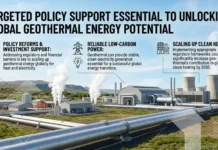






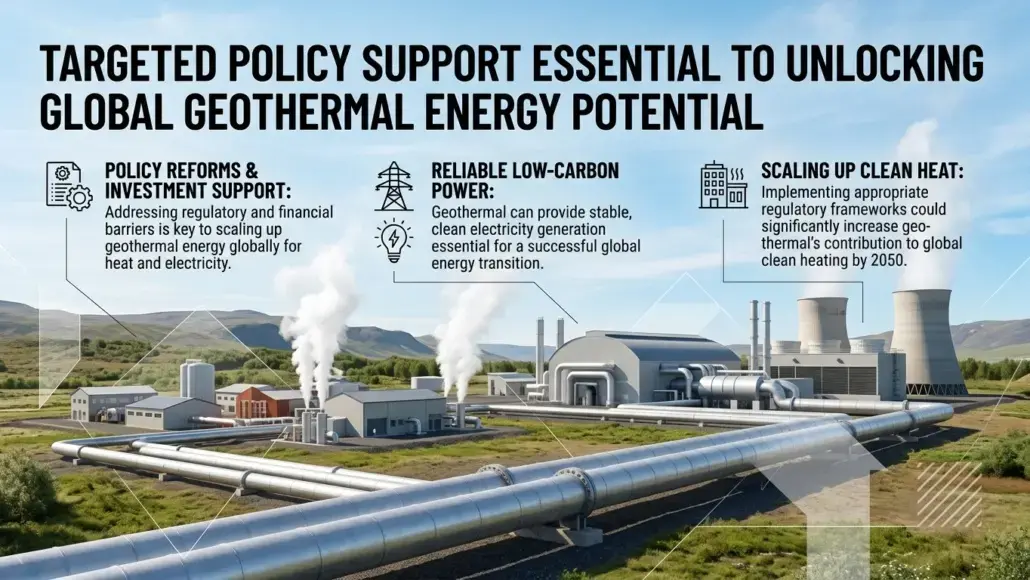

Targeted policy support and the removal of investment barriers are critical to realizing the full geothermal energy potential required for the global transition to clean heat and reliable low-carbon power. New analysis from the Energy Transitions Commission (ETC) indicates that while the sector currently supplies just 0.5% of global final heat consumption and 0.3% of electricity generation, these contributions could rise to 8% of both by 2050 with the implementation of appropriate regulatory frameworks. The report highlights that geothermal technologies are often sidelined by untargeted policies, preventing the sector from providing the transformative clean energy solutions necessary for mid-century climate goals.
The ETC identifies three distinct technological categories that each require tailored financial and policy interventions: shallow geothermal for building climate control, conventional hydrothermal systems utilizing naturally occurring hot water, and next-generation geothermal leveraging advanced drilling techniques. The next three to five years are considered a critical window for proving the commercial viability of next-generation systems, which are increasingly attracting interest from sectors with high constant power requirements, such as AI and data centres. Despite the maturity of some of these technologies, the report suggests that they remain largely untapped even in regions where the underlying economics are already favorable.
Scaling Shallow and Hydrothermal Technologies
Shallow geothermal applications, including ground source heat pumps, are identified as one of the most immediate opportunities for large-scale deployment. In colder geographic regions, the ETC estimates that deployment could expand by four to six times by 2050. Such a transition would significantly reduce pressure on national electricity grids by approximately 10-20% during peak demand periods. Furthermore, the adoption of these systems at scale is projected to save consumers in the United States almost $80 billion annually, highlighting the significant economic advantages of utilizing the geothermal energy potential for residential and commercial heating.
Conventional hydrothermal technology, while limited by specific geographical requirements, continues to offer a reliable source of baseload heat, cooling, and 24-hour electricity where suitable underground water resources are accessible. Adair Turner, Co-Chair of the Energy Transitions Commission, observed: “It’s several different technologies, which are modest in some countries and potentially transformative in others. Yet even where the economics already work and the technology is ready, geothermal remains largely untapped.” This highlights the discrepancy between technical readiness and actual market penetration, often caused by a lack of coordinated drilling support and regulatory clarity.
Policy Reforms and Investor Interest
To accelerate the transition, the report calls for a suite of tailored policies including direct grants, low-cost financing options, and comprehensive regulatory reforms. These measures are designed to mitigate the high upfront risks associated with drilling and exploration, which currently deter private investment. The growing demand for carbon-free, constant electricity from the technology sector is acting as a new catalyst for next-generation geothermal development. This interest is driven by the need for reliable energy to support the rapid expansion of AI infrastructure and large-scale data centres.
The path toward commercial viability for next-generation systems involves adapting techniques from other extractive industries to access deep heat in a wider variety of locations. By implementing the suggested policy changes, governments can provide the stability required for long-term investment in these advanced drilling projects. The transition to a more supportive policy environment is essential for ensuring that geothermal energy can fulfill its role as a stable and scalable component of the global low-carbon power mix, providing a necessary complement to intermittent renewable sources like wind and solar.