























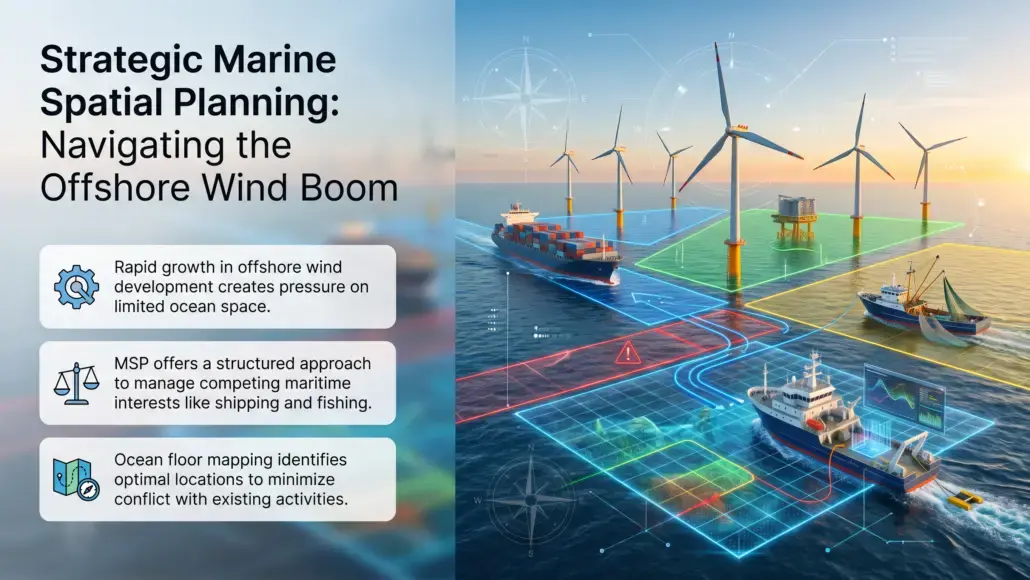

The increasing demand for renewable energy has led to a rapid surge in offshore wind developments, putting pressure on the limited spatial resources of our oceans. Effective marine spatial planning provides a structured approach to managing these competing interests, ensuring that the deployment of wind turbines does not unnecessarily conflict with existing maritime activities such as shipping, fishing, and aggregate extraction. By mapping the ocean floor and identifying the most suitable locations for energy infrastructure, planners can optimize the use of marine space, reducing the risk of costly delays and legal disputes. This strategic allocation of resources is essential for achieving the ambitious climate targets set by governments around the world.
Effective spatial management requires a deep understanding of the physical and biological characteristics of the marine environment. Planners must consider factors such as water depth, seabed composition, and wind resource potential, as well as the presence of sensitive habitats and migratory routes for marine life. The use of geographic information systems (GIS) allows for the integration of these diverse datasets into a single, comprehensive map of the ocean. This visual representation of the marine environment enables stakeholders to identify potential zones of conflict and develop creative solutions for co existence, such as co locating wind farms with aquaculture operations or marine protected areas.
The transition toward a multi use ocean economy represents a significant shift in how we perceive and manage our marine resources. Historically, maritime activities have been managed in silos, with little coordination between different sectors. Comprehensive marine spatial planning breaks down these silos, fostering a more holistic and integrated approach to ocean governance. This collaborative model not only supports the growth of the renewable energy sector but also promotes the long term health and productivity of the marine ecosystem, ensuring that the oceans continue to provide essential services for generations to come.
Mitigating Environmental Impacts through Data Driven Zoning
One of the primary challenges facing the offshore wind industry is the potential for significant environmental impacts, ranging from the displacement of marine mammals during construction to the alteration of seabed habitats. Data driven zoning is a critical component of marine spatial planning, allowing planners to steer developments away from the most ecologically sensitive areas. By using high resolution environmental data, authorities can establish “no go” zones for wind energy, protecting critical biodiversity hotspots while still providing sufficient space for the growth of the industry. This balance between development and conservation is essential for maintaining the social license of the offshore wind sector.
The process of environmental zoning involves a rigorous assessment of the potential risks and benefits associated with different locations. For example, placing a wind farm in an area with high bird activity may lead to significant mortality rates, whereas a nearby location with lower bird density might be more suitable. Advanced modeling techniques can simulate these impacts, providing planners with the evidence they need to make informed decisions. The standardization of these environmental assessments ensures that the same level of scrutiny is applied to all projects, providing a level of transparency and accountability that is highly valued by both developers and environmental advocates.
In addition to protecting existing habitats, strategic marine spatial planning can also identify opportunities for environmental enhancement. Some wind farm designs include features that promote the growth of artificial reefs, providing new habitats for fish and other marine organisms. By incorporating these ecological considerations into the planning process, the industry can move beyond mere mitigation and actively contribute to the restoration of marine biodiversity. This proactive approach to environmental management is a hallmark of the modern wind energy sector, demonstrating a commitment to sustainability that goes beyond the production of clean electricity.
Integrating Stakeholder Interests in Coastal Policy Frameworks
The success of any large scale infrastructure project depends on the support of the local communities and stakeholders who are directly impacted by it. Modern marine spatial planning includes a comprehensive framework for stakeholder engagement, ensuring that the voices of fishers, coastal residents, and tourism operators are heard during the planning process. By involving these groups early and often, planners can identify potential concerns and develop mitigation strategies that address them effectively. This collaborative approach reduces the likelihood of opposition and builds a sense of shared ownership in the energy transition.
Stakeholder engagement often involves a complex negotiation between competing values and priorities. Fishers may be concerned about the loss of access to traditional fishing grounds, while coastal residents might be worried about the visual impact of turbines on the horizon. Planners must balance these local concerns with the national and global need for renewable energy. Transparent communication and data sharing are essential for building trust among all parties. By providing stakeholders with access to the same data and models used by the planners, authorities can foster a more informed and constructive dialogue about the future of the coast.
The integration of stakeholder interests also extends to the economic benefits of offshore wind. Strategic marine spatial planning can help identify locations that maximize the local economic impact, such as those near ports that are well suited for turbine assembly and maintenance. By aligning the development of the wind industry with the needs of the local economy, planners can create new jobs and investment opportunities in coastal communities. This economic alignment is a key driver of political support for the energy transition, ensuring that the benefits of renewable energy are shared broadly across society.
Facilitating Transboundary Cooperation in Shared Marine Basins
The oceans are not constrained by national borders, and the development of offshore wind often requires cooperation between neighboring states. Coordinated marine spatial planning facilitates this transboundary cooperation, allowing countries to coordinate their energy policies and infrastructure developments in shared marine basins. Whether it is the North Sea, the Baltic, or the Mediterranean, the ability to plan at a regional scale is essential for optimizing the deployment of wind energy and minimizing the impact on the shared marine environment.
Regional cooperation involves the harmonization of planning standards and the sharing of environmental data across borders. This consistency ensures that a wind farm in one country does not negatively impact the marine resources of its neighbor. It also allows for the development of cross border infrastructure, such as subsea cables that connect wind farms in different countries to a single energy hub. These regional hubs can provide a more stable and efficient supply of electricity, reducing the cost of the energy transition for all participants. The development of these international energy networks is a major step toward a more integrated and resilient global power grid.
The role of international organizations and regional sea conventions is critical in this process. These bodies provide the platforms for negotiation and the frameworks for legal cooperation that are necessary for transboundary planning. By working through these established channels, countries can resolve disputes and develop common goals for the management of their shared marine resources. This spirit of cooperation is essential for addressing the global challenge of climate change, demonstrating that the energy transition is a collective effort that transcends national boundaries.
Adaptive Governance for Long Term Ecological Sustainability
The marine environment is a dynamic and constantly changing system, and the policies that govern it must be equally flexible. Adaptive governance is a core principle of marine spatial planning, allowing for the regular review and adjustment of spatial plans based on new data and changing conditions. This iterative process ensures that the management of marine space remains effective even as the climate changes and new technologies emerge. By building flexibility into the planning framework, authorities can respond to unforeseen challenges and capitalize on new opportunities.
Monitoring and evaluation are essential for adaptive governance. Planners must continuously track the environmental and social impacts of offshore wind developments, using this information to refine their models and policies. For example, if monitoring data shows that a particular wind farm is having a larger than expected impact on a specific marine species, the spatial plan can be adjusted to limit future developments in similar habitats. This evidence based approach to management ensures that the industry continues to operate within ecological limits, protecting the long term health of the oceans.
The transition toward adaptive governance also requires a shift in the legal and regulatory frameworks that govern the seas. Traditional rigid zoning models are increasingly being replaced by more dynamic systems that allow for the temporary or conditional use of space. This flexibility is particularly important for the deployment of emerging technologies, such as floating wind turbines, which may have different spatial requirements than fixed bottom structures. By embracing this culture of learning and adaptation, the offshore wind industry can ensure that it remains a leader in sustainable development, providing a model for other sectors to follow in the transition to a circular and resilient economy.