



























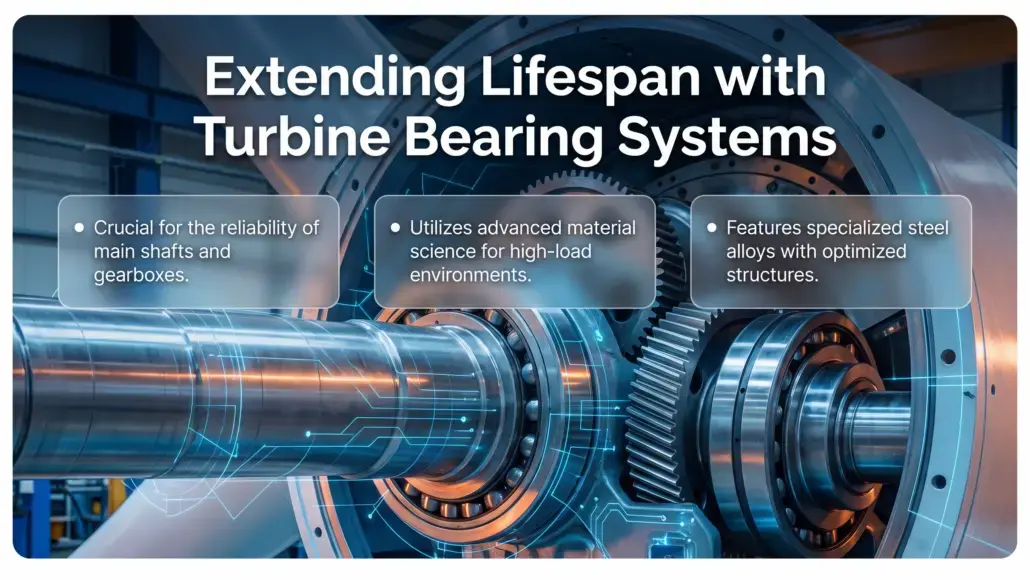

The mechanical reliability of a wind turbine is largely dictated by the performance of its most critical rotating components, specifically the bearings that support the main shaft and the gearbox internals. Advanced turbine bearing systems are at the forefront of this technical evolution, utilizing advanced material science to overcome the challenges of high load environments. The development of specialized steel alloys, featuring optimized grain structures and increased hardness, allows these bearings to withstand the intense stresses of modern high capacity turbines. By reducing the susceptibility to surface fatigue and rolling contact fatigue, these materials ensure that the drivetrain remains functional for its entire design life, and often beyond.
Material innovation also extends to the use of advanced coatings and surface treatments. Black oxide coatings, for instance, provide a protective layer that enhances the bearing’s resistance to moisture, corrosion, and the formation of white etching cracks (WEC). These cracks are a major cause of premature bearing failure in the wind industry, often leading to expensive unscheduled maintenance campaigns. By applying these technical solutions at the manufacturing stage, engineers can create bearings that are specifically tailored for the harsh conditions of the renewable energy sector. The transition toward these high performance materials represents a significant investment in the long term stability of the global energy infrastructure.
The selection of the appropriate material for each bearing tier is a critical part of the engineering process. For the most demanding applications, such as the main shaft bearings, ultra high purity steels and specialized heat treatment processes are employed to maximize durability. In contrast, auxiliary turbine bearing systems may use more standard materials that still meet the necessary performance criteria but at a lower cost. This tiered approach to material selection ensures that every component is optimized for its specific role within the turbine, providing a cost effective solution that does not compromise on reliability. The ongoing research into new ceramic and composite materials promises even greater performance gains in the future, further extending the boundaries of what is possible in wind energy engineering.
Precision Engineering for Optimized Load Distribution
The way loads are distributed across a bearing’s rolling elements is a primary factor in its longevity and efficiency. Modern turbine bearing systems incorporate precision engineering techniques to ensure that every micron of the bearing surface is utilized effectively. Advanced modeling tools, such as finite element analysis (FEA), allow designers to simulate the stresses on the bearing under various operating conditions, from extreme wind gusts to emergency shutdowns. By optimizing the internal geometry of the bearing, including the raceway profile and the roller shape, engineers can minimize stress concentrations and prevent the localized wear that leads to failure.
Load management is particularly important for the larger turbines that are now becoming the industry standard. These massive machines generate enormous torque, which must be transmitted through the bearings to the generator. Any misalignment or uneven load distribution can lead to rapid degradation of the bearing surfaces, resulting in a significant reduction in the turbine’s operational life. Precision manufacturing processes, including high speed grinding and automated inspection systems, ensure that every bearing meets the exacting tolerances required for these high stakes applications. The result is a more stable and efficient drivetrain that can handle the variable nature of the wind resource without compromising its mechanical integrity.
In addition to the bearing itself, the design of the surrounding housing and support structures also plays a vital role in load distribution. Precision turbine bearing systems involve a holistic approach to drivetrain engineering, where the interaction between all components is carefully considered. By integrating the bearing design with the overall turbine architecture, engineers can create a more resilient system that is better able to absorb and dissipate the forces of the wind. This integrated approach to design is a hallmark of the modern wind industry, demonstrating a commitment to technical excellence that is essential for the success of large scale renewable energy projects.
Integrating Condition Monitoring for Predictive Maintenance
The shift from reactive to predictive maintenance is one of the most significant trends in the power generation sector, and bearings are at the heart of this transition. High performance turbine bearing systems are increasingly equipped with integrated sensors that monitor temperature, vibration, and acoustic emissions in real time. This data is transmitted to a central control center, where advanced analytics platforms identify early signs of wear or degradation long before a failure occurs. This proactive approach to maintenance allows operators to schedule repairs during planned outages, minimizing downtime and reducing the overall cost of ownership.
Vibration analysis is a particularly powerful tool for monitoring bearing health. Every bearing has a unique vibration signature that changes as the component wears. By tracking these changes over time, maintenance teams can detect the onset of pitting or spalling on the raceways and rollers. This early warning system provides the time needed to source replacement parts and mobilize a repair crew, avoiding the massive costs associated with a catastrophic failure. The integration of these diagnostic tools into a unified asset management system provides a comprehensive view of the health of the entire turbine fleet, allowing for more efficient resource allocation and risk management.
The use of artificial intelligence (AI) to analyze bearing data is another emerging trend that is improving the reliability of wind turbines. AI algorithms can identify subtle patterns in the sensor data that may be invisible to human analysts, providing even earlier and more accurate predictions of bearing failure. By combining this technical data with historical maintenance records and environmental information, operators can develop highly customized maintenance strategies that reflect the specific needs of each turbine. This data driven approach to asset management is essential for maximizing the efficiency and lifespan of the wind energy fleet, ensuring that the industry can continue to deliver clean and reliable electricity for decades to come.
Strategic Retrofitting for Aging Turbine Assets
As the global wind energy fleet continues to age, the need for effective life extension strategies is becoming increasingly important. Specialized turbine bearing systems offer a viable solution for retrofitting older assets, providing them with the high performance components they need to continue operating safely and efficiently. By replacing original equipment bearings with newer, more advanced versions, operators can significantly extend the operational life of their turbines, delaying the need for expensive decommissioning or repowering projects.
The retrofitting process involves a careful assessment of the turbine’s current condition and its remaining design life. Engineers must ensure that the new bearings are compatible with the existing drivetrain and that they can handle the loads of the specific site. In many cases, the use of performance tiered bearings allows for an upgrade in the turbine’s performance, such as increasing its power rating or improving its availability. This value added approach to maintenance is a key driver of the business case for life extension, providing a clear return on investment for asset owners.
Strategic retrofitting also provides an opportunity to address systemic issues that may have plagued a particular turbine model during its early years of operation. If a specific bearing was prone to premature failure, the retrofitting process allows for the implementation of a more durable design that addresses the root cause of the problem. This continuous improvement cycle is essential for maintaining the long term viability of the wind energy sector, ensuring that even older assets can contribute to the global energy transition. The ability to upgrade and extend the life of existing infrastructure is a critical component of a sustainable energy policy, minimizing waste and maximizing the value of the invested capital.
Lifecycle Cost Benefits of Tiered Bearing Solutions
The financial viability of a wind energy project is determined by its levelized cost of energy (LCOE), which includes the initial capital expenditure as well as the ongoing operational and maintenance costs. High quality turbine bearing systems provide a significant reduction in LCOE by improving the reliability and availability of the assets. While high performance bearings may have a higher upfront cost than standard alternatives, the long term savings in avoided maintenance and increased energy production are substantial. For large scale utilities, these savings aggregate across hundreds of turbines, significantly improving the overall profitability of the portfolio.
A tiered approach to bearing selection allows operators to allocate their maintenance budget more effectively. By investing in the highest quality bearings for the most critical applications and using more standard versions for less demanding roles, they can optimize their total cost of ownership. This strategic approach to procurement is essential for maintaining the competitiveness of wind energy in the global power market. The transparency and reliability provided by turbine bearing systems also make them more attractive to insurers and lenders, further reducing the financial risks associated with the project.
The environmental benefits of extending turbine lifespan are also significant. By keeping assets in operation for longer, the industry can reduce the demand for new raw materials and minimize the volume of waste generated by decommissioning. This alignment of financial and environmental goals is a key characteristic of the circular economy, where the focus is on maximizing the value of existing resources. The implementation of high performance bearing systems is a major step toward achieving this vision, providing the technical foundation for a more sustainable and resilient power grid. As the industry continues to evolve, the importance of these advanced mechanical solutions will only grow, ensuring that wind energy remains a cornerstone of the global transition to clean power.