




































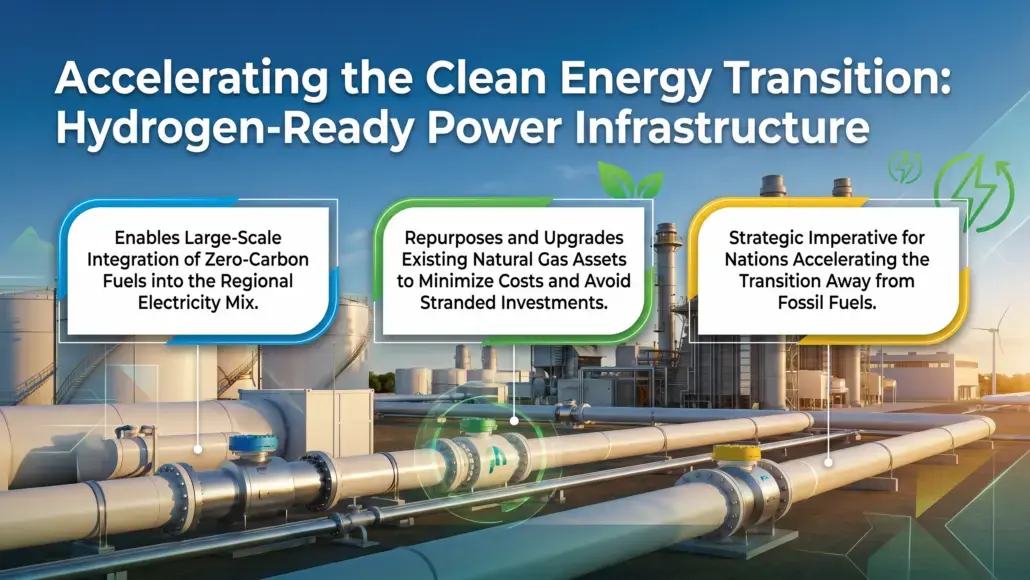

Utilities are currently upgrading their assets to Hydrogen-Ready Power Infrastructure Supporting Clean Energy Expansion to enable the large scale integration of zero-carbon fuels into the regional electricity mix. As nations accelerate their transition away from fossil fuels, the ability to repurpose and upgrade existing natural gas infrastructure becomes a strategic imperative for minimizing costs and avoiding stranded assets. Hydrogen-ready infrastructure encompasses a wide range of assets, including transmission pipelines, distribution networks, compression stations, and power generation sites, all designed or modified to handle hydrogen-natural gas blends and, eventually, pure hydrogen. This preparatory work is essential for ensuring that the grid can accommodate the massive volumes of green hydrogen produced by offshore wind and large scale solar farms. By establishing the physical and technical foundation for a hydrogen economy today, the power sector can ensure a reliable and cost-effective pathway to a fully decarbonized future. The implementation of these standards is not just a technical upgrade; it is a fundamental shift in how energy is transported and utilized across the entire utility environment.
Repurposing Existing Gas Networks for Hydrogen Service
A primary pillar of hydrogen-ready power infrastructure supporting clean energy expansion is the strategic repurposing of the existing natural gas pipeline network. Many existing steel pipelines can be converted to transport hydrogen with targeted upgrades to the valves, seals, and compression systems. Hydrogen molecules are smaller and more prone to leakage than methane, necessitating the use of specialized gaskets and sealants that are compatible with the chemical properties of the gas. Additionally, the higher velocity of hydrogen at equivalent energy flows requires the installation of advanced compressors and metering equipment designed to handle the lower density and higher diffusivity of the fuel. Utilities are conducting extensive integrity assessments and material testing to identify the specific segments of their networks that are most suitable for conversion. This brownfield approach significantly reduces the capital expenditure and environmental impact associated with building entirely new infrastructure. The development of regional hydrogen clusters, where multiple power plants and industrial sites are connected to a shared backbone, is an efficient way to utilize these existing assets and create a resilient and scalable energy network.
Material Compatibility and Embrittlement Mitigation
The successful deployment of hydrogen-ready power infrastructure supporting clean energy expansion requires a deep understanding of the interactions between hydrogen and the materials used in the energy grid. Hydrogen embrittlement is a well-documented phenomenon where hydrogen atoms diffuse into the metallic lattice of steel components, leading to a loss of ductility and an increased risk of brittle fracture under stress. This is particularly concerning for high-pressure transmission lines and critical components in power generation sites. To mitigate these risks, engineers are developing new material standards and qualification procedures for hydrogen service. This includes the use of specialized alloys, such as austenitic stainless steels and high-strength polymers, that are resistant to hydrogen penetration. For existing assets, the application of internal coatings and liners can provide an effective barrier against hydrogen-metal interactions. Continuous monitoring and non-destructive testing are also essential for ensuring the long term integrity of the infrastructure. By prioritizing material science and engineering excellence, the power generation sector can build a reliable and durable network that is capable of handling the unique challenges of the hydrogen economy for decades to come.
Integration of Metering and Control Systems
The transition to a hydrogen-rich grid necessitates a major upgrade in the metering and control systems that manage the flow of energy. Hydrogen-Ready Power Infrastructure Supporting Clean Energy Expansion requires precise measurement of gas composition and energy content, particularly during the initial phase of hydrogen blending. Traditional gas meters, which are calibrated for methane, must be replaced or modified with ultrasonic or Coriolis meters that can accurately measure the different flow characteristics of hydrogen. Additionally, the integration of advanced sensors and real-time analyzers allows grid operators to monitor the concentration of hydrogen at every point in the network, ensuring that the blend remains within the technical limits of the connected power generation assets. These digital tools are integrated into a centralized supervisory control and data acquisition (SCADA) system, providing a holistic view of the energy system and allowing for rapid response to changes in supply or demand. The use of edge computing and artificial intelligence further enhances the responsiveness of these systems, optimizing the dispatch of hydrogen and maximizing the efficiency of the entire grid.
Regulatory Standards and Interoperability
The global expansion of hydrogen-ready power infrastructure supporting clean energy expansion is dependent on the development of harmonized regulatory standards and technical codes. Currently, different regions have varying requirements for hydrogen purity, pressure levels, and safety protocols, which can create barriers to international trade and technology transfer. The establishment of clear and consistent standards is essential for providing the regulatory certainty needed to attract large scale investment to the sector. This includes the development of international certification schemes for hydrogen-ready components and systems, ensuring that they meet the highest standards of safety and performance. Policymakers are also working to align grid codes across national borders, facilitating the creation of an interconnected hydrogen market that can balance supply and demand across entire continents. The harmonization of these regulations is a complex process that requires close collaboration between governments, industry associations, and standardization bodies. By creating a unified regulatory environment, the power generation sector can accelerate the deployment of hydrogen technology and ensure that the benefits of clean energy are shared globally.
Siting and Land Use Considerations for New Infrastructure
While repurposing existing assets is a priority, the full realization of hydrogen-ready power infrastructure supporting clean energy expansion will also require the construction of new dedicated pipelines and storage facilities. The siting of these assets involves a complex array of environmental, social, and logistical considerations. Developers must manage rigorous permitting processes and engage with local communities to ensure that new infrastructure projects are both safe and socially acceptable. The integration of hydrogen hubs with existing industrial zones and power generation sites can minimize the need for new greenfield construction and reduce the impact on natural ecosystems. Additionally, the use of shared utility corridors can facilitate the rapid deployment of new pipelines while minimizing land use conflicts. The development of comprehensive spatial planning tools is essential for optimizing the layout of the hydrogen grid and ensuring that it is integrated with other critical infrastructure, such as high-voltage transmission lines and water networks. By taking a holistic and proactive approach to siting, the power sector can ensure that the expansion of the clean energy network is both sustainable and efficient.
Economic Impact and Job Creation in the Infrastructure Sector
The development of hydrogen-ready power infrastructure supporting clean energy expansion is a major driver of economic growth and job creation across the energy and manufacturing sectors. The construction and retrofitting of pipelines, compression stations, and power generation sites require a highly skilled workforce, ranging from engineers and material scientists to specialized welders and technicians. This transition provides an opportunity for workers in the traditional oil and gas sectors to transition their skills to the clean energy economy, ensuring a just and inclusive energy transition. Additionally, the demand for hydrogen-ready equipment and services is stimulating innovation and investment in the domestic manufacturing base, creating new opportunities for businesses to compete in the global market. Governments are supporting these economic benefits through targeted funding and workforce development programs, ensuring that the necessary skills are available to meet the needs of the growing hydrogen industry. By investing in the physical and human capital of the energy grid, nations can build a resilient and prosperous economy that is powered by clean and sustainable energy. The long-term economic benefits of a hydrogen-ready infrastructure, including lower energy costs and reduced carbon emissions, far outweigh the initial investment, providing a strong case for continued support for the sector.
Digital Twin Technology for Predictive Asset Management
The modernization of hydrogen-ready power infrastructure supporting clean energy expansion is increasingly incorporating digital twin technology to enhance the safety and efficiency of the network. A digital twin is a virtual representation of a physical asset, such as a pipeline or a compression station, that is updated in real time with data from sensors and monitoring systems. By creating these virtual models, grid operators can simulate the performance of the infrastructure under different hydrogen blending scenarios and identify potential bottlenecks or safety issues before they occur in the physical world. Digital twins allow for a more precise management of the network, enabling predictive maintenance that reduces downtime and extends the life of the assets. For instance, the model can predict how different concentrations of hydrogen will affect the fatigue life of a specific pipe segment based on historical pressure cycles and material properties. This data-driven approach is essential for managing the inherent complexities of a hydrogen-rich grid and providing the high level of reliability required by the power generation sector. Additionally, digital twins can be used to optimize the dispatch of hydrogen across the network, ensuring that the fuel is delivered to the right place at the right time while minimizing energy losses. As the hydrogen grid grows in scale and complexity, the use of these advanced digital tools will become a standard requirement for the safe and efficient operation of the infrastructure.
Engineering Standards for Hydrogen-Ready Valves and Actuators
A critical component of hydrogen-ready power infrastructure supporting clean energy expansion is the development and deployment of specialized valves and actuators designed for hydrogen service. Traditional valves used in natural gas networks often rely on elastomeric seals and lubricants that can be degraded by hydrogen, leading to leaks and mechanical failure. Hydrogen-ready valves use advanced metallic seals and high-performance polymers that are specifically tested for compatibility with the gas. Additionally, the actuators that operate these valves must be engineered to handle the different torque requirements and response times associated with hydrogen flow control. The establishment of rigorous testing protocols, such as helium leak testing and cycle testing at cryogenic temperatures, ensures that these components meet the highest standards of integrity. In power generation sites, the reliability of these valves is essential for the safe operation of the fuel handling system and the protection of the turbine assets. Manufacturers are increasingly offering “hydrogen-ready” product lines that are pre-certified for use in high-concentration hydrogen environments, providing utilities with a clear and reliable path for infrastructure upgrades. By focusing on these critical sub-components, the industry can ensure that the entire energy network is built on a foundation of safety and technical excellence. This attention to detail is what ultimately enables the large scale expansion of clean energy and the successful transition to a net-zero future.