














MCE 2026

Scania installs largest solar roof in the Netherlands

Note* - All images used are for editorial and illustrative purposes only and may not originate from the original news provider or associated company.

Subscribe

- Never miss a story with notifications

- Gain full access to our premium content

- Browse free from any location or device.

Media Packs

Expand Your Reach With Our Customized Solutions Empowering Your Campaigns To Maximize Your Reach & Drive Real Results!

– Access the Media Pack Now

– Book a Conference Call

Leave Message for Us to Get Back

Related stories

Allocation Round 8 Renewable Auction Set for July 2026 in UK

The UK government has announced that the next renewable...

Microgrids Strengthening Energy Resilience for Cities

Microgrids are becoming a cornerstone of urban energy infrastructure, providing cities with the ability to maintain critical services during major grid disruptions and fostering a more decentralized and resilient electrical network.

AI-Powered Forecasting Is Improving Power Demand Management

The application of artificial intelligence and machine learning to energy demand forecasting is enabling utilities to optimize grid operations, reduce peak loads, and integrate renewable energy more effectively through high-precision predictive insights.
- Advertisement -

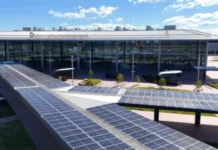
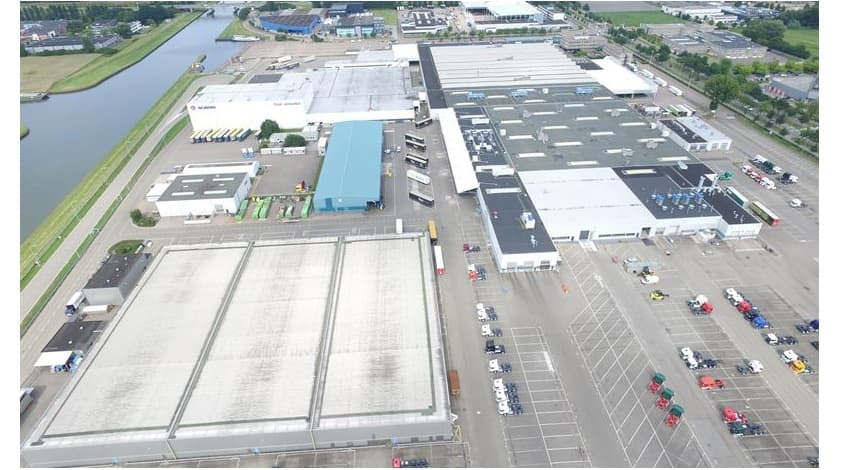
Zwolle production unit gets solar-powered roof equivalent to the size of nearly eight football pitches, bringing it nearer to the goal of being carbon neutral by 2020.

Scania has taken its latest significant step in its transition to using exclusively renewable energy in its production activities.

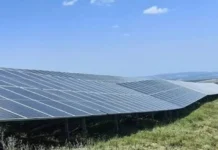
The company’s production unit in Zwolle, Overijssel, will install the largest solar roof in the Netherlands. The solar roof will have 22,000 solar panels with a total energy capacity of six megawatts.

“Scania is committed to reducing its carbon footprint and throughout the organisation we are now taking initiatives similar to those in Zwolle to enhance energy efficiency. We have set ambitious targets and are well on our way to achieving carbon neutrality,” says Ruthger de Vries, Executive Vice President for Production and Logistics. 

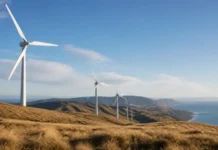
The roof is just one of several initiatives that Scania has taken in Zwolle for the production unit to reach carbon neutrality by 2020. One example is wind power. In September 2016, Scania Nederland started collaborating with the Dutch citizen initiative ‘Blauwvinger Energie’ and Windesheim College, to build three wind turbines by the Zwolle-IJssel canal, two of which are due to be built two of those wind turbines on the Scania factory area. The turbines for the project ‘Windenergie in Zwolle’ have a capacity of two to three megawatts each, while the hub height and rotor diameter of the turbines are 100 metres.

The solar roof has been welcomed by the local authority. “Scania is amongst those leading the way in energy,” says Annemieke Traag, Member of the Executive Council of the Province of Overijssel for Energy, Environment and European Affairs.

“As a major employer in our province, Scania is manifesting that it takes energy transition very seriously.”

In reaching its 2020 target, Zwolle would become the first Scania production in the world to become energy-neutral, but the company as a whole is committed to reducing its environmental footprint throughout its production processes. Scania is a signatory to the UN Global Compact, which has now been complemented by Agenda 2030 and its sustainability goals.

For further information, please contact:
Hans-Åke Danielsson,
Press Manager, Corporate Relations
Phone: +46 8 553 856 62
E-mail: hans-ake.danielsson@scania.com

Latest stories

Related stories

Allocation Round 8 Renewable Auction Set for July 2026 in UK

The UK government has announced that the next renewable...

Microgrids Strengthening Energy Resilience for Cities

Microgrids are becoming a cornerstone of urban energy infrastructure, providing cities with the ability to maintain critical services during major grid disruptions and fostering a more decentralized and resilient electrical network.

AI-Powered Forecasting Is Improving Power Demand Management

The application of artificial intelligence and machine learning to energy demand forecasting is enabling utilities to optimize grid operations, reduce peak loads, and integrate renewable energy more effectively through high-precision predictive insights.

Decentralized Energy Networks Transform Power Systems

The shift from centralized power plants to decentralized energy networks is creating a more resilient and democratic energy landscape, enabling local generation, peer-to-peer trading, and improved infrastructure reliability.

Subscribe

- Never miss a story with notifications

- Gain full access to our premium content

- Browse free from any location or device.

Media Packs

Expand Your Reach With Our Customized Solutions Empowering Your Campaigns To Maximize Your Reach & Drive Real Results!

– Access the Media Pack Now

– Book a Conference Call

Leave Message for Us to Get Back

Translate »