





























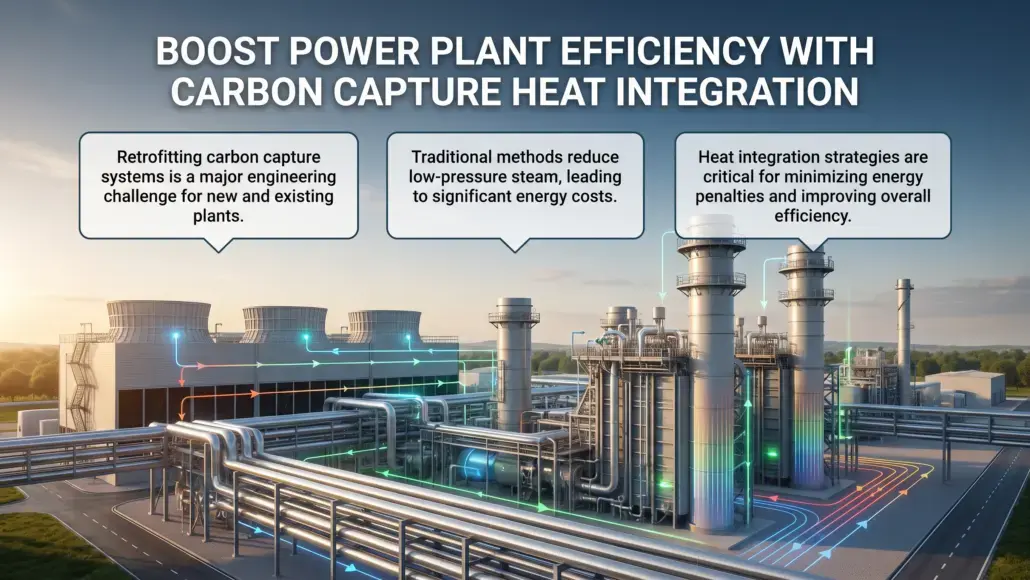

The integration of carbon capture systems within existing and new-build power generation facilities represents one of the most significant engineering challenges facing the industry today. The primary hurdle remains the substantial energy penalty associated with solvent regeneration, which traditionally siphons off large quantities of low-pressure steam from the turbine cycle. To address this, carbon capture heat integration improving power plant efficiency has emerged as a critical focus for thermal engineers seeking to minimize the parasitic load of decarbonization technologies. By systematically capturing waste heat from the compression stages and the capture process itself, operators can reclaim significant portions of the thermal energy that would otherwise be lost to the cooling system. This approach requires a sophisticated understanding of the thermodynamic coupling between the flue gas treatment facility and the main power block, ensuring that the capture process does not unacceptably degrade the net electrical output of the plant. The complexity of these systems necessitates a holistic design philosophy where the power plant and the carbon capture unit are treated as a single, unified thermal machine rather than two separate entities.
Optimization of Solvent Regeneration Through Steam Cycle Coupling
The solvent regeneration process in post-combustion carbon capture requires intense thermal energy to break the chemical bonds between the solvent and the captured carbon dioxide. Traditionally, this heat is supplied by extracting steam from the crossover pipe between the intermediate and low-pressure turbines. However, this extraction directly reduces the work done by the steam cycle, leading to a drop in overall plant efficiency. Effective carbon capture heat integration improving power plant efficiency involves optimizing this extraction point to ensure that the steam quality matches the reboiler requirements without excessive throttling losses. Advanced configurations now utilize secondary heat exchangers to preheat the solvent using waste heat from the flue gas, reducing the total amount of steam required from the turbine. This careful balancing of thermal loads allows for a more stable operation of the turbine during load-following maneuvers, which is increasingly important in grids with high intermittent renewable penetration. The pressure at which this steam is extracted must be precisely controlled to avoid stalling the low-pressure turbine stages or causing excessive moisture levels in the exhaust steam, both of which can lead to equipment damage over time.
Additionally, the configuration of the reboiler itself plays a vital role in thermal management. By utilizing multi-stage regeneration or split-flow configurations, engineers can lower the temperature required for solvent stripping. This reduction in temperature enables the use of lower-grade waste heat, which might be sourced from other parts of the power plant, such as the boiler feed water system or the turbine cooling water. The goal is to create a closed-loop thermal network where every megawatt of heat is utilized to its highest potential before being rejected. Such detailed thermal mapping is essential for achieving the efficiency targets necessary for the economic viability of carbon capture projects in competitive electricity markets. The integration of advanced heat pumps is also being explored to upgrade low-temperature waste heat to a level suitable for the reboiler, effectively reducing the net thermal demand on the main boiler system and further enhancing the system resilience.
Managing Parasitic Loads Through Compression Heat Recovery
The compression of captured carbon dioxide for transport and storage is another energy-intensive phase of the carbon capture chain. Multi-stage centrifugal compressors are typically used to bring the gas from atmospheric pressure to the supercritical pressures required for pipeline transport. This compression process generates significant amounts of heat at each stage, which must be removed to maintain compressor efficiency and protect equipment. In a standard setup, this heat is rejected to the atmosphere or a cooling tower. However, in a highly integrated facility, this compression heat is captured through intercoolers and redirected back into the power plant cycle. This recovery is a prime example of carbon capture heat integration improving power plant efficiency, as it directly offsets one parasitic load with the waste energy of another. The potential for heat recovery from the final stage of compression is particularly high, as the gas temperatures can reach well over 100 degrees Celsius, providing a high-grade thermal resource that can be used for significant feed water preheating.
By integrating this high-quality waste heat into the boiler feed water preheating circuit, the plant can reduce the amount of steam extraction required for regenerative feed water heating. The design of these intercoolers must account for the specific temperature profiles of the compressed gas, ensuring that the heat transfer is maximized while maintaining the necessary pressure drops. The implementation of such systems requires advanced control logic to manage the varying heat availability as the compressor load fluctuates in response to carbon dioxide throughput changes. Engineers must also consider the potential for supercritical carbon dioxide to interact with the heat exchanger materials, requiring the use of high-strength alloys that can withstand the unique combination of pressure, temperature, and chemical reactivity. The success of this integration hinges on the ability to maintain stable compressor operation while extracting the maximum possible thermal benefit for the steam cycle.
Flue Gas Thermal Management and Condensate Recovery
Before flue gas enters the absorber column, it must be cooled to temperatures suitable for the chemical solvent, typically between 40 and 60 degrees Celsius. This cooling process often involves a direct contact cooler or a series of heat exchangers that extract thermal energy from the hot combustion gases. This low-grade heat, while often overlooked, can be utilized for preheating the combustion air or for district heating applications if the plant is located near an industrial or residential heat sink. Recovering this energy is a fundamental component of carbon capture heat integration improving power plant efficiency, as it improves the overall thermal utilization of the fuel source. The use of condensing economizers can further increase the heat recovery by capturing the latent heat of vaporization from the flue gas moisture, adding several percentage points to the overall boiler efficiency.
In addition to heat recovery, flue gas cooling allows for the condensation and recovery of water vapor present in the exhaust stream. This recovered condensate can be treated and used as makeup water for the boiler or the cooling tower, reducing the plant’s raw water consumption. This circular approach to resource management is becoming a hallmark of modern power plant design, where environmental compliance and operational efficiency are treated as interconnected goals. The integration of moisture recovery systems requires careful material selection to prevent corrosion from acidic components in the flue gas, but the long-term benefits in terms of water security and thermal efficiency are substantial. As water scarcity becomes a more pressing concern for power plant operators globally, the ability to generate a portion of the plant’s water needs through flue gas condensation provides a significant operational advantage.
Integration Challenges and Control System Requirements
Implementing deep thermal integration between a power block and a carbon capture facility introduces significant operational complexity. The two systems are thermally linked, meaning that a disturbance in one will inevitably affect the other. For instance, a sudden change in turbine load will alter the temperature and pressure of the extracted steam, which could disrupt the solvent regeneration process. To maintain stability, advanced process control systems are required to manage these interdependencies in real time. These controllers must use predictive models to anticipate changes in heat availability and demand, adjusting valve positions and pump speeds to maintain optimal thermal balance. The use of digital twins is becoming increasingly common in this context, allowing operators to simulate the impact of various integration strategies before implementing them on the physical asset.
The physical layout of the integration also poses challenges, particularly for retrofit projects. The proximity of the capture plant to the turbine hall is critical to minimizing thermal losses in the steam and condensate piping. Large-diameter pipes required for low-pressure steam extraction can be difficult to route through existing plant infrastructure, requiring innovative engineering solutions such as elevated pipe racks or underground tunnels. Despite these hurdles, the drive for carbon capture heat integration improving power plant efficiency remains strong, as it is the most effective way to reduce the levelized cost of electricity from decarbonized fossil fuel plants. The ongoing development of high-efficiency solvents with lower regeneration energy requirements will further enhance the benefits of these integrated thermal designs, making carbon capture a more competitive option for large-scale power generation.
Economic Implications of Enhanced Thermal Integration
The economic justification for carbon capture projects often hinges on the net efficiency of the facility. A plant that suffers a 10 percent drop in efficiency due to carbon capture will require significantly more fuel to produce the same amount of electricity, increasing both operational costs and the carbon footprint per kilowatt-hour. By prioritizing carbon capture heat integration improving power plant efficiency, developers can reduce this efficiency penalty to a more manageable level, often below 5 or 6 percent in optimized designs. This improvement directly translates to lower fuel costs and better competitiveness in electricity auctions. The capital investment required for integration hardware, such as additional heat exchangers and control systems, is typically offset by the long-term savings in fuel consumption and the potential for increased electrical output.
Additionally, the ability to sell recovered heat or use it to offset internal thermal demands can provide additional revenue streams or cost savings. In jurisdictions with carbon pricing, the efficiency of the capture process becomes a critical factor in determining the total tax liability or the value of carbon credits earned. As the power industry continues to evolve, the integration of thermal systems will be a key differentiator for the next generation of low-carbon dispatchable power assets. The focus on maximizing every unit of thermal energy through sophisticated integration strategies will ensure that power plants remain the backbone of a reliable and sustainable energy system. The strategic alignment of environmental goals with thermodynamic optimization is the only path forward for a sector that must meet growing electricity demand while achieving net-zero emissions targets.
Future Developments in Thermal Systems Integration
Looking ahead, the next generation of thermal integration will likely incorporate even more advanced technologies such as supercritical carbon dioxide power cycles. These cycles promise higher efficiencies and more compact footprints than traditional steam cycles, making them ideal for integration with carbon capture systems. The use of artificial intelligence to optimize the thermal network in real time will also become more prevalent, allowing for autonomous adjustments to heat flows based on market prices and weather conditions. These advancements will continue to push the boundaries of carbon capture heat integration improving power plant efficiency, ensuring that decarbonized power generation remains a viable and reliable component of the global energy mix. The research into new solvent chemistries that operate at lower temperatures will also expand the range of waste heat sources that can be utilized, further decoupling the capture process from the primary steam cycle.
The integration of carbon capture with other industrial processes, such as cement or steel production, offers another avenue for thermal optimization. Shared heat networks can allow for the exchange of thermal energy between different facilities, creating a larger and more resilient energy ecosystem. The development of high-temperature thermal storage systems can also provide a buffer for waste heat, allowing it to be used when the demand is highest rather than when it is generated. These holistic approaches to energy management will be essential for creating the deeply integrated and highly efficient industrial clusters of the future. The commitment to thermal excellence and the systematic application of integration principles will remain the defining characteristics of a successful power generation strategy in the age of decarbonization.