

































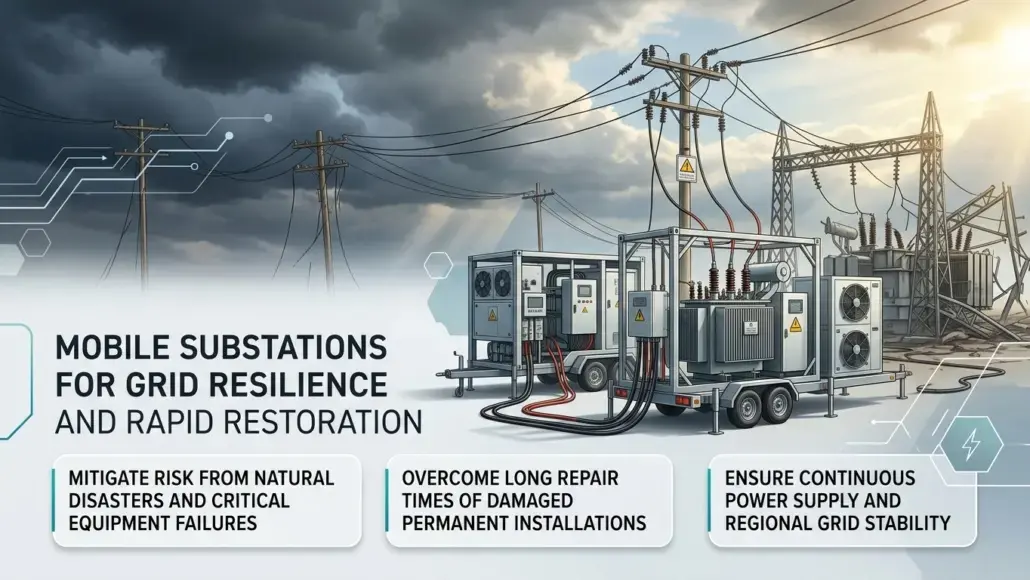

The ability to maintain a continuous power supply in the face of natural disasters, physical attacks, or major equipment failures is a defining challenge for modern utilities. Traditional substations are permanent installations that can take months or even years to repair or replace if they are severely damaged. This vulnerability represents a significant risk to the overall stability of the regional power grid and the economic well-being of the communities they serve. To mitigate this risk, the industry is increasingly utilizing portable power solutions that can be deployed quickly to any location. The implementation of mobile substations represents a vital component of the modern strategy for grid resilience, providing a versatile and responsive alternative to fixed infrastructure.
A mobile substation is a complete substation assembly mounted on a trailer or a series of skids, designed for rapid transport and quick connection to the existing high-voltage network. These units typically include a transformer, switchgear, and control systems, all integrated into a compact and robust package. By maintaining a fleet of these units, utilities can ensure that they have the capacity to bypass a damaged station or provide temporary power during a major overhaul. The adoption of mobile substations is a strategic response to the need for greater agility in grid operations, ensuring that the power stays on even when the permanent infrastructure is compromised.
Resilience and Rapid Restoration Capabilities
The primary benefit of utilizing portable substation technology is the significant reduction in the time needed to restore power following an outage. In an emergency situation, such as a flood or a severe storm, the arrival of a mobile unit can mean the difference between a few hours of disruption and several days of darkness. Mobile substations are designed for ease of installation, with many units featuring specialized connectors and modular designs that allow for a rapid interface with the existing line. This speed of deployment is essential for protecting critical infrastructure, such as hospitals and communication centers, during a major grid event.
Furthermore, the use of mobile units allows for a more proactive approach to grid restoration following an intentional attack or an act of vandalism. As the physical security of the grid becomes a more prominent concern, the ability to rapidly replace a targeted asset is a key part of the national strategy for energy security. Mobile substations act as a reliable backup that can be moved to the most critical points of the network as needed. This flexibility ensures that the overall integrity of the grid is maintained, even if specific components are taken offline. The resilience provided by these units is a fundamental requirement for the modern utility operating in an increasingly uncertain environment.
Design and Versatility for Modern Grid Needs
The technical sophistication of modern mobile units has reached a point where they can match the performance and the functionality of their permanent counterparts. Designers utilize high-efficiency transformers and compact gas-insulated switchgear to minimize the physical footprint of the unit without compromising on capacity. Mobile substations can be engineered for a wide range of voltage levels and power ratings, making them suitable for everything from local distribution to high-voltage transmission applications. This versatility ensures that the utility can utilize the same fleet of units for a variety of different operational needs across their entire service territory.
The design of these units also accounts for the logistical challenges of transport over public roads. Weight and dimension restrictions are a primary concern, requiring the use of lightweight materials and innovative structural designs. Many mobile units are built using specialized trailers with multiple axles and hydraulic leveling systems to ensure stability during transport and operation. This focus on mobility ensures that the units can reach even the most remote or difficult-to-access locations in a timely manner. The engineering excellence required to create a full-scale substation on a trailer is a testament to the innovation currently driving the power sector.
Operational Benefits and Maintenance Flexibility
Beyond emergency restoration, mobile units provide significant benefits for the day-to-day management of the power grid. When a permanent substation requires a major overhaul or a transformer replacement, a mobile unit can be used to maintain the power flow, allowing the work to be performed during normal business hours without a planned outage. This flexibility simplifies the task of equipment maintenance and reduces the impact on the customer. Mobile substations are therefore a vital tool for improving the overall efficiency of the maintenance department, allowing for more thorough and frequent inspections of the permanent infrastructure.
The use of mobile units also supports the expansion of the grid to accommodate new industrial or residential developments. If a permanent substation is still under construction but the demand for power is already present, a mobile unit can provide a temporary solution. This allows for the rapid connection of new customers and ensures that the economic growth of the region is not delayed by infrastructure lead times. Once the permanent station is completed, the mobile unit can be moved to the next project, providing a highly efficient use of the utility’s capital resources. The role of portable power in supporting this development speed is an essential aspect of modern utility management.
Strategic Planning and Fleet Management
The successful implementation of a mobile substation program requires a comprehensive approach to fleet management and strategic planning. Utilities must determine the optimal number and type of units needed to cover their entire territory and ensure that they are stored in locations that allow for a rapid response. This involves a detailed analysis of the most vulnerable parts of the network and the potential risks from weather and other threats. Mobile substations are a long-term investment that requires a commitment to regular maintenance and staff training to ensure that they are always ready for deployment when needed.
The coordination between the utility and the local authorities is also essential for the successful transport of these large units. Route planning and the coordination of police escorts are often necessary to ensure that the units can move through urban areas or over restricted bridges. By integrating the mobile fleet into the broader emergency response plan, utilities can ensure that every part of the organization is prepared to handle a major grid event. The ongoing evolution of mobile substations is set to further enhance the resilience of the 21st-century power grid, providing a responsive and flexible foundation for the energy transition.