





































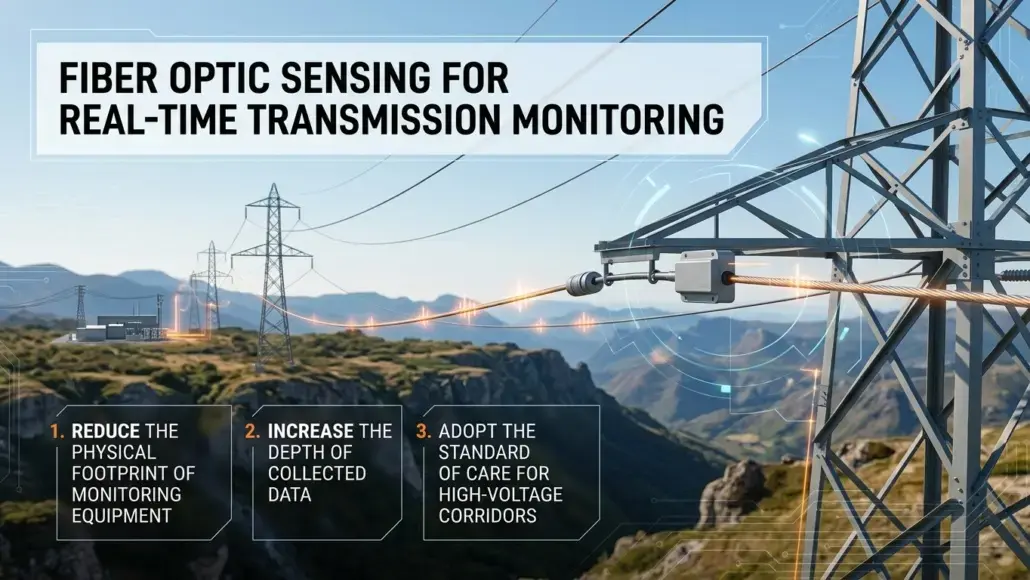

The trajectory of utility asset management has moved steadily toward reducing the physical footprint of monitoring equipment while increasing the depth of the data collected. This progression is largely driven by the development of sophisticated fibre optic sensing platforms that allow grid operators to monitor the health of their transmission lines with unprecedented precision. These systems have moved from being experimental tools to becoming the standard of care for high-voltage corridors across both urban and rural environments. The shift toward continuous, distributed monitoring is not merely a matter of operational convenience; it is a fundamental restructuring of grid economics and safety standards that utilities must address.
As utility technology continues to advance, the distinction between traditional manual inspections and real-time monitoring has become increasingly pronounced. Modern sensing platforms are now capable of providing a continuous thermal and mechanical profile of the line, identifying changes in temperature and strain at every point along the cable. This enhanced visibility allows for the identification of localized hot spots and excessive line sag that could indicate an impending failure or a safety hazard. The result is a significant reduction in the risk of unplanned outages and a more informed approach to maintenance and life extension for critical transmission assets.
Distributed Temperature Sensing and Thermal Management
The integration of these tools into the daily workflow of clinical teams requires a thoughtful approach to grid modernization. It is not enough to simply install the sensors; utilities must invest in the data infrastructure and the training necessary to support these advanced platforms. This includes the implementation of specialized software for data visualization and the redesign of the control room to accommodate the constant stream of information. When the physical environment is optimized for fibre optic sensing, the efficiency of the entire maintenance team is improved, leading to faster response times and better resource utilization across the network.
One of the primary advantages of utilizing distributed sensing is the impact on thermal management. Power lines that are heavily loaded during periods of high demand can experience significant heating, which can lead to insulation degradation or dangerous line sag. Fibre optic sensing allows for the precise measurement of temperature along the entire length of the cable, providing a reliable indicator of its thermal health. For grid operators, this translates to the ability to implement dynamic line rating, ensuring that the infrastructure is used at its maximum safe capacity without the risk of permanent damage.
Acoustic Sensing and Physical Grid Security
The evolution of sensing technology has also expanded the boundaries of what is considered a detectable event. External threats that might have gone unnoticed by traditional monitoring are now identified in real-time thanks to the sensitivity of Distributed Acoustic Sensing. By analyzing the vibrations within the fiber, utilities can detect third-party excavations, falling trees, or even the subtle acoustic signature of a faulty component. This expansion of the monitoring field has significant implications for grid security, particularly as the prevalence of extreme weather events and physical security threats increases.
Beyond the immediate safety benefits, the shift toward continuous monitoring is reshaping the financial profile of transmission departments. While the initial investment in fibre optic sensing can be substantial, the long-term savings associated with reduced outages and more efficient maintenance justify the expense. Payors and regulators are recognizing the value of these systems, as they lead to lower total costs of care for the grid infrastructure. Consequently, the selection of monitoring equipment has become a strategic decision that involves input from engineering leads, financial officers, and administrative stakeholders within the utility.
Real-Time Data and Enhanced Maintenance Strategy
The role of visualization in the success of these programs cannot be overstated. Modern sensing software provides operators with a detailed, high-resolution view of the line’s status, presented in an intuitive digital format. This level of clarity is a cornerstone of operational precision, allowing for the identification of small changes in temperature or strain that might be obscured by the noise in traditional systems. As imaging and data technology continue to improve, we see the integration of real-time diagnostics and predictive analytics, which further enhances the ability of the utility to distinguish between normal fluctuations and genuine faults.
The transition to fiber optic sensing also has significant implications for technical education and workforce training. Maintenance crews and engineers must now master a different set of skills, focusing on the interpretation of digital data and the management of complex fiber-optic networks. Simulation technology has become an essential part of the training curriculum, allowing staff to practice the response to different fault scenarios in a risk-free environment. This shift in pedagogy ensures that the next generation of utility professionals is fully prepared to handle the complexities of a modern, data-driven power grid.
Environmental Resilience and Infrastructure Protection
Environmental sustainability is another area where the choice of monitoring technology is making an impact. While traditional inspections often require the use of vehicles or helicopters, fiber optic sensing provides a continuous and low-impact alternative that reduces the carbon footprint of the utility’s operations. This effort to reduce the environmental impact of grid management is aligned with the broader corporate social responsibility goals of many modern energy organizations. By choosing durable and efficient sensing systems, utilities can minimize their ecological footprint without compromising on the safety or the reliability of the power supply.
The continued refinement of these sensors will likely involve the use of new materials and the incorporation of smarter analytical algorithms. We expect to see systems that can provide real-time feedback on the health of individual components, further reducing the risk of accidental injury or equipment failure. This constant improvement in monitoring precision is what defines the modern era of the utility sector. By embracing these changes, the power industry is setting a new standard for what is possible in grid management, ensuring that the transmission network remains a safe and effective foundation for the global energy system.
In conclusion, the adoption of distributed sensing technology is an essential step for the utility industry as it strives to meet the growing demands of modern society. By improving the safety and the efficiency of the transmission network, these technologies are setting a new standard for operational excellence. It is clear that the focus on fiber optic sensing is the only way to achieve the scale and the precision required in the 21st century.