








































In the modern energy landscape, where the complexity of infrastructure projects continues to escalate alongside stringent regulatory requirements, the role of leadership has transcended traditional management boundaries. We are no longer in an era where safety can be treated as a secondary department or a checklist of compliance requirements. Instead, safety leadership energy projects has emerged as the single most significant driver of both personnel protection and operational efficiency. True leadership in this sector is not defined by the authority to give orders, but by the ability to influence behavior, inspire commitment, and embed a deep-seated value for human life into every facet of the project lifecycle.
The correlation between high-performing safety cultures and project success is undeniable. When leaders at the executive and field levels demonstrate an unwavering commitment to safety, it permeates the entire organization, creating a psychological environment where workers feel empowered to identify hazards and pause operations when risks become unacceptable. This proactive stance does not hinder progress; rather, it stabilizes the project by reducing the likelihood of catastrophic delays associated with incidents, investigations, and workforce turnover. By prioritizing safety leadership energy projects, organizations are essentially investing in the long-term reliability and sustainability of their energy project management strategies.
Cultivating a Culture of Accountability and Ownership
At the heart of safety leadership is the concept of workforce accountability safety. In high-risk environments like electrical transmission and power generation, accountability is often misunderstood as a mechanism for blame. However, effective safety leadership reframes accountability as a shared responsibility for outcomes. It involves clearly defining expectations and providing the necessary resources for workers to meet those standards. When leaders demonstrate that they are personally accountable for the safety of their teams, it encourages a reciprocal sense of ownership among the workforce.
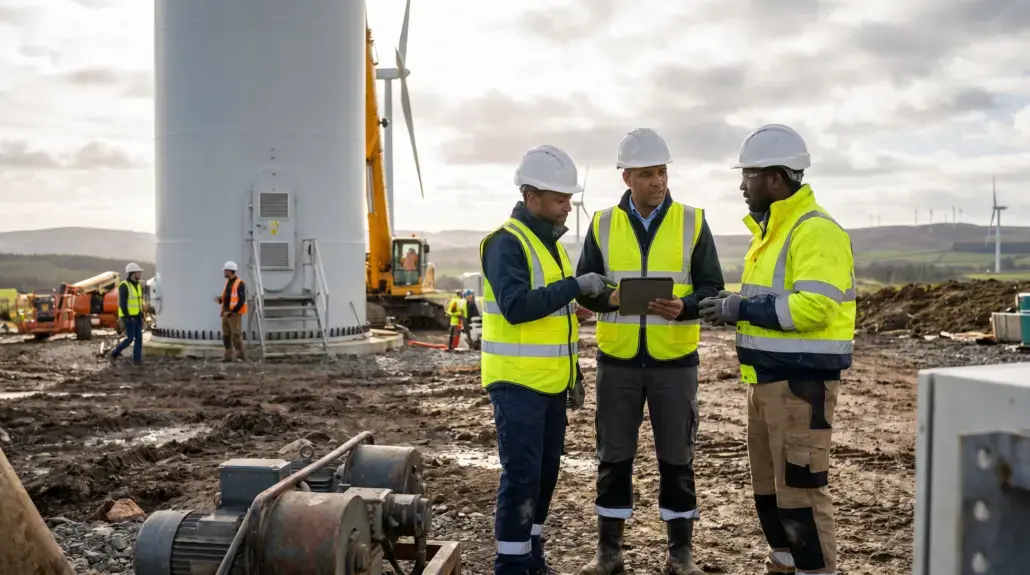
This culture of ownership is particularly vital in decentralized energy projects where supervisors cannot be present at every work location. In such scenarios, the leadership displayed by senior technicians and crew leads becomes the primary defense against procedural drift. By fostering an environment where “doing it right” is more important than “doing it fast,” leaders ensure that safety remains the constant variable in an otherwise volatile operational environment. This alignment of values ensures that workforce accountability safety is not just a policy, but a lived reality on every jobsite, reinforcing the overall transmission safety strategy.
The Psychology of Influence and Behavioral Change
Leadership in safety is fundamentally an exercise in psychology. To drive performance, leaders must understand the motivations and cognitive biases that influence human behavior in high-stress situations. For instance, the “normalization of deviance” where workers gradually become comfortable with small risks because they haven’t resulted in an accident is a constant threat in the power sector. A strong safety leader recognizes this trend and intervenes through consistent engagement and “visible felt leadership,” where they spend time in the field, not to inspect, but to understand the challenges faced by the crew.
By engaging in meaningful dialogue rather than one-way communication, leaders can identify the systemic barriers that prevent workers from following safety protocols. This might include issues with equipment availability, unrealistic scheduling, or conflicting priorities. Addressing these root causes is a hallmark of safety leadership energy projects. When a leader removes a barrier that was making a job more difficult or dangerous, they build trust and credibility. This trust is the currency of leadership, enabling the leader to influence behavior more effectively than any manual or disciplinary policy ever could.
Integrating Safety into the Executive Narrative
The influence of leadership must begin at the highest levels of the organization. If the board of directors and the executive suite only discuss safety during annual reviews or after an incident, the message to the workforce is clear: safety is a priority, but performance is the goal. For safety leadership energy projects to be truly effective, safety must be the lens through which every business decision is made. This includes procurement, scheduling, and capital allocation. Executives who lead in safety are those who are willing to delay a project milestone if safety requirements haven’t been met, sending a powerful signal that human life is the non-negotiable bottom line.
This executive commitment is what allows for the development of a mature transmission safety strategy. It provides the financial and political backing needed to implement advanced safety technologies, such as biometric monitoring or AI-driven risk analytics. Furthermore, when executives participate in safety briefings and visit field sites, it humanizes the leadership team and demonstrates that they are not disconnected from the realities of the work. This top-down alignment is essential for creating a cohesive safety culture that can withstand the pressures of aggressive project timelines and complex technical challenges.
Measuring the Impact of Leadership on Performance
While the “human” side of leadership is vital, it must also be backed by data. High-performing energy projects use a combination of leading and lagging indicators to measure the effectiveness of their safety leadership. However, the focus is increasingly shifting toward leadership-specific metrics, such as the frequency of management site visits, the closure rate of employee-reported hazards, and the quality of safety coaching sessions. These metrics provide a more accurate picture of the organization’s safety health than injury rates alone, as they measure the activities that prevent injuries from occurring in the first place.
When safety leadership energy projects are measured and rewarded, it creates a virtuous cycle of improvement. Managers and supervisors begin to see safety leadership not as an additional task, but as a core competency that is essential for their professional growth. This integration ensures that leadership in safety becomes a sustainable part of the organizational DNA. By tracking these metrics alongside traditional project performance data, organizations can see the direct correlation between leadership activity and reduced operational risk, further reinforcing the business case for a leadership-centric approach to safety.
Conclusion: The Enduring Legacy of Safety Leadership
The energy sector is in the midst of a historic transition, with new technologies and decentralized power sources changing the way we think about infrastructure. Amidst this change, the importance of safety leadership remains constant. It is the thread that connects the engineers in the office to the lineworkers on the towers. By championing safety leadership energy projects, we are not just protecting our current workforce; we are setting the standard for the next generation of energy professionals. A leader’s legacy is not measured by the megawatts delivered, but by the workers who returned home safely because of the culture that leader helped to build.
In conclusion, driving performance in energy projects requires a holistic approach where safety is the foundation of every action. It requires leaders who are courageous enough to speak truth to power, humble enough to listen to their crews, and diligent enough to follow through on their commitments. By focusing on workforce accountability safety and integrating safety into every level of project management, the industry can achieve a level of excellence that transcends simple compliance. The future of energy is bright, but only if it is built on a foundation of uncompromising and visionary safety leadership.