




















The management of electrical transmission infrastructure involves navigating some of the most complex and high-energy hazards in the industrial world. In this high-stakes environment, the difference between a successful operation and a catastrophic incident often lies in the quality of the preparatory work. Establishing robust risk assessment transmission operations is the fundamental process through which utilities identify potential threats, evaluate their severity, and implement controls to mitigate them. This is not a static one-time activity but a dynamic and continuous framework that evolves with the project, accounting for everything from the physics of induction to the volatility of local weather patterns.
A comprehensive risk assessment framework serves as the blueprint for all safety planning energy. It provides a structured methodology for technical teams to deconstruct complex tasks into manageable steps, identifying the specific “friction points” where hazards are most likely to occur. By formalizing this process, organizations can ensure that their safety efforts are targeted and efficient, rather than reactive. The ultimate goal of risk assessment transmission operations is to create a “fail-safe” environment where even if a human error occurs, the systemic controls in place prevent that error from resulting in injury or equipment damage.
Hierarchical Controls and the Science of Hazard Identification
The first step in any risk assessment framework is meticulous hazard identification. In transmission work, these hazards are multifaceted. There are the obvious electrical risks arc flash, step and touch potential, and induced voltages but there are also significant physical and environmental risks. Working at heights, operating heavy machinery on unstable terrain, and managing the physiological effects of extreme temperatures are all part of the risk profile. A mature risk assessment transmission operations framework utilizes a combination of historical incident data, engineering specifications, and field-level expertise to ensure no potential threat is overlooked.
Once hazards are identified, the framework must guide the selection of controls based on the “Hierarchy of Controls.” This industry-standard approach prioritizes elimination and substitution over administrative controls and personal protective equipment (PPE). For example, if a hazard involves working near energized lines, the most effective risk assessment power sector strategy is to de-energize and ground the lines (elimination). If that is not possible, the framework might suggest the use of specialized insulated aerial lifts or robotic arms (engineering controls). By systematically applying this hierarchy, utilities can ensure they are implementing the most robust protections available, rather than defaulting to the least effective methods.
Integrating Field Expertise into Quantitative Models
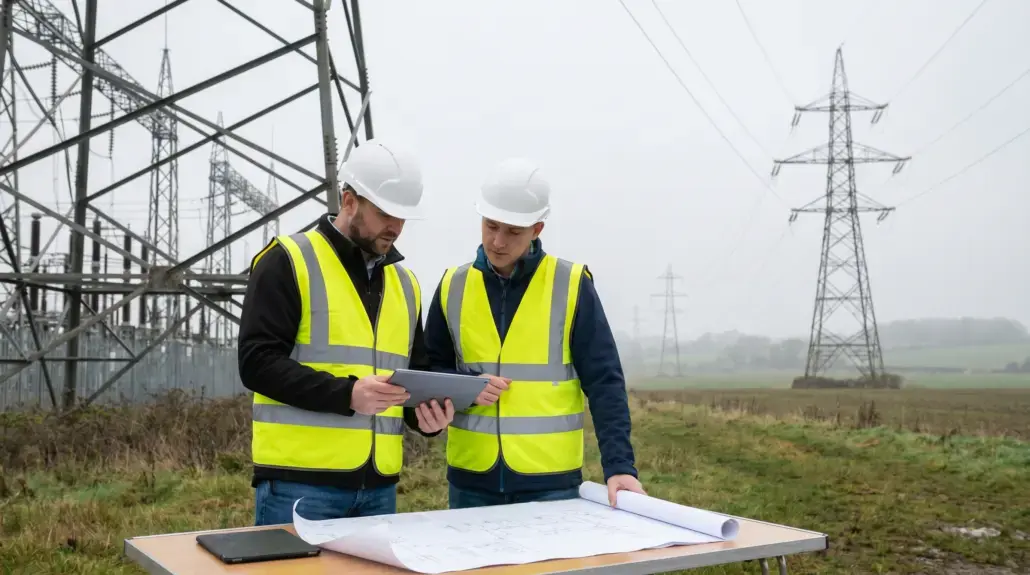
While mathematical models and historical data are essential for industrial risk management, they cannot replace the insights of the people who actually perform the work. One of the most common failures in safety planning energy is the “ivory tower” effect, where risk assessments are developed in an office without input from the field. Effective risk assessment transmission operations bridge this gap by incorporating “Job Hazard Analyses” (JHA) and “Tailboard Meetings” into the broader framework. These field-level assessments allow crews to identify site-specific variables such as a new fence line that creates a grounding hazard or a change in soil stability after a rainstorm that a central model might miss.
This integration of qualitative field data with quantitative analysis creates a more resilient safety system. It empowers workers to become active participants in the risk management process, fostering a culture of vigilance. When a worker sees that their input has led to a change in the project’s safety plan, it reinforces the value of the risk assessment process. This collaborative approach is a key component of transmission operations safety, as it ensures that the theoretical protections designed in the planning phase are practical and effective when applied on the tower or in the substation.
The Role of Advanced Technology in Risk Visualization
The digital revolution is providing new tools that are transforming how we conduct risk assessment transmission operations. We are seeing the rise of Digital Twins virtual replicas of physical transmission networks that allow engineers to simulate various failure scenarios and the effectiveness of potential controls in a risk-free environment. For instance, a Digital Twin can simulate the impact of a high-wind event on a specific span of line, identifying exactly which towers are at the highest risk of structural failure. This predictive capability allows for highly targeted infrastructure reinforcement and safety planning.
Furthermore, Geographic Information Systems (GIS) are being used to map environmental risks with unprecedented precision. By layering data on terrain slope, vegetation density, and lightning frequency, utilities can create “heat maps” of risk that guide the deployment of crews and equipment. These technological advancements in risk assessment power sector management allow for a move away from “generalized” safety protocols and toward site-specific, data-driven interventions. The ability to visualize risk in this way makes it easier for safety managers to communicate hazards to the workforce, ensuring that everyone has a clear understanding of the environment they are entering.
Standardization and Regulatory Compliance
In an industry as regulated as power transmission, risk assessment frameworks must also serve as a tool for compliance. Organizations such as OSHA, NERC, and various international standards bodies have strict requirements for how risks must be identified and documented. A standardized risk assessment transmission operations framework ensures that all necessary documentation is generated as a natural byproduct of the safety planning process. This not only protects the organization from legal and regulatory repercussions but also provides a clear “paper trail” that can be used for post-project reviews and continuous improvement.
Standardization also facilitates better communication between utilities and their contractors. When multiple organizations are working on a single project, having a common language and methodology for risk assessment is critical. It prevents the confusion that can arise when different teams use different terminology or ranking systems for hazards. By mandating a universal risk assessment framework, the lead utility can ensure that everyone regardless of their employer is operating under the same set of safety planning energy principles. This consistency is vital for maintaining transmission operations safety across the entire project ecosystem.
Conclusion: The Strategic Value of Proactive Risk Management
Risk assessment is often viewed as a hurdle to be cleared before the “real work” begins. However, the most successful organizations in the power sector view risk assessment transmission operations as a strategic asset. A thorough risk assessment reduces the “surprises” that lead to project delays, cost overruns, and, most importantly, injuries. It allows for more accurate budgeting, as the costs of necessary safety controls are identified upfront rather than being added as emergency measures. In the long run, the investment in a high-quality risk assessment framework pays for itself many times over through improved operational efficiency and a safer, more engaged workforce.
As the grid becomes more complex with the integration of renewable energy and distributed resources, the nature of risk in transmission operations will continue to change. Our frameworks must be agile enough to adapt to these new challenges. By combining the best of material science, data analytics, and human experience, we can create a safety system that is as robust as the infrastructure it protects. The pursuit of excellence in risk assessment is a journey without a finish line, but it is the most important journey any utility can undertake. Through diligent hazard identification and a commitment to the science of safety, we can ensure that the power grid remains a safe and reliable engine for global progress.