






Close
MCE 2026
World Hydrogen & Carbon Americas

With ASEAN, South Korea Will Expand Its Energy Partnership

Note* - All images used are for editorial and illustrative purposes only and may not originate from the original news provider or associated company.

Subscribe

- Never miss a story with notifications

- Gain full access to our premium content

- Browse free from any location or device.

Media Packs

Expand Your Reach With Our Customized Solutions Empowering Your Campaigns To Maximize Your Reach & Drive Real Results!

– Access the Media Pack Now

– Book a Conference Call

Leave Message for Us to Get Back

Related stories

Industrial Decarbonisation and Power Sector Synergy

The path to a net-zero economy requires the deep integration of heavy industry with the electrical grid. By exploring the concept of sector coupling and the role of hydrogen in difficult-to-abate sectors, this analysis details how industrial decarbonisation and power sector synergy can create a more resilient, flexible, and efficient energy system through shared infrastructure and coordinated strategy.

Hydrogen Trade Corridors Reshape Global Energy Supply

The emergence of international hydrogen trade is fundamentally redrawing the world's energy maps. By establishing dedicated corridors that connect resource-rich exporters with high-demand industrial centers, the global energy transition is moving toward a more diversified and resilient supply chain underpinned by advanced maritime logistics and rigorous certification standards.

Largest Solar-Plus-Storage Project Hits Initial Grid Sync

The first phase of the MTerra Solar project in...
- Advertisement -

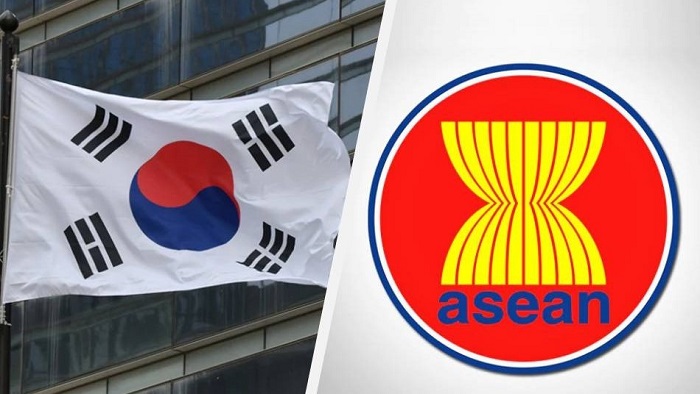
According to Lee Won-ju, Director-General of Energy Policy at the Ministry of Trade, Industry, and Energy (MOTIE), South Korea intends to maintain its cooperation with ASEAN nations, which will be essential in guaranteeing energy security and expanding sustainable energy.

At the 19th ASEAN+3 Energy Ministers’ Meeting, Lee stated that the improvement of green power development, data interchange, project inquiry and sourcing, and offering assistance to Korean enterprises’ entry into the local market will be the main areas of South Korea’s cooperation with ASEAN.

According to Lee, South Korea has committed to ASEAN’s decarbonization and power infrastructure safety management through the nation’s greenhouse gas reduction programmes and energy safety management. MOTIE said in a statement that since 2009, South Korea has been working on policies to reduce greenhouse gas emissions and has been spreading its knowledge of renewable energy and energy efficiency with the ASEAN nations. Additionally, it has been working with the area since 2021 to reduce emissions of greenhouse gases by improving energy efficiency in industry and transportation.

In order to encourage technological developments and close collaboration for the expansion of renewable energy in the area, South Korea has also served as co-chair for Alternative and Renewable Power Generation with Brunei since 2018. The ASEAN region’s energy infrastructure safety management would be improved by the dissemination of electricity safety standards and employee training consultations, according to MOTIE.

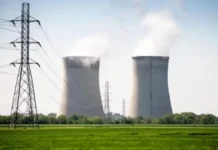
Lee also emphasised the urgent need for the stabilisation of the world energy market and the bolstering of energy security at the 16th East Asia Summit. In addition, he agreed that clean energy expansion was essential to decarbonize markets, pointing to South Korea’s energy strategy in this regard. In order to strengthen energy security and attain carbon neutrality, he continued, nuclear energy will be a key source. The development of clean energy, hydrogen, and renewable technologies will continue to satisfy domestic energy needs and situations.

Latest stories

Related stories

Industrial Decarbonisation and Power Sector Synergy

The path to a net-zero economy requires the deep integration of heavy industry with the electrical grid. By exploring the concept of sector coupling and the role of hydrogen in difficult-to-abate sectors, this analysis details how industrial decarbonisation and power sector synergy can create a more resilient, flexible, and efficient energy system through shared infrastructure and coordinated strategy.

Hydrogen Trade Corridors Reshape Global Energy Supply

The emergence of international hydrogen trade is fundamentally redrawing the world's energy maps. By establishing dedicated corridors that connect resource-rich exporters with high-demand industrial centers, the global energy transition is moving toward a more diversified and resilient supply chain underpinned by advanced maritime logistics and rigorous certification standards.

Largest Solar-Plus-Storage Project Hits Initial Grid Sync

The first phase of the MTerra Solar project in...

India, UK Launch Offshore Wind Taskforce to Scale Capacity

India and the United Kingdom formally launched the India-UK...

Subscribe

- Never miss a story with notifications

- Gain full access to our premium content

- Browse free from any location or device.

Media Packs

Expand Your Reach With Our Customized Solutions Empowering Your Campaigns To Maximize Your Reach & Drive Real Results!

– Access the Media Pack Now

– Book a Conference Call

Leave Message for Us to Get Back

Translate »