

























The United States Trade Representative – USTR has gone ahead and extended the exclusion when it comes to certain classes of hardware, such as solar manufacturing equipment, from the Section 301 import tariffs. As per the USTR, the 178 exclusions were going to expire on November 29, 2025, but the agency has gone ahead and extended them by almost a year to November 10, 2026.
It is well to be noted that the extensions were granted because of the limited availability of numerous covered items outside of China. The USTR goes on to note that its decision followed public discussions that started in 2024. The agency says that 147 of the approved exclusions went on to receive comments supporting extension, stating that the products will continue to be available just in limited quantities outside of China and additional time will be needed in order to shift sourcing outside of China. Apparently, ten of the exclusion items got comments opposing the extensions.
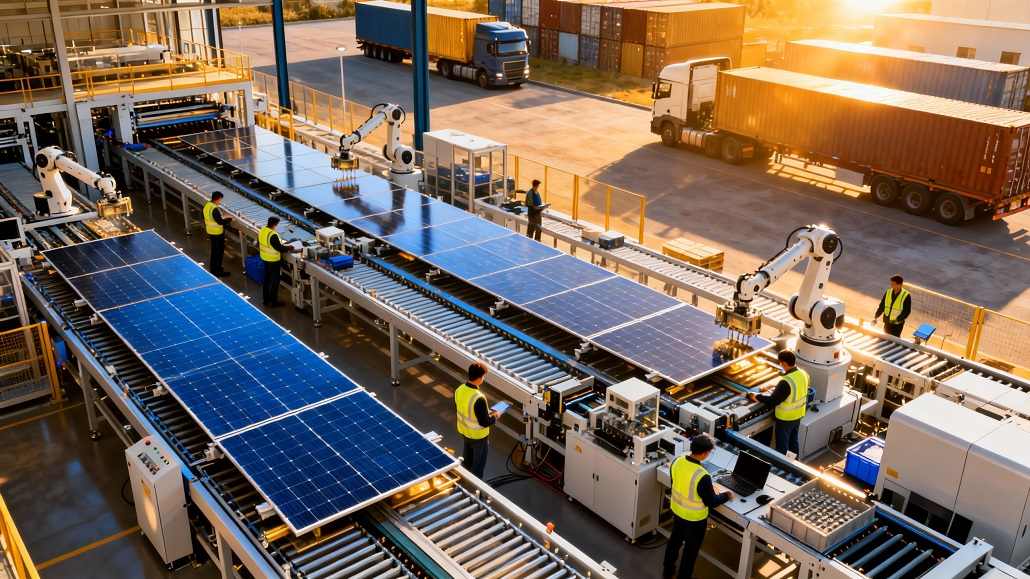
Notably, the excluded solar manufacturing equipment goes on to cover a range of machinery that is required to manufacture solar panel subcomponents. As per the original USTR list, the items include-
- Silicon-growth furnaces so as to grow monocrystalline silicon ingots
- Band saws that are designed for cutting or slicing the cylindrical monocrystalline silicon ingots
- Diamond wire saws in order to cut or slice square or rectangular monocrystalline silicon ingots
- Coolant-fluid recycling machines
- Texturing, polishing, etching, and cleaning machines designed to prepare, clean,
- repair, etch, polish, or texture the solar wafer substrates
- Plasma-enhanced or low-pressure chemical vapor deposition machines that are designed to deposit amorphous or nanocrystalline layers on one or both of the wafer surfaces
- Physical vapor deposition machines
- Screen-printing line machines that include sintering furnaces for printing conducting contacts -silver on both surfaces of a solar wafer
- Machines that are designed for transporting polysilicon to growth furnaces as well as for lifting, handling, loading, or even unloading solar wafers that are almost 200 micrometers thick
It is worth noting that the Section 301 tariffs were put in place by the Biden administration. In May 2024, the administration went on to double the tariffs on solar cells that were imported from China from 25% to 50%. In December 2024, the White House went ahead and doubled the 25% tariff on polysilicon to 50% and also added solar wafers to Section 301, thereby also setting the tariff to 50%.