

















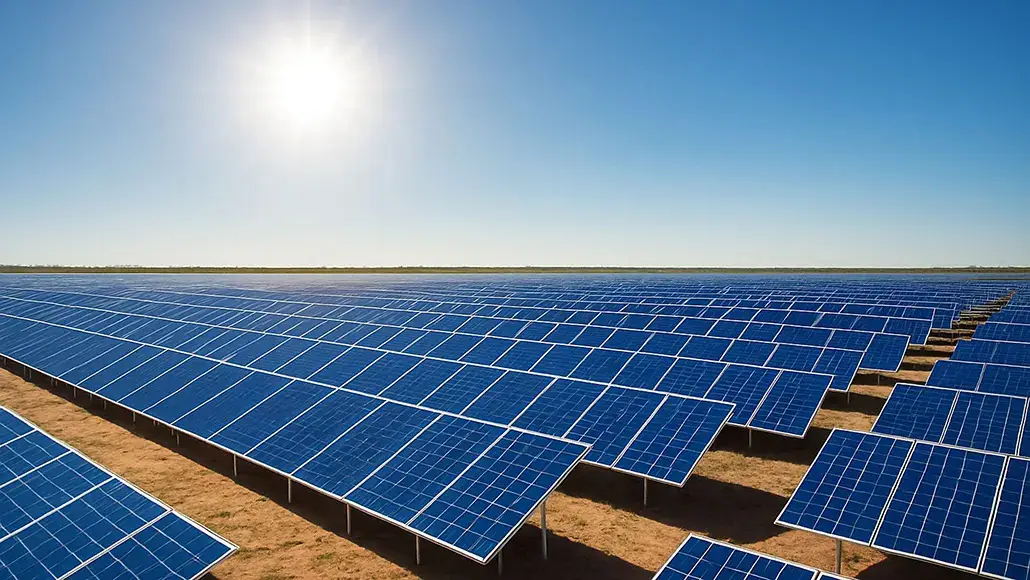

Just a few years ago, China was the proud top manufacturer of solar panels. Today, the status is still there, but instead of pride, there is anxiety and worry. Recently, the size of this success has caused a paradox in the market. China has made so many photovoltaic parts that there is now a huge surplus of solar panels. The production and supply have far surpassed demand in both the US and around the world. This overstock has changed the way the Chinese energy sector works, and it has also had a big effect on the world economy.
This surplus shows how strong China’s industry is, but it also shows how hard it is to manage market control in the face of diving prices. As the globe moved faster toward carbon neutrality, Chinese manufacturers expanded their production facilities so quickly that the market couldn’t keep up with the output. This mismatch has caused the sector to change dramatically, with the focus shifting from growth at any cost to survival and stability through consolidation and efficiency.
The Genesis of Overproduction and the Resulting Price Crash
The main reason for the current instability in the industry is China’s aggressive cycle of over-investment and competitiveness amongst provinces. Many businesses and municipal governments spent billions on new production lines in an effort to control the global renewable energy supply chain. This huge increase in production was so strong that it completely broke the market balance. Because of the overstock, products were being made quicker than they could be installed or shipped, which caused inventory backups that forced manufacturers to lower prices.
While reduced prices are good for both consumers and installers, the quick and severe drop in pricing caused fierce competition among manufacturers. In an environment where costs were always going down, this made it hard for small and medium-sized businesses to compete with huge ones. A lot of businesses went bankrupt or were bought by bigger ones.
The Role of Rapid Technological Obsolescence
The challenge of overproduction was further worsened by quick technology advancement. The solar industry is now switching from classic P-type cells to more efficient N-type technologies. As newer, more efficient factories started up, the older ones couldn’t make money anymore. This led to a solar panel oversupply with two layers: a lot of current-generation panels and an even bigger pile of older-generation equipment that no one wanted to buy.
Manufacturers were stuck in a cycle of making more goods to pay off massive loans for building factories, even while the value of what they made was dropping. The market was full of older parts that were sold at a loss only to get cash flow, which drove the price down even more.
Assessing the Industry Impact and Financial Erosion
The Chinese solar panel industry has been hurt in two ways: financial devastation and forced changes. For much of 2024 and the beginning of 2025, the sector was marked by big losses. But newer research shows that the sector may be at a turning point. The China Photovoltaic Industry Association said that the losses in the sector are finally starting to get smaller. This change isn’t because of a sudden rise in demand. It’s because the industry is going through a difficult process of rationalization and prices are finally stabilizing.
Even though losses are getting smaller, CPIA has mentioned that vicious competition still shapes the scene. Many businesses have had to run at a loss for a long time, which has caused their balance sheets to lose a lot of value. The group said that even though the worst of the price drops may be behind, the solar panel glut is still affecting the industry. To keep prices from getting out of hand again, a lot of producers are now focusing on “self-regulation” and better meeting the needs of the market.
Strategic Steps Taken to Reverse Market Impacts
Both the Chinese government and industry groups have sprung to action to bring things back into balance. New measures are being put in place to curb manufacture and end toxic price competition. The industry is now more focused on survival. This is a big change in policy from the previous concentration on overall output and leading the market. The government wants to stabilize pricing and make sure that its most successful enterprises stay healthy in the long term by getting rid of extra or old capacity.
New rules are coming out that make it harder to be energy-efficient, use water wisely, and make things with precision. These guidelines will keep unnecessary producers from coming back into the market during the next upcycle. The goal is to make sure that any new capacity added to the grid is of the highest quality and fits a specific technological need.
Industry Self-Regulation and Capacity Management
The industry is trying to find a way to move forward together; beyond that, the government has told firms to stop charging too much and to slow down their efforts to grow.
The industry is aiming to keep costs stable by better controlling capacity. But in a competitive market, it’s hard to keep this self-regulation going as it takes a lot of trust and openness amongst competitors. Whether or not the sector can move into a period of steady growth or stay stuck in cycles of boom and bust will depend on how well these initiatives work.
The Ripple-Effect on Global Markets and Energy Prices
The effects of the Chinese solar panel glut have gone beyond China’s borders. China’s internal surplus became a global phenomenon when it became the world’s biggest exporter of solar technology. The arrival of very affordable panels in foreign markets had both good and bad effects. The price drop was good for project developers in Europe, North America, and emerging economies. It made solar installations cheap enough to compete with or even beat fossil fuels. This has caused a huge increase in solar installations around the world, speeding up the shift to green energy.
But for producers in other parts of the world, the rush of cheap Chinese parts was a disaster. Companies in the US and Europe, where labor and energy expenses are frequently higher, couldn’t compete with Chinese prices. This has caused trade problems to get worse and tariffs to be put in place to protect local manufacturing bases. The oversupply of solar panels has turned into a political issue, making countries choose between the goal of quickly cutting carbon emissions and protecting their own businesses.
Future Market Outlook and Long-Term Stability
Analysts and business experts agree that the market is heading toward a time of more stability in the future. The fact that losses are getting smaller at the end of 2025 means that the brunt of the overstock is over. The quality of the supply will get better as factories that aren’t working well are shut down and the switch to N-type technology is finished. Prices are predicted to level off at a level that is higher than the lows of 2023 but still far lower than the historical average. This means that solar energy will always be a cheap alternative for the world’s energy mix.
In conclusion, the solar panel glut has been a very unstable and painful time for the industry. The Chinese solar panel business is finally recovering thanks to a mix of government intervention, self-regulation, and natural market consolidation. The last few years have highlighted that even in booming businesses, balance and foresight are just as vital as new and big ideas. As the market settles down, the focus will go back to giving the world clean, cheap, and dependable energy for many years to come.