

















The global quest for a sustainable energy future is, at its most fundamental level, a quest for better materials. While we often focus on the sophisticated software and complex systems that manage our power, the underlying physical layer the wires, the insulators, the turbine blades, and the battery electrodes is where the most significant gains in efficiency and reliability are being made. Advanced Materials Energy System Performance is the phrase that defines this current era of power infrastructure innovation. From the atomic manipulation of materials science energy to the large-scale deployment of advanced composites, every component of our energy system is being redesigned to be stronger, lighter, more conductive, and more resistant to the increasingly harsh environments of the 21st century.
The Bedrock of Innovation: Materials Science in the Energy Sector
At the core of every major energy breakthrough lies a material that makes it possible. Whether it is a new alloy that allows a gas turbine to operate at higher temperatures for better efficiency, or a nanostructured coating that prevents ice from building up on wind turbine blades, materials science energy is the bedrock of the transition to a carbon-neutral economy. The challenge for researchers today is not just to find materials that perform better in the lab, but materials that can be manufactured at a massive scale with minimal environmental impact. This pursuit of “green materials” and the “circular economy” is essential for ensuring that the renewable energy transition does not inadvertently create a new set of environmental problems, such as mineral scarcity or non-recyclable waste.
The impact of Advanced Materials Energy System Performance can be seen most clearly in the development of next-generation power semiconductors. As we move away from traditional silicon, materials like Silicon Carbide (SiC) and Gallium Nitride (GaN) are revolutionizing power conversion. These materials are not just incrementally better; they represent a step-change in performance. They can handle higher voltages and switch at much higher frequencies than silicon, which translates directly into smaller, more efficient solar inverters and electric vehicle chargers. This is a prime example of how molecular-level materials science energy creates system-level power infrastructure innovation.
High-Performance Conductors and the Battle Against Resistive Loss
The transmission and distribution of electricity over long distances have always been plagued by resistive losses, which can account for up to 10% of the total energy generated globally. This is essentially energy that is “leaked” into the atmosphere as heat. To address this, high-performance conductors are being developed using advanced materials energy system performance strategies. Traditional steel-reinforced aluminum cables (ACSR) are increasingly being replaced by Advanced Composite Core (ACC) conductors. These new cables use a carbon fiber core that is lighter and stronger than steel, allowing them to carry up to twice as much current without sagging, even when operating at high temperatures.
Furthermore, the field of superconductivity is seeing a resurgence of interest for specialized urban applications. High-Temperature Superconductors (HTS), which can operate at the temperature of liquid nitrogen rather than the extreme cold of liquid helium, are being used to create compact, high-capacity cables for land-constrained urban environments. By using these next-generation materials, we can create “power pipes” that can carry massive amounts of energy into city centers with zero resistive loss. This represents a major leap in grid durability solutions and overall system efficiency.
Thermal Efficiency Materials and the Management of Waste Heat
In the thermal energy sector, the focus is on maximizing the retention, transfer, and storage of heat. Thermal efficiency materials, such as aerogels and phase-change materials (PCMs), are being integrated into everything from industrial furnaces to residential building envelopes. Aerogels, often referred to as “frozen smoke,” are among the world’s most effective insulators. When used to wrap high-temperature steam pipes, they can significantly reduce the energy required to maintain industrial processes. In the context of Advanced Materials Energy System Performance, these materials are the key to closing the loop on thermal waste.
Phase-change materials are particularly exciting for their ability to store and release thermal energy as they transition between solid and liquid states. By integrating PCMs into building materials like drywall or insulation, we can create buildings that act as “thermal batteries.” They absorb the excess heat of the day and release it during the cool of the night, dramatically reducing the load on HVAC systems. This is a direct application of materials science energy to improve the energy system performance of our built environment without the need for complex moving parts or high-maintenance electronics.
Advanced Composites: Scaling Up Wind and Solar Power
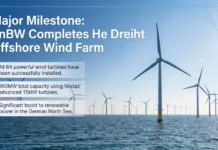
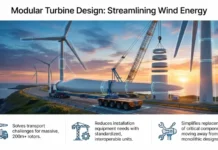
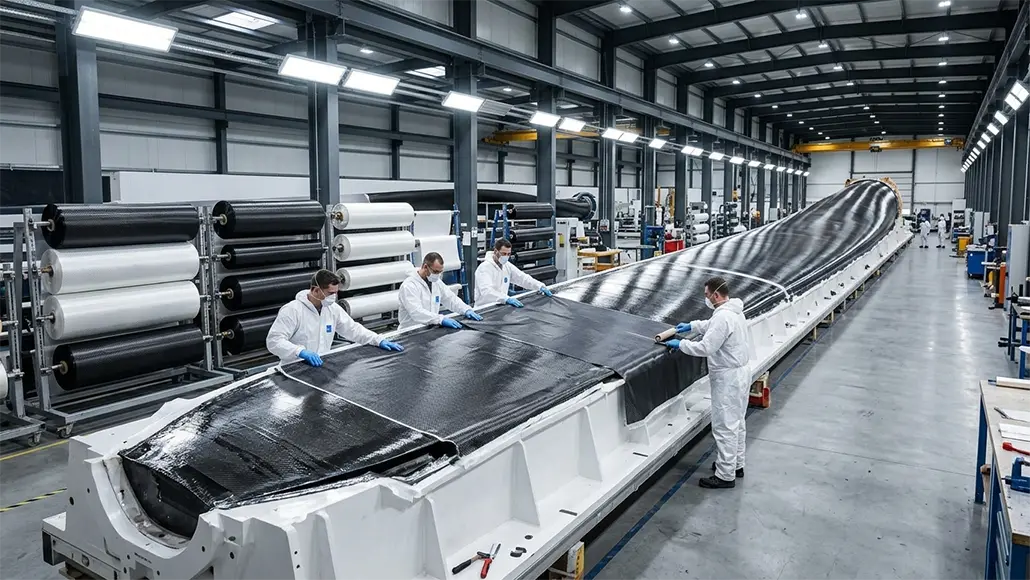
The renewable energy sector is perhaps the most visible beneficiary of advanced materials. Wind turbine blades are now reaching lengths of over 100 meters, a feat that would be physically impossible with traditional materials like wood or fiberglass alone. Advanced composites, such as carbon-fiber-reinforced polymers (CFRPs), provide the necessary stiffness-to-weight ratio to prevent these massive blades from buckling under the extreme forces of offshore wind. These next-generation materials allow for larger turbines that capture more energy at lower wind speeds, significantly lowering the Levelized Cost of Energy (LCOE) for clean power.
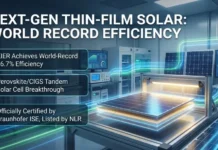
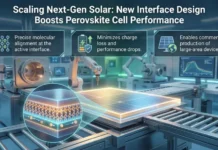
In the solar industry, the development of perovskite materials is threatening to disrupt the decades-long dominance of silicon. Perovskites can be manufactured using low-cost chemical solution processing essentially “printing” solar cells onto flexible substrates. When used in “tandem” cells with traditional silicon, these advanced materials energy system performance can reach efficiencies exceeding 30%, which is well beyond the theoretical limits of pure silicon cells. This innovation is a direct result of power infrastructure innovation at the chemical level, promising cheaper and more versatile solar power for everyone.
Grid Durability Solutions and the Longevity of Modern Assets
The average age of power grid infrastructure in many developed nations is over 40 years. Replacing this massive, interconnected network all at once is economically unfeasible, making grid durability solutions a top priority for utility companies. Advanced coatings and surface treatments are being used to extend the life of these aging assets. For example, self-healing polymers can automatically repair microscopic cracks in underground cable insulation, preventing water ingress and subsequent electrical failure before it ever happens.
Similarly, anti-corrosion coatings based on graphene or other 2D materials are being deployed to protect transformers and substations in harsh coastal or industrial environments. By using these next-generation materials, we can reduce maintenance costs and extend the operational life of critical infrastructure by decades. This long-term thinking is a key component of materials science energy, ensuring that the massive investments we make today are sustainable and resilient for the future.
Advanced Materials for the Future of Energy Storage
As we move toward a grid dominated by intermittent renewables like solar and wind, the need for high-capacity, long-duration energy storage becomes paramount. Lithium-ion batteries have led the way, but their performance is currently limited by the chemistry of their electrodes and the flammability of their liquid electrolytes. Advanced materials for energy storage, such as solid-state electrolytes and silicon-based anodes, promise to significantly increase both the energy density and the safety of batteries. Solid-state batteries replace the liquid electrolyte with a solid ceramic or polymer layer, eliminating the risk of fire and allowing for much faster charging times.
Beyond lithium, researchers are exploring “beyond-lithium” chemistries such as sodium-ion, which uses more abundant and cheaper materials, and flow batteries that use specialized electrolytes for long-duration grid storage. Each of these technologies relies on the unique properties of advanced materials energy system performance to achieve the necessary cycles, costs, and safety profiles. The successful commercialization of these technologies will be the final piece of the puzzle for a fully renewable, reliable power infrastructure innovation roadmap.
Challenges in Material Scaling, Scarcity, and Sustainability
Despite the immense promise of these materials, several significant challenges remain. The first is the issue of critical minerals. Many advanced materials energy system performance solutions rely on rare earth elements or minerals like lithium, cobalt, and copper, which are concentrated in a few geographic regions and are subject to supply chain volatility. Diversifying the supply chain and developing “substitutional” materials that use more abundant elements is a critical area of research within materials science energy.
The second challenge is the end-of-life management of advanced composites and electronic components. Many of the materials that make our wind turbines and solar panels more efficient are currently difficult or expensive to recycle. Developing “circular” material systems, where every component can be easily disassembled and its raw materials recovered for a new life, is essential for the long-term sustainability of the energy sector. This requires a shift in the design philosophy of power infrastructure innovation, from a linear “take-make-dispose” model to a circular one that mimics nature.
The Future: Programmable and Self-Sensing Materials
As we look toward 2050 and beyond, the role of advanced materials in the energy sector will only become more central. We are entering an era of “programmable materials,” where the physical properties of a component can be changed in response to environmental conditions. Imagine a wind turbine blade that can change its aerodynamic shape in real-time to optimize efficiency as wind speeds change, or a solar cell that can repair its own radiation damage. Furthermore, “self-sensing” materials with embedded nanotechnology can provide real-time data on the health of a bridge or a transmission tower, alerting operators to potential failures before they occur.
The pursuit of Advanced Materials Energy System Performance is a testament to human ingenuity and our ability to manipulate the physical world at the most fundamental level to solve our greatest challenges. By continuing to invest in materials science energy, we are not just building better machines; we are building the foundation of a new industrial revolution. This revolution will be defined by its efficiency, its resilience, and its uncompromising commitment to the health of our planet.