





















Ensuring the stability and continuity of the modern electrical grid requires a meticulous approach to the infrastructure that facilitates power distribution. At the heart of this network lie substations, the critical nodes responsible for voltage transformation and switching. Substation maintenance strategies are the systematic practices that utility providers employ to ensure these components function optimally under various loads and environmental conditions. The reliability of the entire power system hinges on the health of these individual sites, making maintenance not merely a routine task but a strategic necessity. By shifting from reactive fixes to sophisticated, data-informed models, operators can significantly mitigate the risk of catastrophic failures and prolong the service life of expensive assets.
The complexity of contemporary power grids, characterized by the integration of renewable energy sources and increasing consumer demand, has intensified the pressure on substation equipment. Transformers, circuit breakers, and relay systems are subject to thermal stress and mechanical wear that can lead to unexpected outages if left unmonitored. Implementing robust substation maintenance strategies allows for the identification of potential points of failure before they escalate into systemic issues. This proactive stance is essential for maintaining grid reliability, as it ensures that the infrastructure can handle peak loads and recover swiftly from external shocks like weather events or equipment degradation.
The Evolution of Maintenance Philosophies in Power Distribution
Historically, maintenance in the power sector followed a simple “run-to-failure” model. This reactive approach, while minimizing immediate labor costs, often resulted in astronomical expenses during emergency repairs and widespread consumer dissatisfaction during outages. As the demand for uninterrupted power grew, the industry transitioned toward time-based preventive maintenance. Under this paradigm, technicians perform inspections and part replacements at fixed intervals, regardless of the actual condition of the equipment. While this offered a higher level of security than the reactive model, it frequently led to unnecessary maintenance on healthy machines or, conversely, failed to catch issues that developed between scheduled visits.
Modern utility management now leans heavily toward condition-based and predictive substation maintenance strategies. These methods utilize advanced diagnostics and real-time monitoring to assess the actual health of assets. By analyzing data from sensors that track temperature, vibration, and gas levels in transformer oil, maintenance teams can schedule interventions exactly when they are needed. This evolution marks a significant shift toward operational efficiency, as it optimizes resource allocation and ensures that maintenance efforts are focused on the most critical or vulnerable components of the grid.
Strengthening Grid Reliability through Asset Optimization
Grid reliability is the primary metric by which any power system is judged. It encompasses both the adequacy of the system to meet demand and the security of the system to withstand sudden disturbances. Substation maintenance strategies directly influence both aspects. When a transformer fails due to poor lubrication or insulation degradation, the resulting outage can cascade through the network, affecting thousands of businesses and homes. Therefore, asset management is not just about keeping a machine running; it is about protecting the economic and social stability that constant electricity provides.
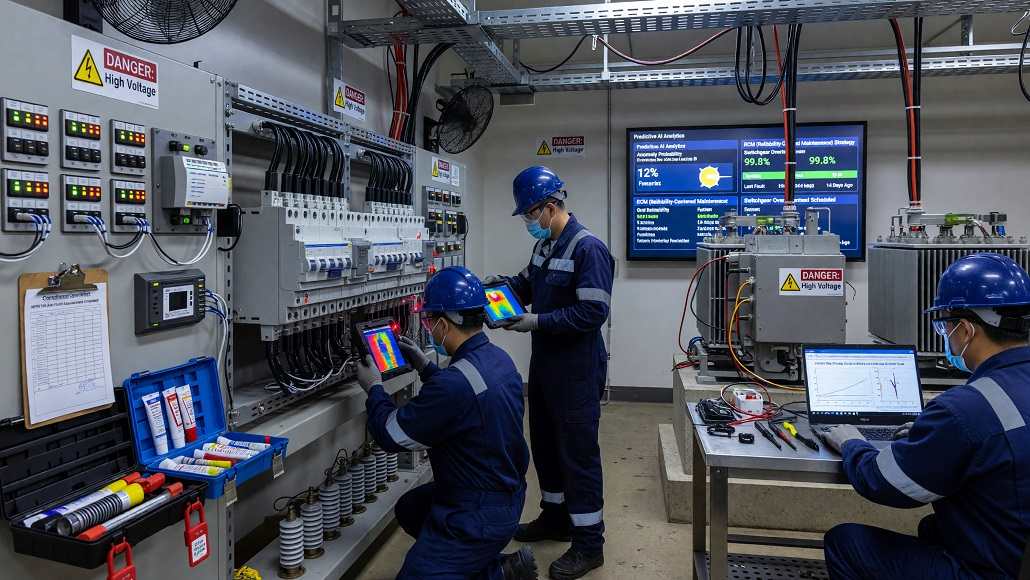
Reliability-centered maintenance (RCM) has emerged as a gold standard for utilities seeking to maximize uptime. This strategy involves identifying the specific functions of each asset and determining the failure modes that would have the most significant impact on the system. By prioritizing maintenance for assets that are crucial for grid stability, operators can achieve a higher level of reliability for the same or even lower investment compared to traditional methods. This strategic layering ensures that every dollar spent on maintenance provides the maximum possible benefit to the grid’s overall resilience.
Mitigating Outages through Predictive Diagnostics
The integration of predictive tools into substation maintenance strategies has revolutionized how technicians approach their daily tasks. In the past, identifying a failing circuit breaker might have required physical disassembly or waiting for a visible malfunction. Today, thermographic imaging can detect “hot spots” in electrical connections that indicate high resistance and potential failure. Similarly, dissolved gas analysis (DGA) in transformers provides a window into the internal health of the unit, revealing signs of arcing, overheating, or partial discharge long before a breakdown occurs.
These predictive diagnostics allow for a much more nuanced approach to outage prevention. Instead of taking a substation offline for a week of broad inspections, a utility can schedule a targeted four-hour window to replace a specific part identified by the monitoring system. This minimize the impact on consumers and reduces the workload on maintenance crews, who can focus their expertise on high-value interventions. The result is a leaner, more responsive maintenance operation that consistently delivers superior grid performance.
Balancing Lifecycle Costs and Capital Expenditure
One of the most compelling arguments for adopting advanced substation maintenance strategies is the significant reduction in long-term lifecycle costs. A transformer is a multi-million-dollar investment designed to last thirty to forty years. However, poor maintenance can cut that lifespan in half, forcing premature and costly capital expenditures. Conversely, a well-executed maintenance plan can extend the life of that same asset to fifty years or more. By spreading the initial cost over a longer period, utilities can lower their overall cost of service, which can eventually lead to more stable rates for consumers.
Furthermore, the cost of an unplanned failure far exceeds the cost of a planned repair. Emergency mobilizations, the premium paid for expedited parts, and the potential for regulatory fines or liability claims all contribute to the “failure tax.” By investing in sophisticated maintenance models, utility companies effectively buy insurance against these extreme costs. The data gathered through these strategies also informs future purchasing decisions, allowing engineers to identify which brands or models of equipment are the most durable and offer the best return on investment over time.
Technological Integration in Modern Power Infrastructure
The transition to smarter grids has brought about a new era of technological integration in power infrastructure. Digital sensors, fiber-optic communication, and cloud-based analytics are now integral components of substation maintenance strategies. These technologies enable a “living” view of the substation, where performance metrics are streamed constantly to a central control center. This transparency allows for a level of oversight that was previously impossible, enabling managers to see trends across their entire fleet of assets and identify systemic risks.
Artificial intelligence and machine learning are the next frontiers in this technological evolution. These systems can process the vast amounts of data generated by sensors to identify subtle patterns that human analysts might miss. For example, an AI model could correlate weather patterns with small fluctuations in transformer temperature to predict exactly when a cooling fan might fail. As these models become more refined, the “predictive” part of maintenance will become even more accurate, moving the industry closer to a state where unplanned downtime is virtually eliminated.
Operational Efficiency and Maintenance Planning
Efficiency in maintenance planning is not just about doing things faster; it is about doing the right things at the right time. Substation maintenance strategies provide the framework for this high-level organization. When maintenance is scheduled based on data, logistics can be optimized. Parts can be ordered in advance, specialized crews can be dispatched with all necessary tools, and the impact on the surrounding network can be modeled and mitigated. This level of coordination reduces the “idle time” often associated with traditional maintenance schedules.
Moreover, a data-driven approach fosters a culture of continuous improvement. Each maintenance event provides a data point that can be used to refine future strategies. If a particular type of insulator is found to be failing consistently after ten years, the maintenance plan can be adjusted to replace them at the nine-year mark across the entire system. This feedback loop ensures that the utility is always learning from its infrastructure, turning raw data into actionable intelligence that drives operational excellence.
Ensuring Safety and Compliance in High-Voltage Environments
Safety is the cornerstone of all substation maintenance strategies. Working with high-voltage equipment is inherently dangerous, and a well-defined maintenance plan includes strict protocols for de-energizing equipment, grounding, and the use of personal protective equipment. By reducing the number of emergency repairs which are often rushed and performed under stressful conditions proactive maintenance inherently makes the workplace safer for technicians.
Compliance with national and international standards, such as those set by NERC or IEEE, is also facilitated by systematic maintenance practices. These regulations often require utilities to demonstrate that they are maintaining their equipment to a certain standard to ensure the security of the bulk power system. Robust documentation, which is a natural byproduct of modern maintenance software, provides the audit trail necessary to prove compliance. This not only avoids potential legal issues but also reinforces the utility’s reputation as a responsible steward of the public’s power supply.
Conclusion: A Resilient Future Through Strategic Maintenance
The journey toward total grid reliability is an ongoing process of adaptation and investment. Substation maintenance strategies represent the most effective tool in a utility’s arsenal for achieving this goal. By embracing the shift toward predictive and condition-based models, the power industry is moving away from the inefficiencies of the past and toward a future where energy delivery is more stable, cost-effective, and resilient than ever before. As the world becomes increasingly dependent on electricity for everything from transportation to communications, the importance of these strategies will only continue to grow.
Ultimately, the goal of these maintenance efforts is to create a power infrastructure that is “invisible” working so flawlessly that the average consumer never has to think about where their electricity comes from or whether it will be there when they flip a switch. This level of reliability is only possible through the dedicated application of high-level substation maintenance strategies, supported by advanced technology and a deep commitment to asset management. By prioritizing the health of the substation, we ensure the health of the entire grid, powering the progress of society for generations to come.