





















The global energy landscape is shifting rapidly toward renewables, but the transition is not without structural challenges. Solar and wind, while abundant and cost-competitive, are inherently intermittent. This variability has exposed a fundamental limitation in traditional power systems generation does not always align with demand. In response, hybrid power plants are emerging as a strategic solution, integrating solar, wind, and energy storage into a single, optimized system.
Rather than treating each energy source as a standalone asset, hybrid systems combine them to create a more stable and controllable power output. This approach is reshaping how generation assets are designed, operated, and valued across modern grids.
Why Hybridization Is Gaining Momentum
The rise of hybrid power plants is driven by a simple but critical need: reliability. As renewable penetration increases, grid operators face growing challenges in balancing supply and demand. Solar generation peaks during the day, while wind patterns can be unpredictable. Without intervention, this leads to curtailment, inefficiencies, and grid instability.
Hybrid systems address these issues by:
- Combining complementary generation profiles
- Smoothing output variability
- Reducing dependence on single energy sources
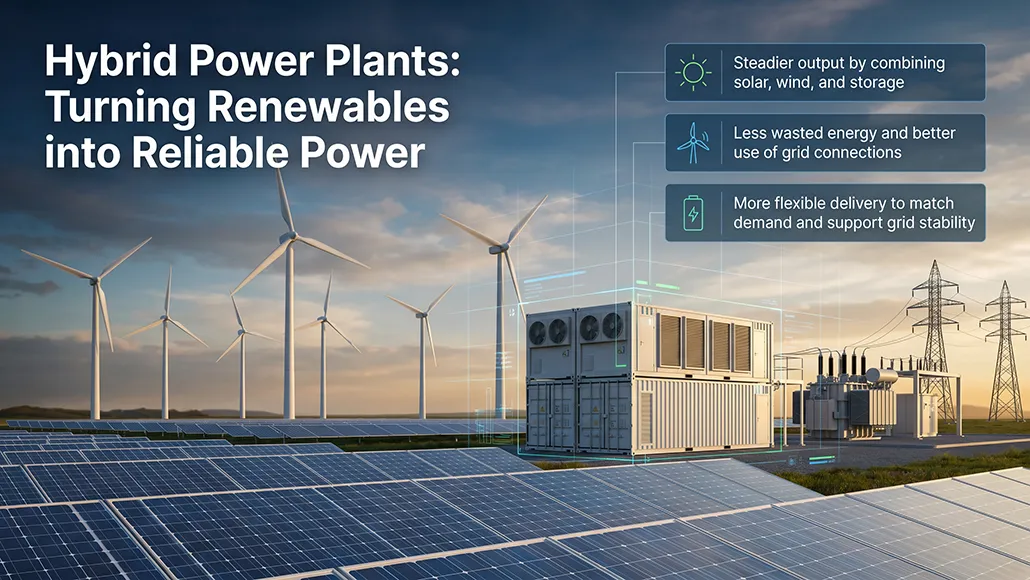
By integrating storage, these plants can store excess energy and dispatch it when needed, effectively transforming intermittent generation into a more reliable resource.
How Solar, Wind, and Storage Work Together
At the core of hybrid power plants is the synergy between different energy sources. Solar and wind often exhibit complementary generation patterns. In many regions, solar output is highest during the day, while wind generation may peak at night or during different seasons.
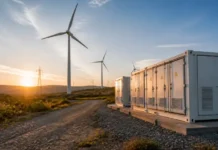
Energy storage acts as the balancing layer. It captures surplus energy during periods of high generation and releases it during demand peaks or low generation periods. This creates a more consistent and dispatchable power profile.
The integration of these components is managed through advanced control systems that optimize generation, storage, and dispatch in real time. This level of coordination is what differentiates hybrid systems from traditional standalone plants.
Efficiency Gains Beyond Individual Assets
One of the most compelling advantages of hybrid power plants is their ability to improve overall system efficiency. Instead of operating as isolated units, solar, wind, and storage function as part of a coordinated ecosystem.
This results in:
- Higher utilization of installed capacity
- Reduced energy curtailment
- Improved load matching with demand patterns
- Better use of transmission infrastructure
By maximizing output from existing resources, hybrid systems enhance the economic performance of renewable assets without requiring proportional increases in infrastructure.
The Economics of Hybrid Power Plants
From a financial perspective, hybridization introduces a more complex but potentially more rewarding model. While the initial capital investment may be higher due to the inclusion of multiple technologies, the long-term benefits can outweigh these costs.
Hybrid systems can:
- Generate more consistent revenue streams
- Reduce reliance on peak pricing volatility
- Improve project bankability through stable output
- Optimize land and infrastructure utilization
Additionally, shared infrastructure such as grid connections and land use can reduce overall project costs compared to deploying separate assets.
Grid Integration and Operational Flexibility
As power systems evolve, flexibility is becoming as important as capacity. Hybrid power plants provide this flexibility by enabling controlled and predictable energy delivery.
With integrated storage, operators can:
- Shift energy delivery to match peak demand
- Provide ancillary services such as frequency regulation
- Reduce grid congestion and transmission bottlenecks
This makes hybrid systems particularly valuable in regions with high renewable penetration, where grid stability is a growing concern.
Challenges in Scaling Hybrid Systems
Despite their advantages, hybrid power plants are not without challenges. Integrating multiple technologies into a single system increases complexity in design, operation, and maintenance.
Key challenges include:
- Higher upfront investment and financing complexity
- Technical integration of different generation and storage systems
- Regulatory frameworks that may not fully support hybrid models
- Operational coordination across multiple assets
In many markets, policies and grid codes are still evolving to accommodate hybrid configurations, which can slow adoption.
The Role of Digitalization in Hybrid Power
Digital technologies play a critical role in enabling hybrid systems. Advanced analytics, real-time monitoring, and predictive algorithms ensure that solar, wind, and storage components operate in harmony.
These systems optimize:
- Energy dispatch decisions
- Storage utilization cycles
- Performance across varying weather conditions
As frequently explored in industry discussions on Power Info Today, digital integration is what transforms hybrid plants from a combination of assets into a cohesive, intelligent energy system.
Strategic Importance in the Energy Transition
Hybrid power plants are increasingly seen as a bridge between intermittent renewables and reliable energy supply. They offer a pathway to scale renewable generation without compromising grid stability.
Their strategic value lies in their ability to:
- Reduce dependence on fossil-based backup generation
- Enhance renewable energy reliability
- Support long-term decarbonization goals
As energy systems continue to evolve, hybridization is likely to become a standard approach rather than a niche solution.
Conclusion: From Intermittency to Integration
The shift toward hybrid power plants represents a fundamental change in how energy is generated and managed. By integrating solar, wind, and storage, these systems address one of the biggest challenges of renewable energy intermittency.
While the complexity of hybrid systems requires careful planning and investment, the benefits in terms of efficiency, reliability, and flexibility are significant. For power producers, the focus is no longer just on generating energy, but on delivering it in a way that aligns with dynamic grid requirements.
In this evolving landscape, hybrid power plants are not just an innovation they are becoming a cornerstone of modern power generation strategy.